Trump Supporters Feel “Betrayed” Over Iran, Mockler Explains
Political analyst Adam Mockler explains why President Trump's supporters, particularly within the "Joe Rogan-sphere," may have felt "betrayed" over Iran policy. Mockler highlights their desire for a "decisive" leader who acts as a "change agent."

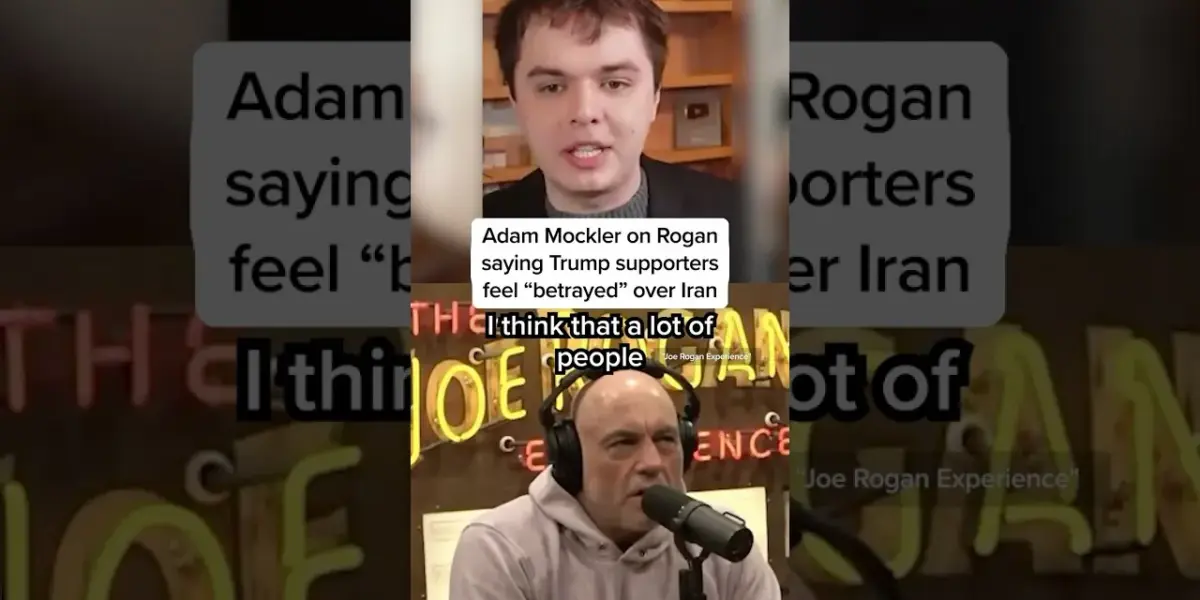
Mockler: Trump Supporters Felt “Betrayed” on Iran Policy
Political analyst Adam Mockler has offered a compelling explanation for why a significant segment of President Donald Trump’s supporters felt a sense of betrayal regarding his administration’s foreign policy, particularly concerning Iran. Appearing on “It’s Happening with Velshi & Ruhle,” Mockler articulated that the “Joe Rogan-sphere,” a demographic often aligned with Trump’s base, sought a “decisive” leader. This desire for decisiveness, he suggests, was a key factor in their perception of Trump as a “change agent” who would fundamentally alter established political norms and international agreements.
The “Change Agent” Appeal
Mockler’s analysis centers on the perception of Trump not as a traditional politician, but as an outsider who promised to disrupt the status quo. This narrative resonated deeply with a base that felt overlooked and unheard by mainstream political establishments. The podcaster Joe Rogan, with his massive reach, often amplified voices that questioned established foreign policy and expressed skepticism towards international institutions and agreements. Mockler posits that this audience looked to Trump for a leader who would act boldly and unilaterally, breaking away from what they saw as ineffective or corrupt globalist policies.
“The word I always go to is ‘decisive.’ The Joe Rogan-sphere, they want a leader who’s decisive.”
This quote from Mockler encapsulates the core of his argument. For supporters who felt the United States had been taken advantage of on the global stage, Trump’s often confrontational and transactional approach to diplomacy was seen as a strength. They equated his willingness to challenge alliances, withdraw from treaties like the Iran nuclear deal (JCPOA), and impose unilateral sanctions with decisiveness. This was not about a nuanced understanding of foreign policy intricacies, but a visceral reaction to a leader who appeared to be fighting for American interests as they defined them.
Iran Policy: A Point of Contention
The Iran nuclear deal, officially known as the Joint Comprehensive Plan of Action (JCPOA), was a cornerstone of the Obama administration’s foreign policy and a significant point of divergence between Trump and his critics. Trump’s withdrawal from the deal in May 2018 and the subsequent reimposition of stringent sanctions were lauded by some as a necessary step to curb Iran’s nuclear ambitions and its regional influence. However, Mockler suggests that for a segment of Trump’s base, the handling of Iran may have ultimately led to feelings of betrayal.
The nature of this potential betrayal is complex. It could stem from several factors:
- Unfulfilled Promises: While Trump campaigned on a strong anti-Iran platform, the actual outcomes of his “maximum pressure” campaign might not have met the high expectations of some supporters. The regime in Iran remained in power, and the geopolitical landscape did not shift as dramatically as some might have anticipated.
- Perceived Incompetence or Inconsistency: Despite the “decisive” rhetoric, some supporters might have viewed specific actions or the lack of a clear endgame as inconsistent with Trump’s persona of a decisive leader. The complex web of sanctions and diplomatic overtures could have appeared muddled to those seeking straightforward solutions.
- The “Deep State” Narrative: A common theme within the Trump orbit was the idea of a “deep state” working against the president’s agenda. Supporters might have felt that the foreign policy establishment, even under Trump, continued to exert influence, preventing a truly decisive break from previous policies or leading to outcomes that felt like compromises.
- Focus on Other Issues: Trump’s presidency was marked by a constant barrage of news cycles and controversies. It’s possible that the focus on Iran, while significant, was overshadowed by domestic political battles, leading to a feeling that this critical foreign policy issue was not being pursued with the unwavering intensity that some supporters desired.
The “Rogan-sphere” and Political Discourse
Joe Rogan’s podcast, “The Joe Rogan Experience,” has become a significant platform for alternative viewpoints and has a massive audience, many of whom are young men. Mockler’s reference to the “Joe Rogan-sphere” highlights the growing influence of such platforms in shaping political discourse, often outside the traditional media ecosystem. These platforms can foster a sense of community among listeners who feel alienated by mainstream narratives and are seeking leaders who reflect their skepticism and desire for radical change.
For this audience, Trump represented a break from the perceived intellectualism and perceived elitism of mainstream politicians and media figures. His direct, often unvarnished communication style, and his willingness to challenge established norms, made him an appealing figure. Mockler’s analysis suggests that the “betrayal” over Iran policy, therefore, is not necessarily about a disagreement with the goal of confronting Iran, but perhaps about the perceived effectiveness or execution of the strategy, or a feeling that the “decisive” action promised didn’t fully materialize in a way that satisfied their expectations.
Broader Implications for Political Identity
Mockler’s insights carry broader implications for understanding the dynamics of political identity and support for figures like Donald Trump. The “change agent” narrative is powerful, particularly for voters who feel disenfranchised. When the promised changes do not materialize as expected, or when policies are perceived as inconsistent or ineffective, it can lead to disillusionment and a sense of betrayal, even among the most ardent supporters.
The “Joe Rogan-sphere” represents a growing segment of the electorate that is influenced by non-traditional media sources. Their desire for “decisive” leadership, coupled with a skepticism of established foreign policy, creates a unique political environment. Understanding this dynamic is crucial for analyzing the motivations of Trump supporters and predicting future political trends. The focus on decisiveness suggests that voters are less interested in the incremental, consensus-building approach of traditional politics and more drawn to leaders who project strength and a willingness to act unilaterally, even if the long-term consequences are uncertain.
Looking Ahead
As political discourse continues to evolve, driven by alternative media platforms and shifting voter priorities, the analysis of figures like Adam Mockler becomes increasingly relevant. The “betrayal” narrative, particularly concerning foreign policy issues like Iran, highlights the complex relationship between leaders and their bases. Future political movements and leadership will likely need to contend with the demand for “decisive” action and the potential for disillusionment when such action does not yield the desired results. The ability of leaders to manage expectations and deliver on promises, especially in the realm of foreign policy, will remain a critical factor in maintaining the loyalty of their supporters.
Source: Adam Mockler on Rogan saying Trump supporters feel "betrayed" over Iran (YouTube)

Related Articles

Trump Dances ‘YMCA’ With Jake Paul Amidst Global Tensions
Former President Donald Trump was seen dancing to the 'YMCA' alongside internet personality Jake Paul during his visit to Kentucky. The event occurred on the twelfth day of a significant global conflict, drawing mixed reactions.

Epstein Files Erupt: Trump’s Distraction Tactics Under Fire
New details surrounding the Jeffrey Epstein files are surfacing, leading to accusations that former President Trump is using military actions in Iran as a distraction. Vocal allies like Lindsey Graham are defending Trump, sparking debate about political loyalty and policy coherence.
FBI Memos Reveal Verified Details in Epstein Accuser’s Account
Newly released FBI memos detail an accuser's claims of abuse by Jeffrey Epstein and Donald Trump. Investigative reporting by The Post and Courier has verified key background details of the accuser's story, lending credibility to her narrative.