Trump’s Iran War Ignorance Exposed in O’Donnell’s Scathing Critique
Lawrence O'Donnell of MS NOW critically examined Donald Trump's understanding of foreign policy, particularly concerning a potential "war of choice" with Iran. O'Donnell argued that Trump's approach was marked by significant ignorance and a tendency towards uninformed pronouncements, raising concerns about the administration's strategic decision-making.

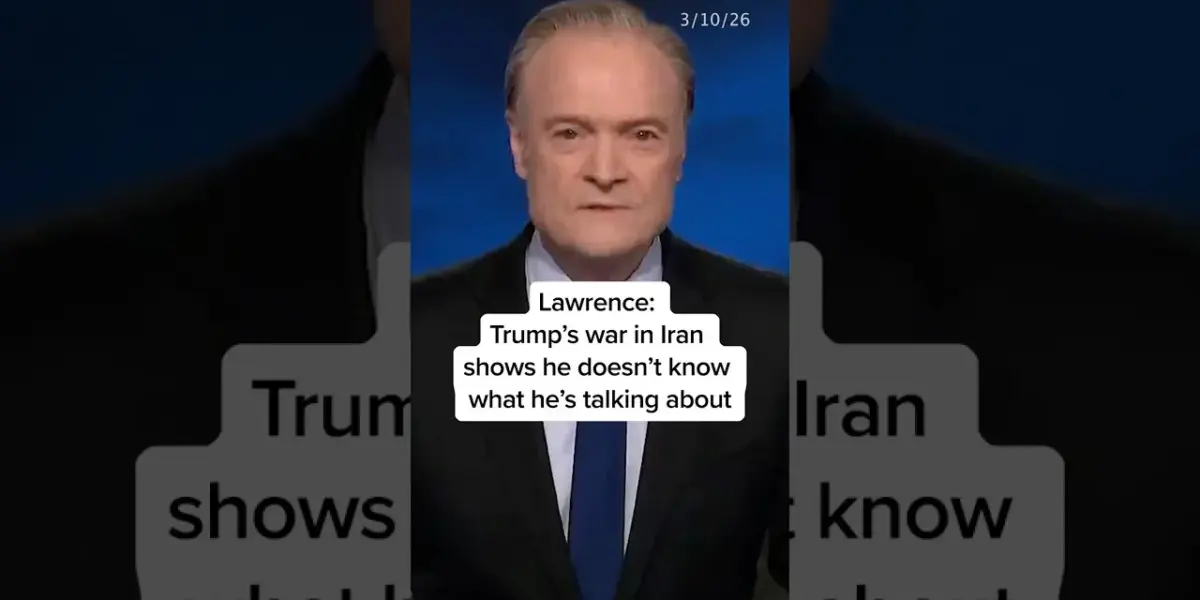
Trump’s Iran War: A ‘War of Choice’ Fueled by Ignorance
MS NOW’s Lawrence O’Donnell launched a blistering critique of Donald Trump’s understanding of foreign policy, specifically targeting the former president’s rhetoric and decision-making surrounding a potential conflict with Iran. In a segment that questioned the administration’s grasp of the complexities of Middle Eastern geopolitics, O’Donnell argued that Trump’s approach to Iran was characterized by a profound ignorance and a dangerous tendency to engage in what he termed a “war of choice.” The analysis, presented on MS NOW, highlighted a disconnect between Trump’s pronouncements and the realities on the ground, suggesting a foreign policy driven by bluster rather than informed strategy.
Questioning the ‘Why’ Behind Trump’s Iran Stance
O’Donnell focused on the fundamental lack of clarity surrounding the Trump administration’s objectives in escalating tensions with Iran. He posited that the decision to pursue a confrontational path was not rooted in a well-defined national security interest but rather in a series of miscalculations and a misunderstanding of the region’s dynamics. “Donald Trump’s war in Iran shows he doesn’t know what he’s talking about,” O’Donnell stated, encapsulating the core of his argument. This assertion implies that the rationale for any potential military action was either absent or based on flawed premises, leaving the public and policymakers in the dark about the true motivations behind such a high-stakes foreign policy.
The President’s Uninformed Declarations
A significant portion of O’Donnell’s analysis centered on what he described as Trump’s pattern of lying and the administration’s general ignorance when faced with scrutiny over its Iran policy. The implication is that Trump’s public statements were not only factually inaccurate but also demonstrated a superficial engagement with the issues at hand. This alleged lack of knowledge, O’Donnell suggests, made the prospect of a “war of choice” particularly perilous. A war of choice, unlike a war of necessity, is one initiated by a nation voluntarily, without a direct attack or imminent threat, making the justification and strategic planning all the more critical. The absence of such informed justification, according to O’Donnell, raises serious questions about the prudence of the administration’s actions.
Broader Implications for Foreign Policy
The critique extends beyond Trump’s personal understanding to encompass the broader implications for American foreign policy. O’Donnell’s commentary suggests that a reliance on uninformed decision-making at the highest levels can lead to destabilizing international relations and potentially catastrophic outcomes. The Middle East, already a volatile region, requires a nuanced and informed approach, and any deviation from this can have far-reaching consequences. The segment implies that the Trump administration’s handling of Iran exemplifies a broader trend of policy driven by impulse rather than expertise, a concern for international stability.
Expert Analysis and Public Discourse
MS NOW, as a platform for “News, Opinion, and the World,” aims to provide context and in-depth coverage of critical global issues. O’Donnell’s segment on Trump’s Iran policy is presented within this framework, encouraging viewers to critically examine the statements and actions of political leaders. The analysis serves as a call for greater accountability and a demand for informed foreign policy, particularly when dealing with matters of war and peace. The segment implicitly urges the public to question the narratives presented and to seek out reliable sources of information to understand the complex geopolitical landscape.
What’s Next in U.S.-Iran Relations?
As the geopolitical landscape continues to evolve, the insights provided by Lawrence O’Donnell’s analysis remain relevant. The question of how the United States will navigate its relationship with Iran, and whether future administrations will prioritize informed diplomacy over confrontational rhetoric, will be crucial to monitor. The legacy of decisions made during the Trump era, particularly regarding the “war of choice” in Iran, will likely continue to shape international relations and regional stability for years to come. The public discourse surrounding these issues, amplified by platforms like MS NOW, will play a vital role in holding leaders accountable and advocating for a more strategic and informed approach to foreign policy.
Source: Lawrence: Trump's war in Iran shows he doesn't know what he's talking about (YouTube)

Related Articles
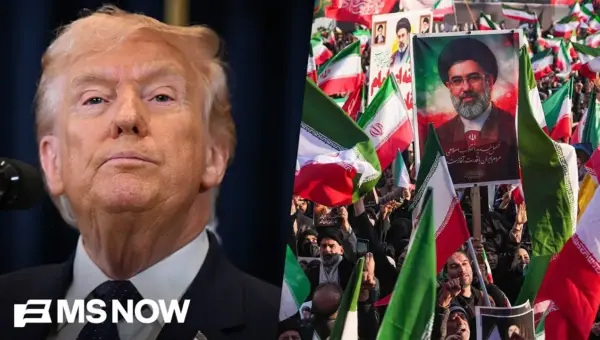
Trump’s Iran Strategy Lacks Competence, Allies Say
Journalist Susan Glasser criticizes the Trump administration's Iran strategy, citing a lack of executive competence, unilateral decision-making, and strategic oversights. The analysis highlights concerns over economic repercussions, political malpractice, and a disturbing handling of civilian casualties.
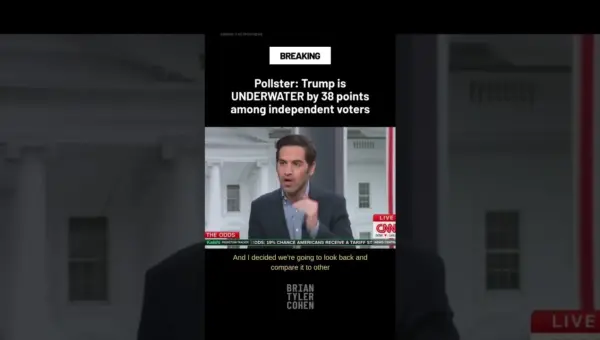
Trump’s Independent Voter Deficit Signals Deepening Political Divide
New polling data reveals Donald Trump is significantly trailing among independent voters, a crucial demographic in American politics. This deficit, larger than that faced by previous presidents, signals a deepening political divide and raises questions about future electoral viability.
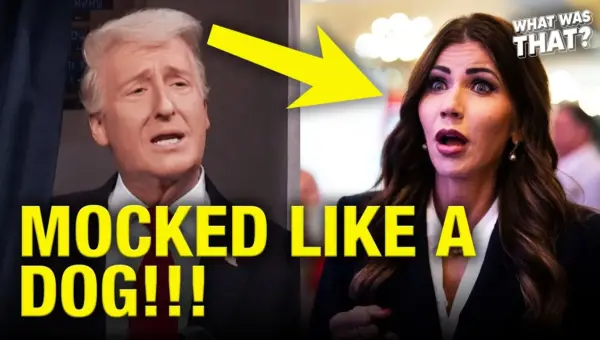
Noem’s Ouster Exposes Trump’s Chaos and Corrupt Contracts
Kirstjen Nielsen's ouster from DHS, marked by a Trump social media decree, exposes the administration's chaotic style, questionable contract awards, and a penchant for propaganda. The analysis delves into controversies surrounding Nielsen's past, the dubious $220 million ad campaign, and the implications for U.S. foreign policy.