Trump’s Iran Strategy Lacks Competence, Allies Say
Journalist Susan Glasser criticizes the Trump administration's Iran strategy, citing a lack of executive competence, unilateral decision-making, and strategic oversights. The analysis highlights concerns over economic repercussions, political malpractice, and a disturbing handling of civilian casualties.

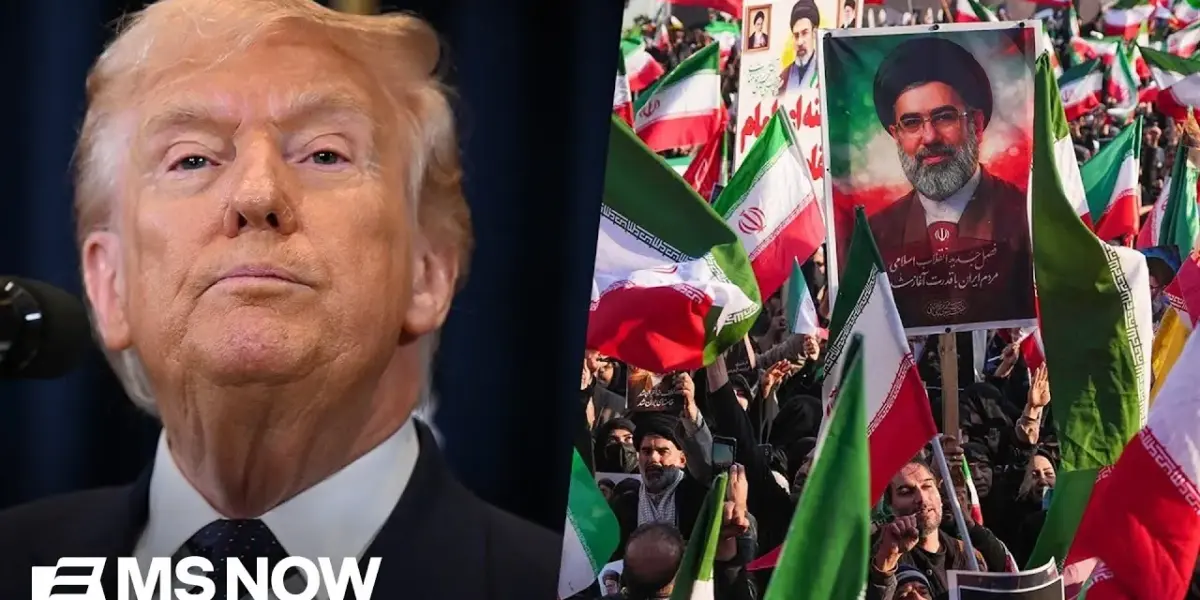
US Leader Accused of Unilateral Iran Conflict Amidst Strategic Failures
In a stinging critique, journalist Susan Glasser has lambasted the Trump administration’s approach to the escalating conflict with Iran, characterizing it as a unilateral decision lacking strategic foresight and executive competence. Glasser, speaking on a recent broadcast, detailed how President Trump appears to have initiated a significant regional and global conflict without consulting Congress, key international allies, or even his own government officials, who were reportedly unprepared for the ensuing consequences.
Strategic Blind Spots Exposed
Glasser highlighted critical oversights in the administration’s planning, pointing out the obvious vulnerability of the Strait of Hormuz, a vital chokepoint for global energy supply. “It doesn’t take an advanced degree in international relations to understand that the Strait of Hormuz is going to be impacted by this,” Glasser stated. “It doesn’t take an advanced degree in energy security to understand that when 20% of the world’s energy supply flows through one choke point, you know, you probably want to have a pretty robust plan in place for what to do if you’re going to attack the country that controls that choke point.”
The lack of preparedness extended to anticipated military tactics. Glasser questioned the apparent unpreparedness of the U.S. military and the President regarding the future of drone swarms, a tactic she noted Iran would likely employ. “This reflects both the hollowing out of U.S. government capacity under Trump, after round after round of firings and things like that. Also, it reflects the lack of process and in the Trump administration,” she observed.
Economic Repercussions and Political Malpractice
The conflict’s potential economic fallout was also a major concern. Glasser drew parallels to the energy shock following Russia’s invasion of Ukraine, warning of potential food insecurity for poorer nations globally due to disruptions in energy supply. This, she argued, directly contradicts the President’s prior boasts about low gas prices, suggesting a profound political miscalculation. “You could certainly call it political malpractice, but I think it’s really important to underscore the global nature of the power invested unilaterally in Donald Trump. He is a single person who has essentially unleashed this on the world,” Glasser asserted.
Republican Scramble and Congressional Accountability
The unfolding situation has reportedly left Republicans scrambling. Senator Josh Hawley’s call for a swift and decisive end to the conflict was presented as an example. Glasser critiqued the legislative body’s role, particularly its impending vote on a substantial funding request for the war. “I think the sooner we get to what the president was talking about yesterday, a decisive, clear end to this conflict, the better. Yeah, I agree with you. I mean, if only we had a legislative body that had the power to hold the president accountable because they’re going to be asked soon to sign their names to $50 billion additional dollars. And once they do that, it’s not just Donald Trump’s war, it’s Republicans’ war,” Glasser stated.
She further elaborated on the financial implications, reminding listeners of previous significant defense budget increases. “Every Republican that votes for that is essentially giving the president a blank check,” she warned. Glasser also pointed out the irony of a President elected on promises of tackling inflation now pursuing policies that could exacerbate it.
Tragic Civilian Casualties and Intelligence Failures
A particularly egregious aspect of the conflict, according to Glasser, is the reported killing of 175 school-age girls and the administration’s apparent lack of intelligence regarding the incident. Glasser questioned the President’s stated unawareness of how the event occurred, attributing it to a systemic issue within the government.
“The problem is rooted in the fact of how this is all being managed, as you indicated earlier. You’ve got offices that would otherwise be looking at this, haven’t been gutted by this administration.”
She cited a Politico report detailing the slashing of offices tasked with civilian protection, including the Civilian Protection Center of Excellence, by approximately 90%. Glasser emphasized the importance of these departments in providing the President with accurate intelligence to understand such events and assign responsibility.
Questions of Accountability and Transparency
The narrative surrounding the civilian casualties has been fraught with misinformation. Glasser noted the President’s initial assertion that Iran was responsible, despite Iran not possessing the alleged weaponry. “The fact that we know what did it, Susan, and that the President of the United States has repeatedly lied about it, I do think it’s very important that we all… I mean, I think that there’s this, like, a little willful ignorance, people are like maybe the President is just not too smart about this. If he ain’t know, at least three other people in the room knew,” Glasser argued, pointing to the Chairman of the Joint Chiefs of Staff and individuals within the State Department and Pentagon.
Glasser stressed that democracies distinguish themselves through transparency and accountability, especially when mistakes are made. “There’s nothing that can take away the tarnish to our reputation,” she lamented, particularly regarding the President’s alleged deception about the civilian deaths. The administration’s response, including admitting an American weapon was involved, has been slow and characterized by what Glasser termed “extreme callousness.”
War as a Political Tool and Tarnished Reputation
The broader implication, Glasser suggested, is the administration’s treatment of war as a political tool, akin to a video game, with a disregard for the human cost. This approach, she fears, could alienate the very Iranian population the U.S. ostensibly seeks to support.
“We’re seeing war treated as a video game. We’re seeing the President and the Secretary of Defense celebrate the violence they have unleashed. And I think that’s something that really risks blowing back, even among the people inside Iran who are very happy that the supreme leader is dead, who are very hopeful about positive change coming to their country.”
The article concludes by underscoring the critical need for an investigation into the civilian casualties and accountability for those responsible, emphasizing that transparency in such matters is a hallmark of democratic governance and crucial for maintaining international credibility.
Source: 'Lack of executive competence': Susan Glasser tears into Trump’s Iran war strategy (YouTube)

Related Articles

Trump’s ‘America First’ Iran Policy Echoes Past Mistakes
A critical analysis of Donald Trump's 'America First' foreign policy, particularly regarding Iran, suggests a repetition of past mistakes that may have undermined U.S. interests. The discussion on MS NOW highlighted concerns about the policy's effectiveness and its impact on international relations.

Trump’s Rally Unravels: War Justifications, Epstein Files, and Declining Rhetoric
A recent Trump rally in Kentucky exposed a volatile mix of contradictory war justifications, personal attacks, and a focus on political vendettas. The event highlighted concerns over declining rhetorical abilities and the spread of misinformation.


Trump’s Iran ‘Word Salad’ Sparks Debate on Foreign Policy
MSNBC hosts Ali Velshi and Stephanie Ruhle analyzed Donald Trump's recent remarks on Iran, characterizing them as "word salad." The discussion also addressed the U.S. national debt and the future direction of the Democratic Party.