Noem’s Ouster Exposes Trump’s Chaos and Corrupt Contracts
Kirstjen Nielsen's ouster from DHS, marked by a Trump social media decree, exposes the administration's chaotic style, questionable contract awards, and a penchant for propaganda. The analysis delves into controversies surrounding Nielsen's past, the dubious $220 million ad campaign, and the implications for U.S. foreign policy.

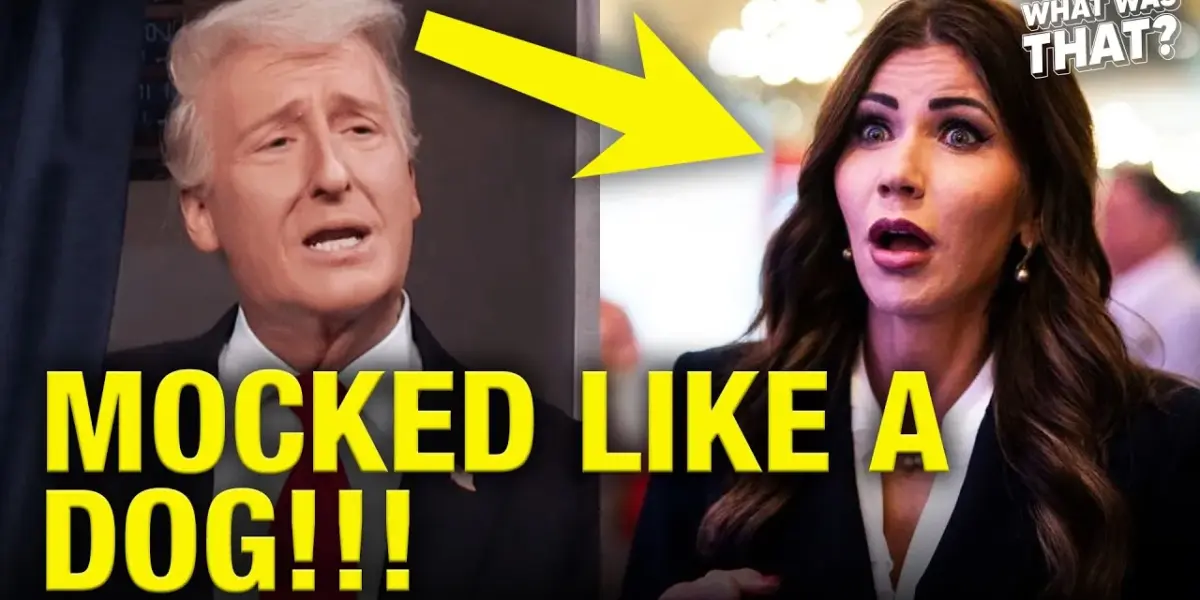
Noem’s Ouster Exposes Trump’s Chaos and Corrupt Contracts
The recent departure of Kirstjen Nielsen from her role as Secretary of Homeland Security, widely perceived as a firing orchestrated by Donald Trump via a social media post, has illuminated the chaotic and often questionable practices within the Trump administration. This event, coupled with a scathing critique from Saturday Night Live, has brought to the forefront issues ranging from questionable leadership decisions and a penchant for propaganda to deeply concerning contract awards and the administration’s handling of foreign policy.
The Spectacle of a Social Media Firing
Nielsen’s exit was anything but conventional. Instead of a private conversation or a formal notification, news of her replacement, Mark Wayne Mullen, broke on Trump’s Truth Social platform. This public dismissal, often likened to a reality TV show catchphrase, underscores a pattern of the former president’s unconventional and often disrespectful approach to personnel changes. The insistence from Nielsen that her departure was voluntary, despite the clear implications of Trump’s post, highlights the desperate attempts to salvage dignity in the face of overt rejection.
Echoes of Orwell and the Dog-Killing Controversy
The narrative surrounding Nielsen’s departure is further complicated by her own controversial past actions and statements. Her invocation of a quote often attributed to George Orwell – “People sleep peacefully in their beds at night only because rough men stand ready to do violence on their behalfs” – has been met with irony, given that Orwell never uttered these words. More disturbingly, Nielsen’s memoir details the killing of her puppy, Cricket, and a goat. While she framed these acts as leadership lessons in making tough decisions, critics argue they reveal a disturbing lack of empathy and sound judgment, traits that many find incongruous with leading a critical department like DHS.
The juxtaposition of Nielsen quoting Orwell (albeit inaccurately) while simultaneously facing public scrutiny for her past actions, particularly the killing of her own dog, creates a deeply ironic and uncomfortable tableau. This incident, alongside the controversial shooting of individuals in Minneapolis, which Nielsen’s own agency was involved in, raises profound questions about the caliber of individuals entrusted with significant power and the ethical frameworks guiding their decisions.
Propaganda, Shell Companies, and Taxpayer Dollars
A significant portion of the critique centers on a $220 million taxpayer-funded advertising campaign spearheaded by Nielsen. The campaign, featuring Nielsen riding a horse and promoting a message of border security, has been decried as expensive propaganda. Compounding the issue is the revelation that a substantial portion of this contract, $143 million, was awarded to a shell company, Safe America Media, incorporated just days before receiving the deal. This company reportedly had no staff and an address linked to a political operative, raising serious questions about competitive bidding, due diligence, and potential cronyism. The administration’s justification of a “national emergency” for bypassing standard procurement processes has been met with skepticism, especially given the Republican party’s long-standing rhetoric against government waste and fraud.
The sheer cost of this campaign, exceeding that of major Hollywood blockbusters like The Matrix or Oppenheimer, further fuels accusations of fiscal irresponsibility and a prioritization of personal image over effective governance. The conflicting accounts regarding Trump’s awareness and approval of this campaign, with Nielsen asserting his prior consent and Trump later denying knowledge, add another layer of obfuscation and distrust.
The Shadow of an Affair and a New ‘Special Envoy’
Adding to the salacious details surrounding Nielsen’s tenure is the alleged affair with Cory Lewandowski, a former DHS official. The use of a taxpayer-funded luxury private jet with a “flying bedroom” for their alleged trysts has become a point of public ridicule and ethical concern. Nielsen’s response to these allegations, dismissing them as tabloid fodder while her demeanor suggested otherwise, further fueled speculation.
Nielsen’s post-DHS role as “special envoy for the Shield of the Americas” is characterized as a fabricated title designed to placate and silence individuals who might otherwise expose corruption or provide damaging testimony. This tactic, the analysis suggests, is a common strategy within the Trump White House to manage potential whistleblowers or critics.
Enter the ‘MAGA Warrior’: Mark Wayne Mullen
Nielsen’s replacement, Mark Wayne Mullen, is presented as a stark contrast, described by Trump as a “MAGA warrior” and former MMA fighter. However, the analysis debunks this image, highlighting his limited fighting career and lack of expertise in emergency management or constitutional law. Mullen’s background, including his alleged witnessing of inappropriate behavior by Representative Matt Gaetz on the House floor, raises further concerns about his suitability for a leadership role at DHS. The narrative suggests that Mullen, like Nielsen, is expected to adhere to the administration’s hardline stance on immigration and civil liberties, with little expectation of accountability for negative outcomes.
Escalation in the Middle East and the Fog of War
Beyond domestic issues, the piece delves into the Trump administration’s foreign policy, particularly its actions in the Middle East. The sinking of an Iranian warship, described as an act of aggression against a vessel that posed no immediate threat, is highlighted as an example of reckless military action. The administration’s reluctance to label these operations as “war” is seen as a deliberate attempt to avoid constitutional scrutiny and public accountability for potential casualties, including Iranian school children.
The conflicting statements from Secretary of Defense Lloyd Austin and other officials regarding the bombing of an Iranian school further illustrate the administration’s propensity for obfuscation and misinformation. The assertion that Iran was responsible for striking its own school, while later contradicted by internal military investigations, underscores a pattern of blaming adversaries while potentially concealing U.S. missteps.
Cuba on the Horizon?
The piece concludes by touching upon calls for an invasion of Cuba, championed by figures like Lindsey Graham and embraced by Trump. This aggressive posturing, coupled with the broader theme of “making America great again” through military might, paints a picture of an administration eager to project strength, often without clear strategic objectives or consideration for the consequences. The comparison to Ronald Reagan, albeit amplified, suggests a desire to emulate a strongman image, potentially at the expense of diplomatic nuance and international stability.
Why This Matters
The events surrounding Kirstjen Nielsen’s departure and the broader critique of the Trump administration’s practices are significant for several reasons. Firstly, they expose a pattern of leadership characterized by personal loyalty over competence, public spectacle over substantive governance, and a disregard for established norms and processes. Secondly, the revelations regarding questionable contract awards and the use of taxpayer funds for political propaganda raise serious concerns about corruption and the erosion of public trust. Finally, the administration’s approach to foreign policy, marked by aggressive rhetoric, a reluctance to define conflict, and potential misinformation, has profound implications for global stability and the U.S.’s role on the world stage. The analysis suggests that beneath the shifting narratives and the colorful personalities, the core tenets of the Trump agenda – maximum pain for perceived enemies and a profound lack of accountability – remain consistent, regardless of who holds a particular office.
Implications, Trends, and Future Outlook
The events detailed suggest a continuing trend of personality-driven politics, where loyalty to a leader trumps policy expertise. The reliance on social media for official announcements and the creation of seemingly arbitrary titles indicate a desire for control and a willingness to bend institutional norms to personal preference. The awarding of large contracts with questionable oversight points to a potential vulnerability for future administrations to investigate and rectify, should accountability be sought. In foreign policy, the reluctance to use the term “war” while engaging in significant military actions highlights a sophisticated, albeit potentially deceptive, strategy to manage public perception and avoid constitutional constraints. This approach could lead to prolonged, undeclared conflicts with ambiguous objectives and unclear exit strategies. The future outlook suggests a continued tension between Trump’s base, who may applaud these assertive tactics, and a broader public concerned with stability, transparency, and ethical governance.
Historical Context and Background
The critique of the Trump administration’s practices can be viewed through the lens of historical precedents. The use of propaganda, while amplified by modern media, is a tactic employed by various regimes throughout history to shape public opinion and legitimize actions. The awarding of contracts to entities with questionable backgrounds, while presented here as a contemporary issue, echoes concerns about patronage and cronyism that have periodically plagued government operations. The administration’s “America First” rhetoric and its transactional approach to international relations bear some resemblance to isolationist or nationalist movements of the past, though the specific manifestation under Trump is unique in its direct challenge to established alliances and global norms. The focus on personal loyalty over institutional process also recalls periods where executive power was consolidated, sometimes at the expense of checks and balances.
Source: Noem gets ULTIMATE HUMILIATION after FIRING (YouTube)

Related Articles
Trump’s ‘America First’ Iran Policy Echoes Past Mistakes
A critical analysis of Donald Trump's 'America First' foreign policy, particularly regarding Iran, suggests a repetition of past mistakes that may have undermined U.S. interests. The discussion on MS NOW highlighted concerns about the policy's effectiveness and its impact on international relations.
Trump’s War in Iran: Missteps, Casualties, and Bizarre Distractions
Twelve days into the conflict with Iran, the war initiated by Donald Trump and Benjamin Netanyahu is marked by significant civilian casualties, a lack of clear strategy, and controversial responses to military missteps. Reports indicate a U.S. missile strike on an Iranian school, initially blamed on Iran by Trump, has been attributed to a targeting error by the Department of Defense. Meanwhile, the administration faces criticism for its handling of Iranian retaliation and the war's low public approval ratings.
Trump Campaign Shifts Immigration Stance, Eyes Criminals Over Mass Deportations
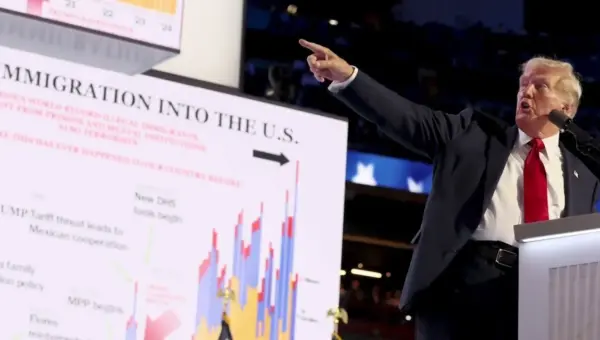
The Trump administration is reportedly advising House Republicans to shift their immigration focus from "mass deportations" to prioritizing the removal of violent criminals. This strategic pivot aims to broaden appeal ahead of the midterm elections, acknowledging past enforcement methods were viewed as overzealous. The move has sparked debate within the GOP, with some accusing the White House of softening its stance.