Trump’s ‘I Don’t Know’ Plea Masks Escalating Mideast Crisis
Donald Trump's "I don't know" response to allegations of a U.S. strike on an Iranian school highlights a concerning lack of accountability and transparency in the escalating Middle East conflict. The analysis questions leadership competence amidst contradictory terminology and rising economic impacts.

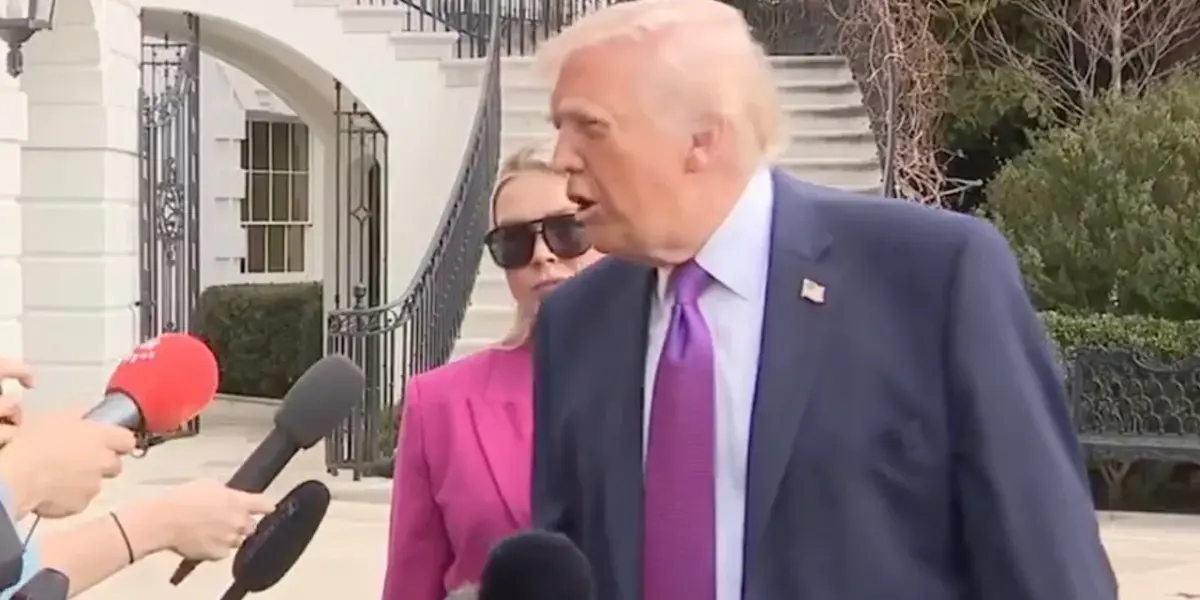
Trump’s ‘I Don’t Know’ Plea Masks Escalating Mideast Crisis
In a moment that has sent ripples of concern through the geopolitical landscape, Donald Trump’s response to a devastating report alleging U.S. responsibility for bombing a school in Iran has been starkly minimalist: “I don’t know about it.” This seemingly simple phrase, delivered in the face of potentially catastrophic allegations, has ignited a firestorm of questions regarding accountability, transparency, and the very nature of the escalating conflict in the Middle East.
A Bombshell Report and a Non-Answer
The core of the controversy lies in a recent report suggesting that the United States military was responsible for a missile strike that hit a girls’ elementary school in Iran. The transcript details harrowing accounts of the attack, where girls aged 7 to 12 were in class when the strike occurred. Parents, arriving in the aftermath, searched for their children amidst the devastation, with initial reports indicating at least 168 children and 14 teachers were killed. Crucially, evidence presented, including freeze-frames of video footage, points to the weapon used being consistent with an American Tomahawk missile, a weapon exclusively operated by the U.S. Navy. Furthermore, Trump administration officials had reportedly informed Congress in a closed-door meeting that the U.S. had been targeting the area where the school was located.
When confronted with this information, and the fact that he was the only figure in his administration claiming Iran had bombed its own school with weaponry it did not possess, Trump’s response was not a defense or an explanation, but a retreat into professed ignorance. The author of the analysis notes the striking absence of any remorse or even a commitment to investigate, likening the response to being asked about a minor traffic incident rather than a potential war crime.
The Emperor Has No Clothes: A Leadership Vacuum?
The analysis posits two interpretations of Trump’s response, both equally troubling. The first is that he genuinely lacks knowledge of such a significant event. This suggests a profound disconnect between the Commander-in-Chief and the operations being conducted under his authority. If the leader of the nation is unaware that U.S. forces may have bombed a school, it raises serious questions about the command structure and operational oversight of the ongoing military engagement. The author wryly observes that this might be the most damning scenario, highlighting a potential abdication of responsibility and awareness.
The second, though not explicitly detailed as an alternative by the author, is that Trump is aware but chooses to feign ignorance. This, too, points to a deliberate avoidance of accountability, a tactic that the analysis suggests is characteristic of a leader more concerned with clinging to power than taking responsibility for its exercise.
Confusion Reigns: War, Incursion, or Excursion?
Adding to the disquiet is the pervasive confusion surrounding the nature of the U.S. military action in Iran. The analysis highlights the contradictory terminology used by the White House itself, with some officials referring to it as a “war” and others as an “incursion” or “excursion.” These terms carry significant legal, constitutional, and transparency implications. A war necessitates a different level of public discourse, congressional oversight, and accountability than a limited military operation.
The author underscores the inconsistency in Trump’s own descriptions of the conflict. Within days, he has described the action as “mostly over” and a “little excursion,” while simultaneously stating it “could take forever” and that the U.S. has the “capability to go far longer than that.” This vacillation, the analysis argues, is not indicative of strategic nuance but of a leader improvising and hoping the news cycle moves too quickly for the contradictions to be noticed. The example of Peter Ducey from Fox News, struggling to reconcile Trump’s differing statements, serves as a microcosm of this broader confusion.
Historical Context and the Obama Analogy
The piece draws a stark parallel to a hypothetical situation involving former President Barack Obama. The author suggests that if Obama had responded with “I don’t know about it” to allegations of U.S. forces bombing a school resulting in over 160 child casualties, the ensuing public outcry, congressional hearings, and media coverage would have been immense – a “five alarm political crisis.” The contrast with the current muted reaction, attributed to partisan loyalty, is presented as a critical indictment of the political environment.
Historically, the U.S. has engaged in military actions in the Middle East with varying degrees of public support and clarity. However, the current situation, characterized by a lack of clear objectives, an undefined duration, and a confused public narrative, stands out. The author implicitly references Trump’s own campaign rhetoric, which often criticized foreign entanglements and promised to bring down energy costs, contrasting it sharply with the current reality of American lives lost, rising oil prices, and an ambiguous conflict.
The Economic Ripple Effect
Beyond the immediate human cost and geopolitical implications, the analysis touches upon the tangible impact on everyday Americans, particularly through rising gas prices. The author points out Trump’s campaign promises to lower energy costs and achieve energy independence. The current surge in gasoline prices, while not solely attributable to presidential policy, is presented as a direct consequence of the instability and uncertainty generated by the conflict in the Middle East. This economic strain adds another layer of concern for citizens trying to navigate the repercussions of an undefined military engagement.
Why This Matters
This situation matters because it encapsulates a profound crisis of leadership and accountability. The “I don’t know” response, coupled with the contradictory messaging and the devastating allegations of civilian casualties, erodes public trust and raises fundamental questions about the competence and ethical grounding of the nation’s highest office. The lack of clarity on the nature and objectives of the military action in Iran leaves citizens in the dark about the purpose for which American lives are being risked and taxpayer money is being spent. Furthermore, the stark partisan disparity in reactions highlights the dangers of tribalism in a democracy, where critical scrutiny can be abandoned in favor of unwavering loyalty, potentially allowing serious transgressions to go unaddressed.
Implications, Trends, and Future Outlook
The implications of this episode are far-reaching. It suggests a dangerous trend towards opacity in foreign policy and a weakening of democratic checks and balances. The reliance on “vibes” and “bravado” over coherent strategy, as described in the analysis, is a recipe for prolonged conflict and unintended consequences. The future outlook is one of continued uncertainty, with the potential for escalation in the Middle East and persistent domestic disillusionment. The author’s concluding challenge to readers to question leaders about the plan, the terminology, the duration, and the rationale behind the conflict, is a call to arms for informed and engaged citizenship. The ease with which definitions are blurred and accountability is evaded in the current political climate is a trend that, if unchecked, could lead to a normalization of executive overreach and a further erosion of democratic norms.
Conclusion: The Chilling Absence of a Plan
The through line connecting the “I don’t know” response, the conflicting definitions of the military action, the contradictory timelines, and the surge in gas prices is, according to the analysis, a complete absence of a plan. The author contends that there is no coherent military strategy, no clear objectives, and no commitment to accountability or transparency. Instead, there is a reliance on performance and rhetoric that plays well in certain media circles. The chilling reality is that while politicians may engage in such performative leadership, it is the lives of service members and innocent civilians, as well as the economic well-being of citizens, that bear the true cost.
Source: OMG: Trump drops BOMBSHELL confession about his new war (YouTube)

Related Articles

Trump’s Rally Unravels: War Justifications, Epstein Files, and Declining Rhetoric
A recent Trump rally in Kentucky exposed a volatile mix of contradictory war justifications, personal attacks, and a focus on political vendettas. The event highlighted concerns over declining rhetorical abilities and the spread of misinformation.

Trump Taps Oil Reserves Amid Iran Conflict, Global Strikes
President Trump has ordered the release of oil from the U.S. Strategic Petroleum Reserves to combat rising gas prices amid escalating conflict with Iran. The move coincides with a coordinated international release of emergency oil supplies as Iran attacks shipping lanes.

Trump’s Iran ‘Word Salad’ Sparks Debate on Foreign Policy
MSNBC hosts Ali Velshi and Stephanie Ruhle analyzed Donald Trump's recent remarks on Iran, characterizing them as "word salad." The discussion also addressed the U.S. national debt and the future direction of the Democratic Party.