Epstein Death Probe: Trump DOJ Faces New Questions on Cover-Up
New revelations and a congressional transparency law are intensifying scrutiny over Jeffrey Epstein's death in federal custody. Allegations of a bungled investigation under the Trump DOJ and withheld documents are fueling skepticism about the official suicide ruling.

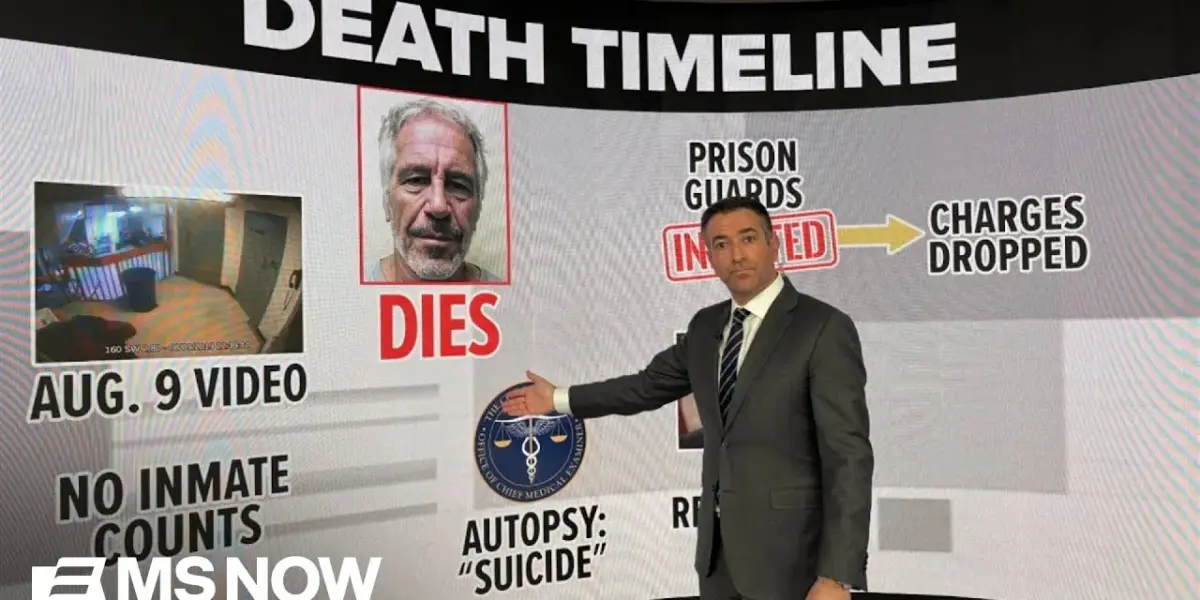
New Law Demands Answers on Epstein’s In-Custody Death
A new transparency law, championed by lawmakers, is forcing a re-examination of the circumstances surrounding Jeffrey Epstein’s death in a federal jail. The legislation demands comprehensive evidence, including incident reports, witness interviews, and medical examiner files, specifically requesting the cause of death. This move signals a significant congressional skepticism towards the official ruling of suicide, a conclusion reached under the Trump-era Justice Department (DOJ).
Allegations of Bungled Investigation and Withheld Documents
The Melber Report, Part 2, has brought to light critical questions regarding the initial investigation into Epstein’s death. Allegations suggest that the Trump DOJ not only declared the death a suicide but also mishandled the crime scene and the subsequent probe. “There’s a lot that’s been wrong with this case from the very first inception to this now embarrassing in-custody death,” the report states, highlighting significant concerns about how a high-profile defendant could die under government care.
Representative Robert Garcia, a leader behind the new transparency law, asserts that the DOJ is still withholding crucial documents related to Epstein’s detention and death. “Absolutely not,” he responded when asked if all requested documents have been provided, adding, “I mean, the DOJ right now, first, they’ve withheld 50 percent of the documents at a minimum.” This lack of full disclosure fuels suspicion about the official narrative surrounding Epstein’s final days.
Timeline of Suspicious Events Leading to Epstein’s Death
The report meticulously traces a timeline of events that raise serious doubts about the suicide ruling:
- July 2019: Epstein is arrested on sex trafficking charges and denied bail.
- July 23rd: Epstein is found in his cell with an orange cloth around his neck. Initially, he tells staff his cellmate attempted to kill him. Later, he retracts this, stating he didn’t know what happened. His cellmate denies the accusation, and another inmate corroborates parts of the story. A preliminary jail probe finds insufficient evidence to conclude an attack. Following this incident, Epstein is placed on suicide watch, which is inexplicably ended after just six days.
- Concerns Over Suicide Watch: The report questions why suicide watch was terminated so quickly if the incident was self-harm, or if it was deemed a potential attack, why wasn’t Epstein afforded greater protection?
- Conflicting Accounts and Protection Money: Epstein reportedly gave conflicting accounts of the July 23rd incident and was allegedly advised to pay protection money to ensure his safety within the jail.
- Cellmate Situation: Despite a recommendation for an appropriate cellmate, the jail transferred Epstein’s new cellmate out and failed to assign a replacement. This left Epstein alone in his cell, a critical failure given recent concerns for his safety.
- August 8th: Two days before his death, Epstein updates his will. While not definitive proof of suicidal intent, the report notes that investigators consider multiple factors, including psychological state, and that a will change could also reflect fear of death from various causes.
- August 9th: Epstein makes a secret, unrecorded, and unsupervised phone call around 7 p.m., claiming he was calling his mother—who had been dead for 15 years. This breach of protocol, allowed by staff, deprived investigators of a potential audio record of his final hours and state of mind. The DOJ report suggests Epstein may have been speaking to a woman he was dating, who told investigators he expressed concern about his safety rather than suicidal thoughts.
- August 10th: Epstein is found dead in his cell, with ripped prison uniforms fashioned into a noose. Crucially, overnight checks, mandated every 30 minutes for inmates in special units, were reportedly not conducted for eight hours.
Failures in the Initial Probe
The investigation into Epstein’s death has been plagued by alleged failures. The report indicates that the Trump DOJ bungled the initial probe, oversaw evidence failures, and that some officers involved were later indicted. Shockingly, fingerprints were not taken in Epstein’s cell after he was found deceased.
Furthermore, the report reveals that the DOJ under Attorney General Merrick Garland “dithered in its probe, minimized key problems.” Most significantly, it is reported that the DOJ “cut an FBI account of a possible sighting of an inmate near Epstein’s cell the night of his death.” This suggests a deliberate omission of potentially crucial information.
“The DOJ right now, first, they’ve withheld 50 percent of the documents at a minimum. I’m not sure if there’s any person in this country that isn’t suspicious, at least somewhat, of the this new timeline of Epstein’s death.”
Broader Implications and Future Scrutiny
The ongoing scrutiny of Epstein’s death raises profound questions about accountability within the federal prison system and the DOJ. The systematic failures and alleged document withholding suggest a potential effort to obscure the truth. The new transparency law represents a significant step towards ensuring that such a high-profile death in custody is thoroughly and honestly investigated.
As Congress continues to demand more information, the focus remains on whether the full truth about Epstein’s death will finally come to light, and who might be held responsible for the failures and potential cover-ups.
Source: Epstein death exposé timeline: Trump DOJ faces new questions (Melber Report, Part 2) (YouTube)

Related Articles


UK Docs Reveal Starmer Knew Epstein Ties Before Envoy Pick
New U.K. government documents reveal Prime Minister Keir Starmer was warned about "reputational risk" concerning Peter Mandelson's ties to Jeffrey Epstein before appointing him as U.S. ambassador. The "Mandelson Files" show Starmer received a checklist detailing Mandelson's extensive connections to the convicted sex offender.

Trump Accuser’s Story Partially Verified by Press
A South Carolina newspaper has confirmed several factual details from an accuser of Donald Trump, including her mother's financial crimes and her own meeting with Jeffrey Epstein. While the core allegations of assault against Trump were not verified, the confirmation of surrounding events lends a degree of factual basis to her account.


Elites Evade Epstein Network Scrutiny, Reed Galen Argues
Wealthy and powerful individuals connected to the Jeffrey Epstein network have strong incentives to avoid full accountability, according to Lincoln Project co-founder Reed Galen. He argues that an 'Epstein Class' exists, using their influence to evade consequences and limit the exposure of the network's full reach.