Bolton: ‘I Would Not Have Started This War Without Regime Change Goal’
John Bolton, former National Security Adviser, asserts that the current military campaign against Iran should not have been initiated without a clear objective of regime change. He criticizes the administration's political strategy and warns against leaving the current ideology in power, albeit wounded.

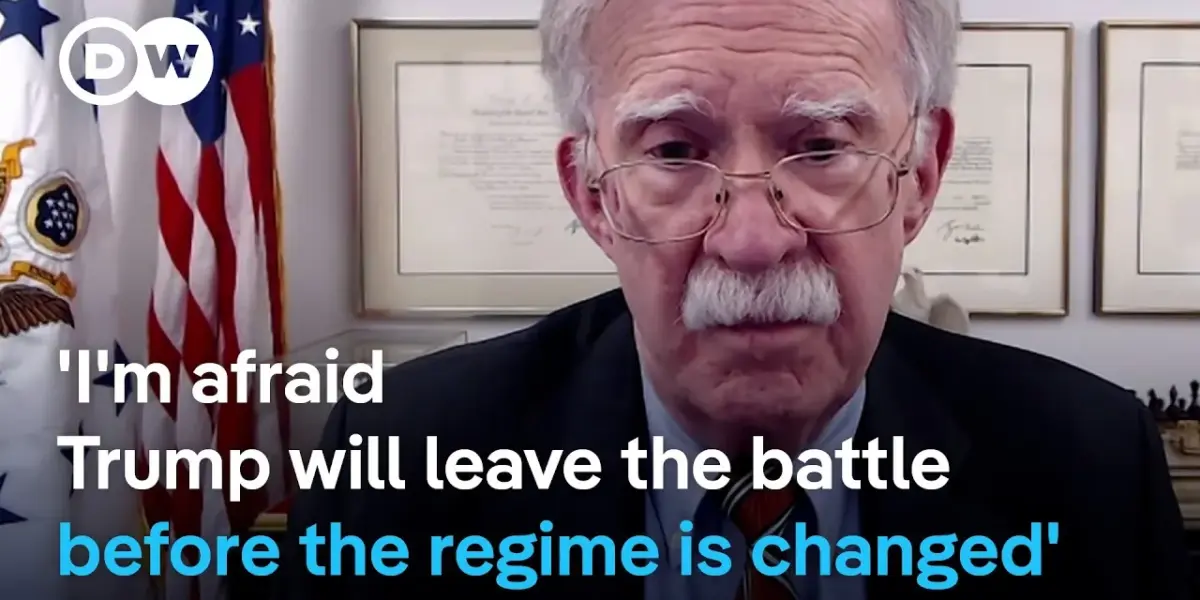
Bolton Criticizes War Strategy, Demands Regime Change in Iran
John Bolton, former US National Security Adviser under the Trump administration and former US Ambassador to the United Nations under George W. Bush, has sharply criticized the current military strategy concerning Iran. Speaking to DW News, Bolton stated emphatically that he would not have initiated the ongoing conflict if the primary objective were not the overthrow of the Iranian regime. He argued that the current approach, while perhaps effective in degrading Iran’s military capabilities, fails to address the fundamental threat posed by the regime itself.
Assessing the Military Campaign and Political Shortcomings
Bolton acknowledged that the military aspects of the campaign have, thus far, proceeded adequately. However, he expressed significant concerns about the political and strategic execution. “I think the political side is not going so well,” Bolton stated, pointing to a lack of preparation and clear articulation of the policy’s objectives to the American public, Congress, and allies. He specifically criticized the administration for not effectively engaging with the Iranian opposition, which he believes is crucial for the success of any regime change effort.
The former National Security Adviser highlighted a recent instance where the White House appeared surprised by rising oil prices following the escalation of conflict in the Persian Gulf. “All I can say is I’m surprised that they’re surprised if they didn’t realize that a war in the region of the world that produces 20% of its oil wouldn’t have an effect on prices,” Bolton remarked. He suggested this surprise indicated a rushed attempt to manage market reactions rather than a sustained strategic vision.
Regime Change as the Only Path to Stability
Bolton has long advocated for regime change in Iran, viewing it as a necessary precondition for long-term peace and stability in the Middle East. He believes the current regime is inherently hostile, driven by an ideology that prevents genuine negotiation and perpetuates conflict. “The problem really ultimately is the regime itself. That’s why it has to go,” he asserted.
He elaborated on the regime’s deep unpopularity within Iran, citing widespread internal dissent and demonstrations. Bolton suggested that the regime is at its weakest point since its inception in 1979, with a significant portion of the population, including young people, women, and ethnic minorities, dissatisfied with their current conditions and seeking an alternative. He believes that the military operations, by demonstrating the regime’s inability to defend itself, should embolden the internal opposition and encourage defections, particularly from the regular army, to facilitate an internal collapse.
“If he wasn’t willing to pursue regime change to its end, Trump never should have started this war.”
Concerns Over a Partial Victory
A central concern for Bolton is the possibility of the conflict concluding without achieving regime change. He warned that a scenario where the current regime remains in power, albeit weakened and potentially seeking revenge, would be detrimental. “I’m very much afraid that Trump will have caused a lot of destruction in Iran but will leave the battle before the regime is changed and that will leave essentially the same ideology in charge – this time wounded and even more desperate to get revenge,” he explained. This, he argued, would prolong the threat and potentially lead to greater instability.
Regional Implications and Diplomacy
Regarding the regional impact, Bolton suggested that Iran’s aggressive actions, including attacks on commercial vessels and its neighbors, have paradoxically strengthened ties between Gulf Arab states, the United States, and Israel. He sees Iran as a primary driver of instability in Iraq, through its support for Shia militias. On the issue of the Kurds, Bolton expressed personal support for an independent Kurdish state, acknowledging their agency in pursuing their aspirations.
When asked about diplomacy, Bolton was unequivocal. He dismissed the possibility of meaningful negotiation with the current Iranian leadership, citing decades of deception on nuclear and ballistic missile programs. “There’s no point in diplomacy with this regime. They have lied and cheated on nuclear matters and ballistic missile matters for 25 years,” he stated, emphasizing that the regime’s ideology precludes constructive engagement.
A Call for Persistence and Resolve
Addressing what advice he would give to President Trump if he were still National Security Adviser, Bolton stressed the need for persistence and patience. “I would have said this at the beginning. I would not have started this war if the objective were not regime change and if we didn’t have the resolve to last until it succeeds,” he declared.
Looking ahead, Bolton expressed concern that the current administration might seek an “off-ramp” prematurely, potentially declaring victory and withdrawing before the fundamental objective of regime change is achieved. He lamented the lack of a clear, sustained public case made by the president for the necessity of such a policy, contrasting it with the need for a strong address from the Oval Office rather than statements made from private residences.
Bolton concluded by reflecting on a broader failure of Western political leadership since the end of the Cold War to fully grasp that the world remains a dangerous place, a sentiment he believes has contributed to challenges in managing current geopolitical threats.
Source: John Bolton: 'I would not have started this war if the objective were not regime change' | DW News (YouTube)

Related Articles

Democrats Force Iran War Debate Amid Secrecy Concerns
Senate Democrats are leveraging the War Powers Resolution to demand public hearings on the ongoing conflict with Iran, citing secretive and contradictory briefings from the Trump administration. Lawmakers argue the war is a "war of choice" lacking clear congressional authorization or coherent public justification.
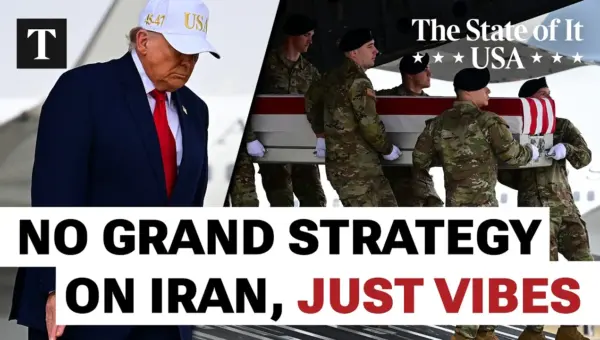
Trump’s Iran War: A Risky Gambit for US Stability?
President Trump's 'Epic Fury' operation against Iran nears two weeks, marked by shifting objectives and public skepticism. The administration's communication strategy and potential diplomatic fallout are raising concerns about long-term U.S. stability and Israel's security.

Trump Touts Economy Amid Iran War Fallout, Oil Prices Surge
President Trump is touting his economic agenda amidst rising oil prices fueled by the Iran conflict. An unprecedented 400 million barrels of oil are being released from strategic reserves to stabilize markets, while the U.S. military reports success against Iranian mine layers. Analysts and former officials question the administration's strategy and preparedness for the economic fallout.