Trump’s Kentucky Remarks: A Recipe for Regional Instability?
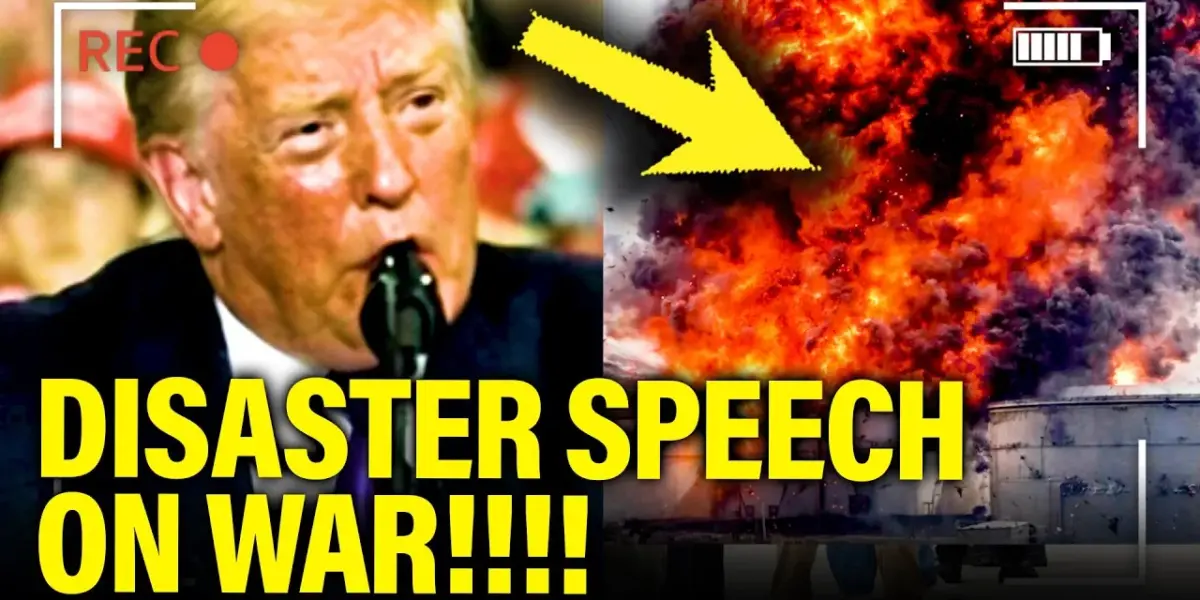
Former President Donald Trump's recent remarks on Iran, delivered in Kentucky, are under fire for allegedly containing "dangerous and fabricated statements." This commentary raises concerns about misinformation impacting foreign policy and regional stability.

Trump’s Kentucky Remarks: A Recipe for Regional Instability?
In a recent address delivered not on the international stage, but amidst the political landscape of Kentucky, former President Donald Trump reportedly made statements regarding Iran that have drawn significant scrutiny. The remarks, as reported by MeidasTouch host Ben Meiselas, are characterized as “disastrous” and containing “dangerous and fabricated statements about his unlawful war against Iran.” While the specific details of these alleged fabrications are not fully elaborated in the provided transcript, the implication is that Trump’s commentary on the complex and volatile relationship between the United States and Iran, delivered in an unexpected domestic setting, has raised concerns about the potential for misinformed or inflammatory rhetoric to shape foreign policy perceptions.
The Setting and the Substance
The choice of venue for such a discussion – Kentucky, a state far removed from the immediate geopolitical flashpoints of the Middle East – is itself noteworthy. It suggests an attempt to connect with a domestic audience on issues that might seem distant, or perhaps to frame foreign policy through a lens that resonates with a particular segment of the American electorate. The accusation of “fabricated statements” about an “unlawful war” points to a significant divergence from established facts or official narratives concerning U.S. policy toward Iran. Without direct quotation or further context from the transcript regarding the specific claims made, it is challenging to dissect the precise nature of the alleged misinformation. However, the framing by MeidasTouch suggests a deliberate attempt to highlight perceived inaccuracies and potential dangers in Trump’s pronouncements.
Historical Context: A Volatile Relationship
The U.S.-Iran relationship has been fraught with tension for decades, dating back to the 1979 Iranian Revolution and the subsequent hostage crisis. This long history of mistrust, punctuated by periods of overt hostility and covert maneuvering, has created a deeply entrenched antagonism. Key moments include the Iran-Iraq War, where the U.S. provided support to Iraq; the U.S. withdrawal from the Joint Comprehensive Plan of Action (JCPOA) in 2018, a move widely condemned by European allies and Iran; and the subsequent imposition of stringent sanctions. The Trump administration’s “maximum pressure” campaign aimed to cripple Iran’s economy and force a renegotiation of the nuclear deal, leading to heightened regional tensions and several near-confrontations, including the drone incident in 2019 and the targeted killing of Qasem Soleimani in 2020. Against this backdrop, any rhetoric, particularly from a former president with a history of assertive foreign policy, carries substantial weight and potential to influence perceptions of risk and engagement.
The Peril of Misinformation in Foreign Policy
The concern articulated by MeidasTouch centers on the potential for misinformation to destabilize already precarious international relations. When political figures, especially those with a significant following, present narratives that deviate from verifiable facts or established diplomatic frameworks, the consequences can be far-reaching. In the context of Iran, where the potential for miscalculation is exceptionally high, such statements could:
- Undermine diplomatic efforts by creating public or governmental distrust.
- Escalate tensions by provoking a reaction from Iran or its allies.
- Mislead the public about the complexities of the situation, hindering informed debate.
- Create an environment where hasty or ill-considered actions are more likely.
The accusation that Trump’s statements pertain to an “unlawful war” is particularly striking. International law and the conduct of warfare are complex, and claims of unlawteness can have significant legal and political ramifications. Whether this refers to past actions, potential future engagements, or the broader framework of U.S. sanctions and pressure campaigns, the assertion suggests a critique of the legal and ethical underpinnings of U.S. policy.
Why This Matters
The implications of such rhetoric, regardless of its factual basis, are profound. Foreign policy decisions, particularly those involving potential military conflict, require a foundation of accurate information and reasoned judgment. When political discourse becomes detached from reality, or when it is deliberately manipulated for domestic political gain, the stakes are exceptionally high. For a region as volatile as the Middle East, and for a relationship as sensitive as that between the U.S. and Iran, the spread of “fabricated statements” can have catastrophic consequences, jeopardizing regional stability and international security. Furthermore, it raises questions about accountability and the role of political leadership in disseminating truthful information, especially on matters of war and peace.
Trends and Future Outlook
The incident highlights a broader trend where foreign policy discussions are increasingly filtered through domestic political lenses, often amplified by social media and partisan news outlets. This can lead to a simplification of complex issues and a reliance on emotionally charged, rather than fact-based, narratives. For the U.S.-Iran relationship, the future remains uncertain. While the Biden administration has sought to re-engage diplomatically, progress has been slow, and tensions persist. The potential for a future administration, perhaps one led by Donald Trump, to revert to a more confrontational stance based on rhetoric that is perceived as factually questionable, remains a significant concern for regional stability and global security. The challenge for policymakers and the public alike is to navigate this landscape, demanding factual accuracy and reasoned discourse in discussions that have profound real-world consequences.
The accuracy and intent behind political statements on foreign policy are crucial. When these statements are alleged to be fabricated, particularly concerning matters of war and international relations, the potential for destabilization and harm increases exponentially.
Source: Trump gives CATASTROPHIC SPEECH on IRAN WAR…in KENTUCKY?!!! (YouTube)

Related Articles

Trump Accuser’s Story Partially Verified by Press
A South Carolina newspaper has confirmed several factual details from an accuser of Donald Trump, including her mother's financial crimes and her own meeting with Jeffrey Epstein. While the core allegations of assault against Trump were not verified, the confirmation of surrounding events lends a degree of factual basis to her account.
Trump Blasts Rep. Thomas Massie as ‘Disaster’ at Kentucky Rally
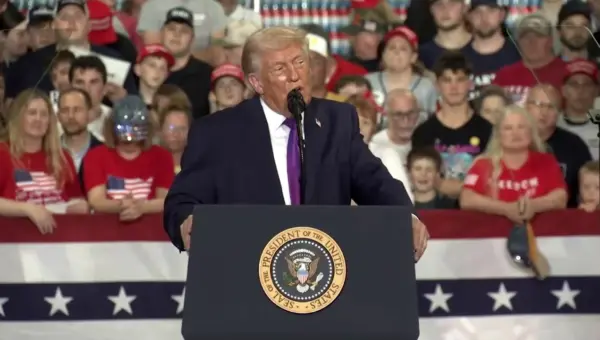
Former President Donald Trump publicly denounced Republican Congressman Thomas Massie as a "disaster" for the party and questioned his character at a rally in Kentucky. Trump's harsh personal attacks contrasted his own electoral success in the state with his critique of the congressman.
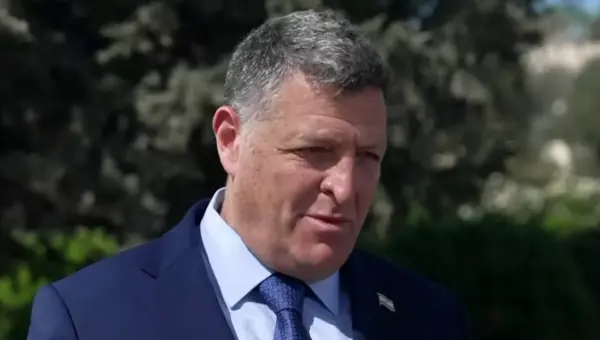
Netanyahu Adviser: Iran Regime’s ‘Moment is Approaching’
A top Israeli adviser to Prime Minister Netanyahu stated that the 'moment is rapidly approaching' for the Iranian people to rise up against their regime. Israel is reportedly intensifying military pressure on Iran while encouraging internal dissent. The adviser also addressed the escalating conflict with Hezbollah in Lebanon, warning of severe consequences if attacks continue.