Google Unveils Nano Banana 2: Image Generation Reaches New Heights
Google's Nano Banana 2 image generation model has arrived, boasting remarkable improvements in realism, subject consistency, and prompt adherence. Tested against industry rivals, it excels in portraiture and complex scene generation, making professional-quality visuals more accessible than ever.

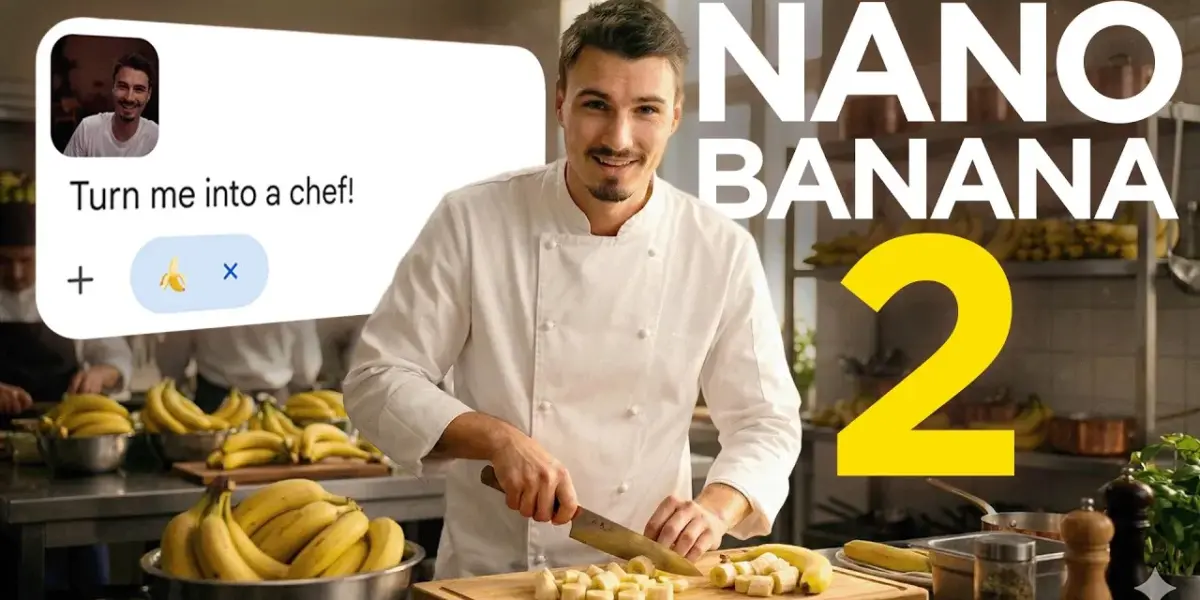
Google’s Nano Banana 2 Elevates AI Image Generation
Google has once again pushed the boundaries of AI image generation with the release of Nano Banana 2. Building on the success of its predecessors, Nano Banana 1 and Nano Banana 1 Pro, which were already considered industry leaders, the new model promises enhanced realism, precision, and creative capabilities. This latest iteration aims to solidify Google’s position at the forefront of visual AI technology.
Testing the Limits: A Comparative Analysis
To assess the advancements, Nano Banana 2 was put to the test against other popular image generation models, including Mourney, Grok, ChatGPT’s image model, Flux 2, and its own predecessor, Nano Banana 1 Pro. The evaluation focused on various categories to highlight the model’s strengths and weaknesses.
Logo Design
In logo generation, Nano Banana 2 performed adequately, though it was not identified as its strongest suit. While it produced acceptable results, other models might offer more specialized or aesthetically pleasing outputs in this niche.
Portrait Photography
The model truly shone in portrait photography. The generated images exhibited a remarkable level of realism, with intricate details like skin textures and pores appearing lifelike. The posing and overall composition were described as near-perfect, surpassing previous benchmarks.
Cinematic Stills and Aerial Photography
Nano Banana 2 also excelled at creating hyper-realistic cinematic stills, offering a neutral and grounded aesthetic that felt like authentic movie frames. In aerial photography, the outputs were highly photorealistic and consistent across various models, though perhaps less groundbreaking than other categories.
Book Covers and Illustrations
The model demonstrated proficiency in graphic design elements, particularly for book covers, producing aesthetically pleasing compositions with well-matched colors. However, it also showed increased caution, refusing prompts for comic strip illustrations due to potential copyright concerns, a common restriction that can sometimes be overcome by re-prompting.
Showcasing Advanced Capabilities
Google’s launch blog post highlighted several advanced features of Nano Banana 2, which were then put to the test by replicating the prompts. These included:
- Handmade Style Infographics: The model demonstrated an impressive ability to generate complex infographics in a collage or scrapbooking style. While direct replication of blog post examples showed some variation, the generated images were still highly creative and visually appealing, suitable for engaging social media content.
- Cartoony Infographics with Flawless Text: Generating an infographic about cloud types, Nano Banana 2 produced detailed visuals with remarkably accurate text. This marks a significant improvement in text generation within images, a persistent challenge for AI models. The accuracy was noted to have improved from around 95% to near 100%.
- Enhanced Visual Fidelity: Google claims upgraded visual fidelity, including more vibrant lighting, richer textures, and sharper details. Subjective assessments suggest these improvements are noticeable, contributing to a higher overall aesthetic quality.
Subject Consistency and Prompt Adherence: Game Changers
Perhaps the most impactful upgrades are in subject consistency and prompt adherence. This means the AI can maintain the likeness of a character or object across multiple generations and precisely follow complex instructions.
Live Testing: Bobblehead Consistency
In a live demonstration, a user’s bobblehead figurine was generated and then placed into various scenes, including the Oval Office with the US President and an astronaut on Mars. The model impressively maintained the figurine’s likeness across these diverse scenarios, a significant leap from previous models where consistency was rated much lower.
Handling Multiple Objects and Detailed Prompts
Nano Banana 2 reportedly handles up to 14 consistently placed objects. A complex prompt involving five bobblehead figurines (including the user’s, a penguin, cat, turtle, and lion) in a beach scene, with specific instructions for accessories (sunglasses, a drink), actions (reading, playing volleyball), and environmental details, was executed with remarkable accuracy. The model successfully incorporated sunglasses on all but the penguin, gave the penguin a drink, had the turtle sunbathing with a book, and depicted the cat and lion playing volleyball, all while maintaining character details like the cat’s hat and the penguin’s bow tie.
Editing and Formatting Capabilities
The model also showed flexibility in editing generated images. While direct edits to fix minor inconsistencies (like a slightly different turtle) were not always successful, the format could be easily adjusted, for instance, to fit an Instagram story. This highlights the practical utility for content creators.
Prompt Adherence: Precision is Key
The enhanced prompt adherence means every word in the prompt matters. Users need to be precise in their language to achieve the desired results. This precision is crucial for leveraging the model’s full potential.
Creative Applications: Anime Style and Handwriting Replication
Further demonstrating its versatility, Nano Banana 2 was used to:
- Generate Anime Style Panoramas: An anime-style panorama of Midtown Manhattan was created from a Google Maps image, offering a visually appealing interpretation of the location.
- Replicate Handwriting: The model showed a strong ability to replicate handwriting for tasks like thank-you notes. While not a perfect match for every individual’s handwriting, it produced convincing results that closely mimicked the style and color, making it highly useful for creating personalized digital content.
Why This Matters
The advancements in Nano Banana 2, particularly in subject consistency and prompt adherence, significantly lower the barrier to entry for creating professional-quality visual content. This has profound implications for various industries:
- E-commerce: Businesses can generate consistent product shots and lifestyle images without expensive photoshoots or complex editing workflows.
- Marketing and Social Media: Content creators can produce unique and engaging visuals, tell stories with consistent characters, and experiment with diverse styles more easily.
- Design: Designers can rapidly prototype concepts, generate assets for presentations, and explore creative directions with greater efficiency.
- Personal Use: Individuals can create personalized digital art, invitations, or other custom graphics with unprecedented ease.
Availability and Pricing
Nano Banana 2 is integrated into Google’s Gemini platform. It is available on a free plan, with enhanced features and potentially higher usage limits on paid tiers, such as the $20/month plan (which may be available for $10). This accessibility ensures that a wide range of users can explore and benefit from its powerful capabilities.
Conclusion
Nano Banana 2 represents a significant leap forward in AI image generation. Its enhanced realism, precision, and groundbreaking consistency in subject matter and prompt following open up a new realm of creative possibilities. While some restrictions remain, the overall improvements make it an invaluable tool for professionals and hobbyists alike.
Source: Nano Banana 2 is Here! Full Review & Testing Results (YouTube)

Related Articles
AI Bots Now Conduct Job Interviews: A Review
AI bots are conducting job interviews, promising efficiency and reduced bias. My experience with platforms like Humanly, CodeSignal, and Eightfold reveals a mixed bag of advanced technology and deep ethical concerns about bias and transparency.
Mark Cuban Urges Students to Embrace AI for Learning and Innovation
Mark Cuban is urging students to view AI as a powerful learning tool, not a shortcut, amidst rising concerns about its use in schools. Pew research indicates over half of teens use AI for homework, sparking debates on cheating and the future of work. Cuban believes adaptation and learning to work alongside AI will lead to a net gain in opportunities.

Ex-OpenAI Researcher Launches Auto-Researcher AI
Andrej Karpathy, an influential ex-OpenAI and Tesla researcher, has launched an open-source AI tool designed for autonomous machine learning research. The 'auto-researcher' aims to enable AI systems to improve themselves, sparking discussions about accelerating AI development and the potential for an 'intelligence explosion.'