Americans Stay Put in Lebanon Amidst Escalating Conflict
Despite U.S. government warnings, some American citizens are choosing to remain in Lebanon amidst escalating conflict and rising casualties. Decades-long residents cite deep connections to the country, finding strength in faith and solidarity with the Lebanese community.


Americans Choose Resilience Amidst Lebanon War
BEIRUT – In the heart of a conflict zone, where government advisories urge evacuation and danger looms large, a small but determined group of American citizens are choosing to remain in Lebanon. Virginia Sadler Shatila, an American retiree who has lived in Beirut for decades, exemplifies this choice, defying U.S. government calls to leave the country while commercial flights were still available. Her decision reflects a deep-seated connection to Lebanon, forged through years of residency and past conflicts.
A Home Forged in Conflict
“In 2006, we had an Israeli invasion and we had Canadian, French and American ships for evacuees. I didn’t leave then, and I’m not leaving now,” Shatila stated, drawing parallels to previous periods of intense unrest. Despite the pleas of her family in Washington D.C. to return to the United States, Beirut has become her home. When questioned about her allegiance, she affirmed, “I will always be American. Always. And even now, in these political times, I don’t want to speak against my own government, which I’m not very happy about. I’ll leave it at that.” Her sentiment highlights a complex identity, one that embraces both her American nationality and her profound connection to her adopted homeland.
Escalating Violence and Civilian Displacement
The decision to stay comes as the conflict intensifies, with a rapidly rising death toll and widespread displacement. Government officials report that over 700,000 people are now displaced within Lebanon, a nation of just 6 million. Israeli airstrikes, once concentrated in specific areas, have begun to hit closer to the heart of the capital, Beirut. These strikes, which have targeted areas not previously affected, are causing increased panic among residents.
Targeted Strikes and Shifting Dynamics
While many strikes have focused on a particular suburb, Israel has also conducted precision strikes within the city itself. One such strike hit the fifth floor of the Ramada Hotel, with Israel stating it was targeting commanders of Iran’s Revolutionary Guard Corps (IRGC). This follows similar strikes on other hotels days earlier. These actions are particularly concerning as Lebanon lacks the air raid sirens and widespread bunker systems found in neighboring Israel, leaving its population more vulnerable.
The IRGC’s Growing Influence
Experts observe a significant shift in the military landscape following the death of Hassan Nasrallah, the former leader of Hezbollah. Members of the IRGC, Iran’s elite military force, have reportedly stepped in to fill the void, actively micromanaging the military arm of Hezbollah. “We saw members of the IRGC micromanaging, particularly the military arm of Hezbollah. So they’ve revised the entire military doctrine. They’ve been training them. They’ve been working with them,” noted one analyst. This increased Iranian involvement signals a deepening of ties and a potential escalation of the conflict’s regional dimensions.
Lebanese Government’s Stance and Uncertain Future
In a potentially seismic shift in Lebanese politics, the Lebanese government has adopted a firmer stance against Hezbollah, even calling for direct talks with Israel to establish permanent security arrangements aimed at containing the militant group. However, Israel has yet to respond to this proposal as it continues to exchange fire with Hezbollah. Concerns are mounting among many that Israel may use the current situation as an opportunity to advance further into Lebanon without a full commitment to retreat, further destabilizing the region.
Faith and Resilience in Beirut
Back at Beirut’s All Saints Church, the dwindling community of expatriates and locals finds solace and strength in their shared faith. Years of conflict and hardship have tested their resolve, but not their spirit. “We are resilient, and I consider myself one of the Lebanese as well. I am American, yes, I am, but I am with the Lebanese community and I want to stand and say we are,” expressed one congregant, echoing Shatila’s sentiment of solidarity and resilience in the face of adversity.
Looking Ahead
The coming weeks will be critical in determining the trajectory of the conflict and the safety of all residents, including the Americans who have chosen to stay. The international community will be watching closely to see if diplomatic channels can be opened and if the Lebanese government’s call for dialogue gains traction. The resilience demonstrated by individuals like Virginia Sadler Shatila underscores the deep human connections that persist even in the most challenging circumstances, but the escalating violence and regional implications present a precarious future for Lebanon.
Source: Some Americans choose to stay in Lebanon despite the war (YouTube)

Related Articles


Iran Faces ‘Most Intense Day of Strikes’ as US War Strategy Debated
The United States declared today the 'most intense day of strikes' inside Iran, targeting missile launchers amid escalating regional conflict. While U.S. officials report reduced Iranian launches, the war has led to significant hospitalizations in Israel and a humanitarian crisis in Lebanon. Diplomatic channels appear closed, and economic concerns, particularly rising oil prices, are mounting.
Hezbollah Fuels Lebanon’s Descent into Wider Iran-Israel Conflict
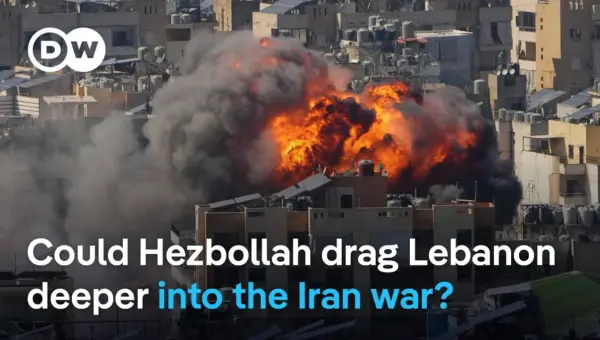
Lebanon is being drawn into the wider Iran-Israel conflict, with hundreds killed and over half a million displaced by recent Israeli strikes targeting Hezbollah. The Lebanese president has accused Hezbollah of jeopardizing the nation's stability, while the militant group vows to defend its existence.

Israel Strikes Beirut Suburbs, Escalating Regional Tensions
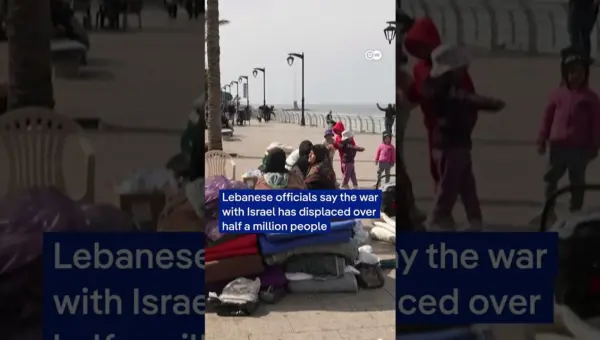
Israel has renewed airstrikes on Beirut's southern suburbs, targeting financial institutions linked to Hezbollah. This escalation follows Hezbollah's retaliatory attacks on Israel after the killing of Iranian Supreme Leader Ayatollah Ali Khamenei.