President’s Iran Bombing Claim Sparks Fierce Media Scrutiny
A journalist's direct challenge to the President's claim about Iran bombing its own school with a Tomahawk missile exposes a potential pattern of misinformation. The analysis explores the implications for international trust, domestic impact, and the crucial role of independent media in seeking truth.

President’s Iran Bombing Claim Sparks Fierce Media Scrutiny
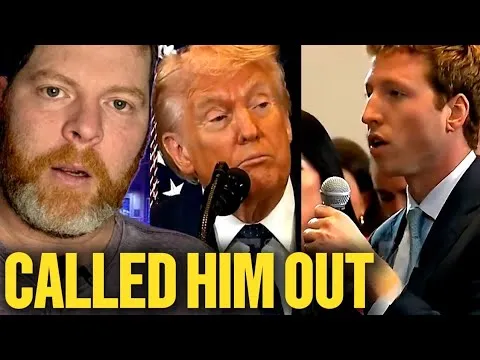
In a moment that highlights the often-fraught relationship between political power and journalistic integrity, a direct confrontation between a journalist and the President has brought a critical issue to the forefront: the dissemination of potentially false or misleading information regarding international conflict. The exchange, captured in a recent video, centers on the President’s assertion that Iran was responsible for bombing its own elementary school with a Tomahawk missile on the first day of a war. This claim, however, stands in stark contrast to information available from other sources, including the President’s own defense secretary, and has led to intense scrutiny of the administration’s communication strategies.
Challenging the Narrative
The core of the controversy lies in a journalist’s pointed question to the President: “President, you just suggested that Iran somehow got its hands on a Tomahawk and bombed its own elementary school on the first day of the war. But you’re the only person in your government saying this. Even your defense secretary wouldn’t say that when he was asked standing over your shoulder on your plane on Saturday. Why are you the only person saying this?” This question directly challenges the President’s singular assertion and probes the lack of corroboration within his own administration. The President’s response, “Because I just don’t know enough about it. I think it’s something that I was told is under investigation, but tomahawks are are used by others as you know. Uh numerous other nations have tomahawks. They buy them from us. Uh but I will certainly whatever the report shows, I’m willing to live with that report,” deflects direct responsibility and highlights a potential lack of concrete evidence supporting his initial statement.
The journalist, however, pressed further, stating, “No, all the reports have already shown that it was the US that fired it. And the fact that it’s a Tomahawk missile, that’s actually what it was. Um that that pretty much seals that fact.” This directly contradicts the President’s insinuation and points to a potential war crime committed by the United States, resulting in the deaths of nearly 160 young schoolgirls. The transcript suggests a pattern of behavior from the administration, characterized as playing “very loose with the facts” and presenting “complete lies to obfuscate and try to push off any kind of blame or accountability for their actions.”
The Human Cost and International Reaction
The analysis extends beyond the immediate factual dispute to consider the broader implications of such alleged actions and the potential public reaction. The journalist poses a hypothetical to the American audience: how would the United States react if another nation bombed an American elementary school, killing 160 children? The response is unequivocal: “There’s no way we can win this. Or would we dig in? Would we it be people in the mountains screaming wolverines and getting ready for red dawn? That’s exactly what would happen.” This rhetorical question underscores the likely escalation and outrage that would follow such an event, contrasting it with the perceived expectation for other nations to de-escalate in the face of American military threats.
The piece argues that expecting other nations to “cow to the threats of military actions” that they have been preparing for decades is illogical, especially when compounded by religious fanaticism. This leads to a more defiant population, a situation the analysis suggests is currently unfolding in the Middle East. The commentary also touches upon calls from figures like Lindsey Graham for Gulf nations to intervene militarily against Iran, a sentiment that the analysis suggests is not shared by those who understand the global ramifications of regional chaos.
Reputation, Deception, and Domestic Impact
A central theme is the administration’s alleged focus on reputation, which, according to the analysis, drives the willingness to propagate “obvious lies about an atrocity, a war crime that they have committed.” This is juxtaposed with the administration’s portrayal of the U.S. as a benevolent actor. The piece criticizes the administration’s narrative, suggesting it aims to paint America as a force for good, a narrative that resonates with a segment of the population but is seen as disingenuous by the rest of the world and a significant portion of Americans.
The analysis points to a perceived lack of effective opposition within the United States, particularly from Republicans in Congress, who are accused of yielding to the demands of those in power rather than representing their constituents’ interests. The economic impact on ordinary Americans is also highlighted, with the transcript referencing the decline of industries, factory closures, and job losses in small towns, many of which voted for the current administration. This economic hardship is linked to the cost of military actions and the resulting global instability, such as the closure of the Strait of Hormuz and the funding of Middle Eastern campaigns.
The Role of Independent Media and Public Awareness
The transcript emphasizes the crucial role of independent media in countering what it describes as a pervasive environment of lies and misinformation. It argues that independent outlets are often the only places where factual reporting can be found, even if it carries a bias. The piece urges viewers to actively share such content to counteract its suppression by mainstream media and to foster greater public awareness and activism.
The analysis concludes by highlighting the tangible effects of these policies on everyday Americans, citing increased gas prices and local government budget cuts leading to job losses in Ohio. The author encourages a broader discussion about how these issues are affecting communities across the nation, fostering a sense of shared experience and collective concern. The underlying message is a call for resilience and active opposition to policies that are seen as detrimental to both domestic well-being and international stability, particularly when driven by deception and a disregard for truth.
Why This Matters
This situation underscores the critical importance of journalistic accountability and the public’s right to accurate information, especially concerning matters of war and foreign policy. When a nation’s leadership is perceived to be deliberately misrepresenting facts, particularly regarding alleged war crimes and their human cost, it erodes trust both domestically and internationally. The analysis suggests a dangerous disconnect between the administration’s narrative and the reality on the ground, with potentially severe consequences for global stability and the well-being of ordinary citizens.
Implications, Trends, and Future Outlook
The implications of such alleged deception are far-reaching. They can lead to increased geopolitical tensions, a loss of international credibility, and the potential for prolonged or escalated conflicts. The trend toward greater polarization, where factual reporting is dismissed by segments of the population, further exacerbates the problem. The future outlook suggests a continued struggle for truth in the public sphere, with independent media playing an increasingly vital role in challenging official narratives. The economic repercussions for citizens, tied to military spending and geopolitical instability, are also a growing concern.
Historical Context and Background
Throughout history, governments have at times been accused of manipulating information to garner public support for military actions or to deflect blame. The use of propaganda, the suppression of dissenting voices, and the framing of events to suit a particular agenda are recurring themes in international relations. The current situation, as presented in the transcript, echoes these historical patterns, raising questions about the ethical responsibilities of leadership and the media’s role in holding power accountable. The mention of the U.S. preparing for conflict for 40 years also hints at long-standing foreign policy objectives and the potential for entrenched interests to influence decision-making.
Source: Trump Panics as Journalist Exposes the Iran School Bombing (YouTube)

Related Articles
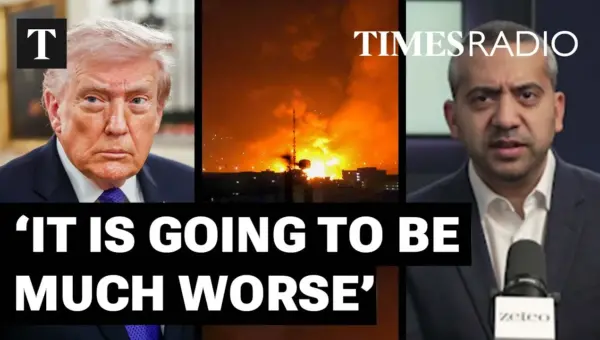
Trump’s Iran War Lacks Plan, Exit Strategy, Analyst Warns
Mehdi Hasan criticizes the Trump administration's military strikes in Iran, labeling the war as lacking a clear plan and exit strategy. He questions the justifications provided, highlighting conflicting narratives and the potential for increased terrorism.
Senator: Trump Adheres to War Powers Act Amid Iran Conflict
Senator Roger Marshall stated that President Trump has followed the War Powers Act "to the letter" amid the ongoing conflict with Iran. He also discussed the inevitability of a supplemental military funding bill and the stalled Save America Act, emphasizing the importance of election integrity.

US War with Iran Ignites: Escalation Looms Amidst Uncertainty
The war against Iran, now in its eleventh day, is escalating with US forces targeting key locations. The discussion of potential ground troop deployment and even nuclear weapons raises grave concerns about the future of the conflict and regional stability.