Trump’s Iran War Lacks Plan, Exit Strategy, Analyst Warns
Mehdi Hasan criticizes the Trump administration's military strikes in Iran, labeling the war as lacking a clear plan and exit strategy. He questions the justifications provided, highlighting conflicting narratives and the potential for increased terrorism.

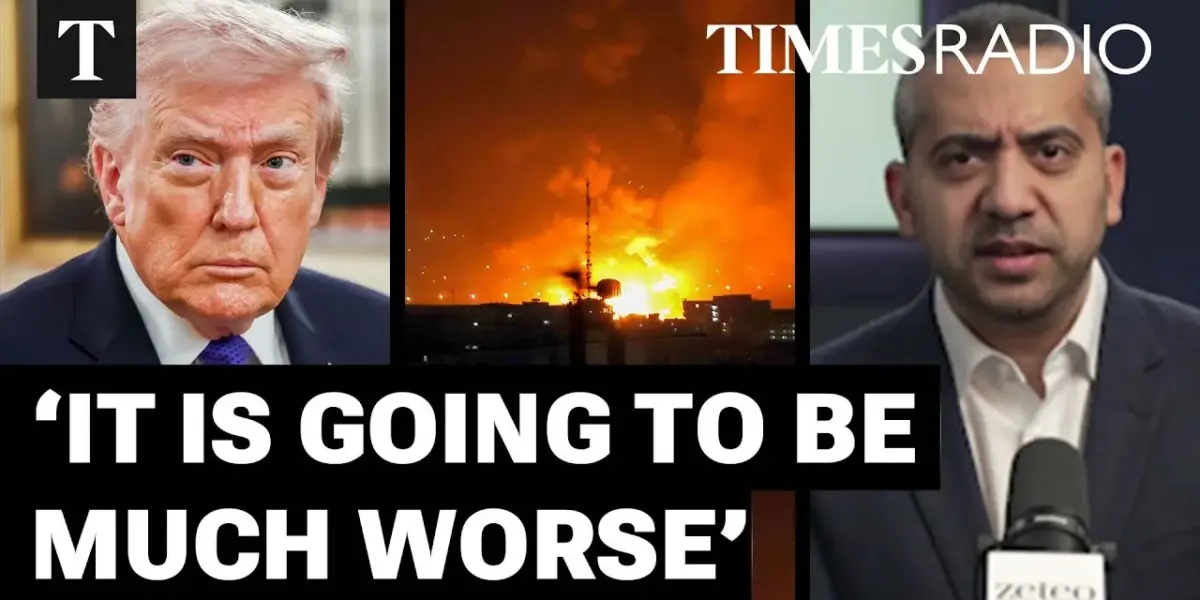
US Military Action Against Iran Deemed Unjustified and Reckless
A week after the initial U.S. military strikes in Iran, the objectives and rationale behind the operation remain unclear, with conflicting narratives emerging from the Trump administration. President Trump has asserted that Iran was poised to attack the United States, stating, “The situation was very quickly approaching the point of no return and the United States found it intolerable… I thought they had in mind to attack us.” However, broadcaster and founder of Zeteo, Mehdi Hasan, argues that the war lacks a coherent plan and an exit strategy, a sentiment shared by a significant portion of the American public, including some Republicans, as well as the British government and public.
Dubious Justifications for Escalation
Hasan challenges the administration’s justification for the strikes, pointing to statements made by Secretary of State Mike Pompeo. Pompeo, when questioned about an imminent threat, suggested that the U.S. acted preemptively because Israel was planning an attack on Iran, and they feared Iran would retaliate against American interests. “That is what the Americans define as an imminent threat. A rather ridiculous answer,” Hasan stated, questioning why the U.S. didn’t simply dissuade Israel from an illegal attack.
Further complicating the narrative, Hasan highlighted that the day before the U.S. strikes, Iran was reportedly negotiating in good faith with the Trump administration through Omani intermediaries. The Omani foreign minister confirmed that Iran had agreed to Trump’s demands. This occurred despite the U.S. having previously withdrawn from the Obama-era nuclear deal, which experts had deemed effective in managing Iran’s nuclear program for at least a decade.
Israel’s Role and Regional Instability
The influence of Israeli Prime Minister Benjamin Netanyahu in pushing for conflict is also a significant point of contention. Hasan noted Netanyahu’s long-held desire for war with Iran, suggesting that Donald Trump is the first U.S. president to heed this call. He cited Senator Lindsey Graham’s admission of coaching Netanyahu on how to engage Trump in this pursuit.
Hasan also critically examined the notion of Iran posing a significant threat to the region. He pointed to the International Atomic Energy Agency’s (IAEA) stance, which disputes claims of an active Iranian nuclear weapons program. Conversely, he highlighted Israel’s ongoing military actions in the region, including bombings in Lebanon that have resulted in civilian casualties, including children. “Which country in the region, John, has nuclear weapons? It’s not Iran, but it’s another country that starts with I,” Hasan remarked, referring to Israel.
“The one good thing about this administration is they often say the quiet part out loud.” –
Mehdi Hasan
Addressing Threats: Diplomacy Over Warfare
While acknowledging that Iran does support certain groups and individuals involved in regional and international threats, Hasan argued that the majority of Islamist jihadist terror threats in the West, such as those from Al-Qaeda and ISIS, are not backed by Iran. He posited that the current military action is more likely to increase, rather than decrease, the threat of terrorism, citing increased chatter and intelligence warnings of potential retaliatory attacks.
Hasan drew parallels to the 2003 Iraq War, where warnings of increased terrorist threats were ignored, leading to devastating consequences. He expressed concern that the current conflict could similarly lead to blowback and make citizens less safe, not more.
A President Acting Without Restraint
Regarding President Trump’s decision-making process, Hasan expressed bewilderment. He noted that Trump campaigned on an anti-war platform, attracting voters who sought to avoid foreign entanglements. Yet, upon entering office, he has engaged in military actions in multiple countries.
Hasan characterized Trump’s approach as erratic and lacking strategic foresight. “He behaves kind of like a mob boss, even in relation to allies like the UK and Canada,” he observed. He suggested that Trump doesn’t appear to be constrained by public opinion, economic factors, or the potential for prolonged conflict, stating, “He’s, he’s he’s simply uh doing what he wants to do, as is so often the case.”
Lack of Planning and International Law
The core of Hasan’s critique lies in the administration’s apparent lack of planning and disregard for international law. He contrasted Trump’s swift, unilateral decision-making with the more debated processes under previous administrations, even those with controversial policies. “Trump just did this overnight with no discussion, no debate, no justification, and no exit plan,” Hasan asserted.
He also pointed to the administration’s own apparent disorganization, citing reports that they had intended to negotiate with specific Iranian leaders after the killing of Qasem Soleimani, only to have accidentally killed those same individuals. “That’s how incompetent this government is,” he stated.
Damaging the Special Relationship and International Order
Hasan expressed concern about the damage inflicted upon international norms and alliances, particularly the U.S.-UK “special relationship.” He argued that the focus should be on the broader implications of Trump’s actions on the international community and the need for countries like the UK, Canada, and France to collectively address actions that undermine international law.
Future Uncertainty and the Path Forward
Looking ahead, Hasan remains pessimistic about the current administration’s ability to positively influence the future of Iran or the region. He believes the war has likely exacerbated existing grievances and will lead to a more dangerous and anti-Western Iran. The lack of a clear strategy or exit plan suggests a continued period of uncertainty and potential escalation.
Source: Trump’s Iran War Has ‘No Plan And No Exit Strategy’ | Mehdi Hasan (YouTube)

Related Articles

Trump Pushes SAVE Act: Democrats Call It ‘Let Them Eat Cake’ Moment
Former President Donald Trump has made the SAVE Act his top legislative priority, asserting it will guarantee Republican midterm victories. However, Democratic strategists decry the act as voter disenfranchisement, comparing it to a 'let them eat cake' moment disconnected from the struggles of ordinary Americans.

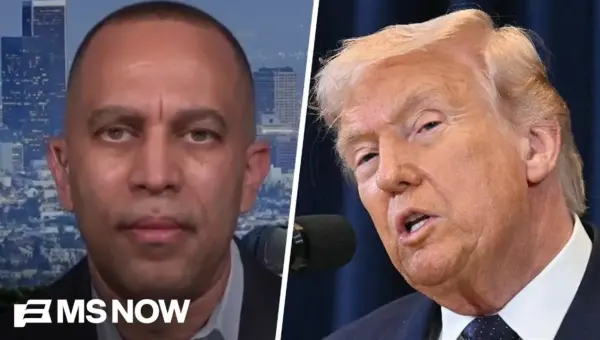
Jeffries Slams Trump’s Billions Spent on Iran War
House Minority Leader Hakeem Jeffries criticizes President Trump for spending billions on the Iran conflict while ignoring domestic affordability issues. Democrats are poised to scrutinize any requests for additional war funding, emphasizing the administration's lack of a clear strategy and exit plan.
US Redefines Iran War Goals Amid Rising Casualties, Oil Fears
The White House is redefining President Trump's 'unconditional surrender' demand from Iran as U.S. military strikes intensify and casualties rise. Amidst volatile oil prices and conflicting messages on the war's duration, questions linger about the administration's ultimate goals and the escalating regional tensions.