Senator: Trump Adheres to War Powers Act Amid Iran Conflict
Senator Roger Marshall stated that President Trump has followed the War Powers Act "to the letter" amid the ongoing conflict with Iran. He also discussed the inevitability of a supplemental military funding bill and the stalled Save America Act, emphasizing the importance of election integrity.

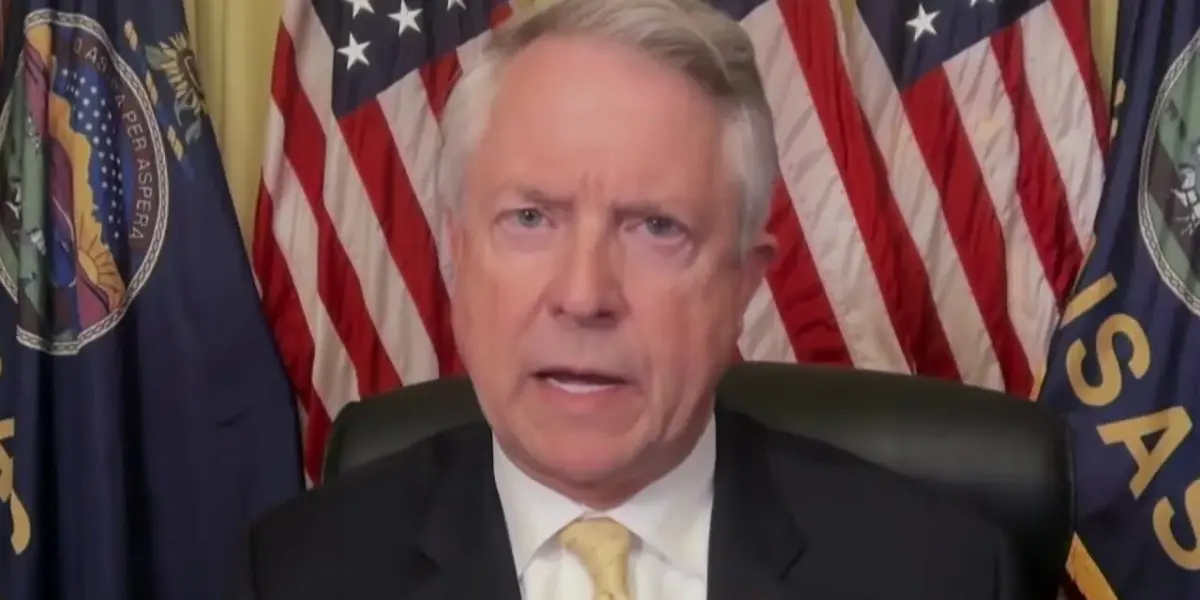
Johnson: Supplemental Military Funding Bill ‘Inevitable’ Amid Iran Conflict
The ongoing military engagement with Iran has prompted House Speaker Mike Johnson to state that a supplemental funding bill for the military is “inevitable.” Speaking on Monday, Johnson indicated that such a bill was anticipated even before the recent operations against Iran began, though the precise timeline for its passage remains undetermined.
However, securing bipartisan support in the Senate for any supplemental funding measure presents a significant hurdle, with Democratic votes appearing uncertain. In response to the escalating situation, Senate Minority Leader Chuck Schumer has called for public hearings, demanding transparency from the administration.
“Donald Trump, Pete Hegseth and Marco Rubio owe the American people some answers. The administration needs to come before Congress and testify in public hearings under oath as to why our troops are fighting and dying in the Middle East.”
Senator Marshall Defends Administration’s Actions, Cites War Powers Act Compliance
Senator Roger Marshall of Kansas, a Republican, joined the discussion, addressing the administration’s objectives and adherence to legal frameworks. Responding to questions about the duration of the conflict, Senator Marshall clarified the President’s stance.
“I think the President’s been very clear from the beginning what our goals were here,” Marshall stated. “So it’s going to be over with when we have annihilated Iran’s missile systems, their nukes, their navy, and they’re unable to fund or arm terrorists.” He noted that the initial 4-to-6-week timeline for key objectives is ahead of schedule, with Iran’s firing power reportedly reduced by over 90%.
When pressed about the need for Congressional authorization to continue military operations beyond the initial phase, Senator Marshall pointed to the War Powers Act.
“You know, I think the War Powers Act is very clear that it gives the President about 60 days of leeway, and the President has followed the law to the letter that he notified Congress within 48 hours. And now he has this 60 day time period, really, to protect Americans that he’s constitutionally called to protect Americans. But Congress has the right to recall this situation as well.”
Marshall highlighted that a previous attempt by Democrats to challenge the operation did not succeed and expressed surprise at the current political landscape.
“To me, it’s really interesting that the only one really supporting Iran right now, it’s not China, it’s not Russia, it’s the Democrats,” he remarked.
Debate Over War Powers Act and Potential Ground Troops
The conversation touched upon the differing views on the War Powers Act, with the interviewer noting Vice President J.D. Vance’s description of the act as “fundamentally fake and unconstitutional.” Senator Marshall acknowledged that he could not predict the administration’s actions as the 60-day limit approaches but emphasized Congress’s inherent powers to act.
The possibility of deploying ground troops into Iran was also discussed. While the President and Defense Secretary have not ruled out this option, reporting suggested discussions about sending special forces to secure Iran’s enriched uranium. Senator Marshall expressed a personal aversion to war, citing his family’s military service, but stopped short of making specific commitments.
“I certainly don’t want to take anything off the table. But I want to be real clear is that I hate war. Okay, I served my dad served. My brother served. My son is serving. And we hate war. But unfortunately, the price of freedom is not free. And I’m grateful to the the soldiers. The airmen and women are able they’re out there defending our nation right now. I would want to get real specific, say what I would and wouldn’t do, but I certainly hope and pray that this war will be over very soon and that we’ll never have any boots on the ground.”
Sanctions Relief and Geopolitical Maneuvering
The discussion shifted to the administration’s potential lifting of oil-related sanctions against Russia, a move that followed a phone call between President Trump and Vladimir Putin. Senator Marshall voiced his support for this action, framing it as a strategic use of tariffs.
“I do. And here here’s a great use of the tariffs by President Trump,” Marshall said. “President Trump used the tariffs to get a first time ever done deal done with India. And he also, on a geopolitical scale, got India to agree to not buy any further oil from Russia.” He connected this to the current geopolitical climate, noting that the conflict in the Middle East and surging oil prices necessitate such adjustments.
Stalemate Over Save America Act and Election Integrity
The conversation then focused on the stalled Save America Act in the Senate. Senate Majority Leader John Thune indicated a lack of sufficient votes to advance the bill, a situation Senator Marshall attributed to Democratic opposition.
“I think the real issue we should be talking about is why ten Democrats won’t come across the aisle and support this Save Act, because 70% of Democrats support some type of voter ID,” Marshall argued. He expressed surprise that Democrats are not supporting voter identification measures, which he believes are crucial for election integrity and the foundation of a free democracy.
Marshall advocated for focusing on the core provisions of the Save Act: requiring voter IDs, proof of citizenship, and limits on mail-in ballots. He suggested that taking up the House-passed version and allowing amendment votes could be a more feasible path forward.
Regarding President Trump’s desire to add further stipulations to the Save America Act, Senator Marshall acknowledged that complexity increases with additional provisions.
“The more you add, the more you add to any bill, the more complicated it is. You’ll gain a couple. You’ll lose a couple. My advice is to take what the House has done and take take that up. Stay focused on these three issues, and then take amendment votes on those other ones and see what happens.”
He reiterated his surprise at the lack of Democratic support for voter ID, questioning why national media is not holding them accountable.
President’s Remarks on Election Impact
Addressing President Trump’s statement that Democrats might not win an election for 50 years if the bill passes, Senator Marshall stated he was unaware of the specific context but urged Democrats to support measures they believe in.
“If the Democrats have nothing to fear, they should come forward. Let’s stay focused on what we can, what we can control,” Marshall advised. “I can’t control all the things that the President says, but we can control that. Democrats are denying their own party when 70% of their constituents believe in voter ID. That’s the real issue here.”
Looking Ahead
As the conflict with Iran continues and legislative debates over military funding and election integrity measures persist, attention will be on the administration’s next steps regarding the War Powers Act deadline. The ability of Congress to bridge partisan divides on both national security funding and electoral reforms will be critical in the coming weeks and months.
Source: Trump has followed War Powers Act ‘to the letter' amid war with Iran: Sen. Marshall (YouTube)

Related Articles


US War with Iran Ignites: Escalation Looms Amidst Uncertainty
The war against Iran, now in its eleventh day, is escalating with US forces targeting key locations. The discussion of potential ground troop deployment and even nuclear weapons raises grave concerns about the future of the conflict and regional stability.

Iran War’s Hidden Cost: Russia’s Military Weakens Dramatically
The war in Iran is proving to be a strategic misstep for Russia, significantly weakening its military capabilities and undermining its war effort in Ukraine. Perceived benefits like higher oil prices are fleeting, while dependence on Iranian drone technology creates a critical vulnerability. Meanwhile, Ukraine gains geopolitical leverage and expertise in drone warfare.

Trump Eyes Iran Victory: A Risky Gambit Amidst Escalation
President Trump appears poised to declare victory in the conflict with Iran, a move that could have far-reaching consequences. Despite ongoing resistance from Tehran and concerns from allies, this strategic pivot may prioritize a swift exit over complete objective achievement.