Trump Eyes Iran Victory: A Risky Gambit Amidst Escalation
President Trump appears poised to declare victory in the conflict with Iran, a move that could have far-reaching consequences. Despite ongoing resistance from Tehran and concerns from allies, this strategic pivot may prioritize a swift exit over complete objective achievement.

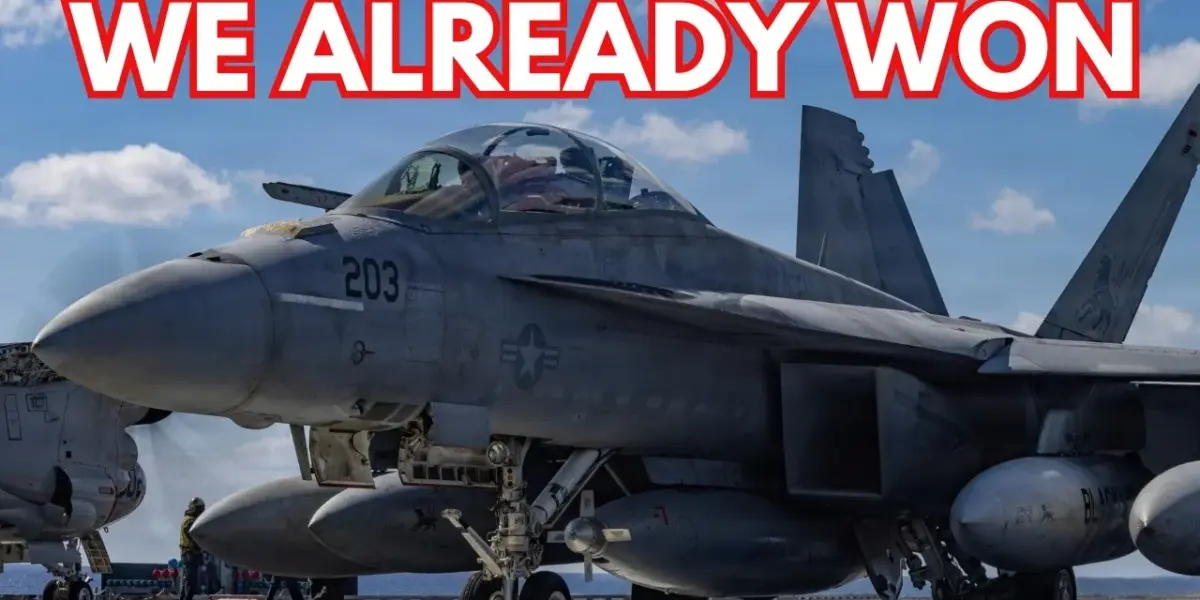
Trump Signals End to Operation Epic Fury, Analysts Warn of Unintended Consequences
In a move that has caught many by surprise, President Trump appears to be signaling a desire to declare victory and withdraw from the ongoing conflict with Iran, codenamed Operation Epic Fury. This potential pivot, driven by a confluence of strategic calculations and battlefield realities, raises significant questions about the long-term implications for regional stability and international security. Despite potential objections from allies like Israel and Gulf partners, and even defiance from the Iranian regime itself, the President’s inclination to frame the operation as a success and ‘move on’ is becoming increasingly evident.
The Shifting Sands of Objective and Rhetoric
Several indicators point towards this strategic recalibration. President Trump’s recent public statements, including the assertion that the U.S. has ‘already won’ and ‘more winning to do,’ suggest a pre-emptive framing of the conflict’s conclusion. This rhetoric, while potentially confusing, particularly when juxtaposed with statements from military leaders like Secretary Hegsth, hints at a desire to define success on his own terms. Furthermore, a noticeable shift in the stated U.S. objectives for the war, from four to three key aims, has been observed. The removal of one of the most challenging initial rationales for engagement—specifically, the destabilization efforts by Iranian proxies—suggests a pruning of the mission to make it more amenable to a declared victory.
The transcript notes the following objectives as presented by Secretary Hegsth and General Kaine:
- Destroy missile stockpiles and launchers.
- Destroy Iran’s navy.
- Permanently deny Iran nuclear weapons.
This contrasts with the four objectives initially laid out by the President on February 28th, which included the aforementioned three plus the crucial aim of ensuring Iranian terrorist proxies could no longer destabilize the world. The omission of this proxy objective, particularly given its complexity and the difficulty of achieving it solely through military means, could be interpreted as a strategic simplification to pave the way for an exit.
The Human Cost of Operation Epic Fury
Amidst the strategic discussions, the human toll of the operation cannot be overlooked. The Pentagon has released the names and images of fallen soldiers, underscoring the real-world consequences of the conflict. As of the transcript’s recording, Chief Warrant Officer 3 Robert Marzan, 54, and Sergeant Ben Pennington, 26, were identified as the sixth and seventh soldiers killed during Operation Epic Fury. Chief Marzan was killed on March 1st in Kuwait during an Iranian drone attack, while Sergeant Pennington died during an Iranian strike on Prince Sultan Air Base in Saudi Arabia. An additional National Guard member also reportedly died due to non-combat related injuries.
Divergent Perspectives on Victory
The notion of a declared victory, however, is met with skepticism from various quarters. From the perspective of Gulf states, a ‘wounded but undefeated’ Iranian regime could pose a continued threat, capable of terrorizing regional cities and disrupting oil traffic. The Iranian regime itself has shown no signs of capitulating. The IRGC has asserted that they, not the U.S., will determine the war’s end and have threatened to block oil flow through the Strait of Hormuz if attacks persist. The speaker of the Iranian parliament has explicitly stated their lack of interest in a ceasefire, vowing to ‘strike the aggressor’ to ensure future security.
The Unforeseen Consequences of Escalation
Beyond the stated objectives and the immediate battlefield, the conflict is generating significant second and third-order effects that appear to be spiraling beyond initial expectations. The disruption of oil traffic through the Strait of Hormuz, a predictable yet potent Iranian tactic, is already impacting global energy markets. Reports indicate that oil producers are pausing output due to full storage facilities and the inability to move product via tankers. This economic pressure point is clearly a concern for President Trump, who has vowed a forceful response to any such disruption.
The decapitation of Iran’s senior leadership, while a significant development, has also introduced new uncertainties. The killing of figures like Ham a and the subsequent selection of his son, Motaba, a figure reportedly even more hardline, raises questions about future Iranian policy. Analysts suggest that rather than seeking de-escalation, this new leadership might accelerate efforts to procure nuclear weapons or adopt a more militant stance, especially given the recent loss of family members.
Furthermore, the conflict is straining regional air defense capabilities. A worrying trend has emerged with a reported increase in the percentage of Iranian drones successfully penetrating Emirati air defenses, suggesting a potential fraying of the network. This, coupled with the redeployment of U.S. THAAD anti-missile systems from South Korea to the Middle East—a move potentially weakening defenses against North Korea and possibly exposing those very systems to Iranian strikes—highlights the unintended consequences of shifting military assets and the complex geopolitical calculus at play.
The Strategic Options: A Choice Between All-In, Air Power, or Declaration
As the conflict progresses, President Trump faces a stark set of strategic options. The first, an all-in approach involving boots on the ground for regime change and securing nuclear materials, appears unlikely given the President’s aversion to prolonged military commitments. The second, relying solely on air power to achieve all objectives, is also questionable, with doubts about its efficacy in fully dismantling Iran’s nuclear program, missile capabilities, or achieving significant regime change. Such an approach could easily devolve into a protracted engagement, contradicting the administration’s stated desire to avoid ‘forever wars.’
This leaves the third option: declaring victory. This path, while potentially disconnected from the full reality on the ground, aligns with the President’s demonstrated inclination to frame outcomes favorably. The argument is that regardless of objective truth, a declared victory—citing the destruction of Iran’s navy, air force, setbacks to its missile program, and the elimination of key leadership—could be sufficient to rally support and justify withdrawal. This strategy, reminiscent of past instances where declared outcomes diverged from ground truth, presents a pragmatic, albeit potentially risky, path forward.
Why This Matters
The potential for the U.S. to prematurely declare victory in Operation Epic Fury carries significant implications. It could embolden Iran, leaving a capable but wounded regime free to continue its regional destabilization activities and pursue nuclear ambitions. For allies like Israel and the Gulf states, it could signal a diminished U.S. commitment to their security, potentially prompting them to pursue more aggressive independent strategies. The global economic impact, particularly on energy markets, could persist or even worsen if the conflict’s underlying causes are not adequately addressed. Moreover, the narrative of a declared victory, irrespective of its factual basis, can shape perceptions of U.S. foreign policy and military effectiveness for years to come, influencing future strategic decisions and international relations.
Future Outlook
The coming days and weeks will be crucial in determining the trajectory of Operation Epic Fury. While the U.S. military continues to project significant firepower, with a substantial portion of the bomber fleet forward-deployed, the President’s inclination towards a swift conclusion suggests that a declaration of victory remains a strong possibility. The reactions of regional adversaries and allies, the unfolding economic consequences, and the success or failure of ongoing military operations will all play a role. However, if the President opts to ‘declare victory and move on,’ it will mark a significant, and potentially controversial, turning point in the complex and volatile relationship between the United States and Iran.
Source: New Plan: Declare Victory and Move On (YouTube)

Related Articles
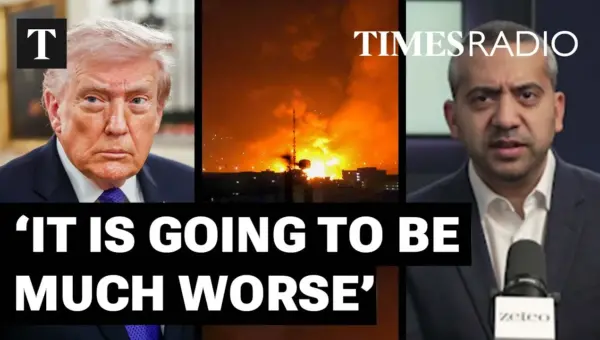
Trump’s Iran War Lacks Plan, Exit Strategy, Analyst Warns
Mehdi Hasan criticizes the Trump administration's military strikes in Iran, labeling the war as lacking a clear plan and exit strategy. He questions the justifications provided, highlighting conflicting narratives and the potential for increased terrorism.


Iran’s Strait of Hormuz Mine Threat: A Dangerous Escalation
Reports indicate Iran has allegedly mined the Strait of Hormuz, a vital global energy chokepoint. This alarming escalation threatens maritime security and global oil supplies, prompting urgent calls for decisive military response and raising fears of wider conflict.


Trump Pushes SAVE Act: Democrats Call It ‘Let Them Eat Cake’ Moment
Former President Donald Trump has made the SAVE Act his top legislative priority, asserting it will guarantee Republican midterm victories. However, Democratic strategists decry the act as voter disenfranchisement, comparing it to a 'let them eat cake' moment disconnected from the struggles of ordinary Americans.