Faith Over Facts: Trump’s Holy War Threatens Separation of Church and State
A critical analysis of how faith-based prophecies influencing political decisions, particularly military actions, poses a direct threat to the separation of church and state. The commentary calls for accountability when leaders prioritize divine mandates over factual analysis.

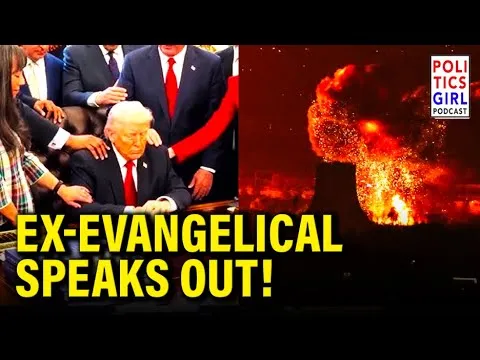
Faith Over Facts: Trump’s Holy War Threatens Separation of Church and State
The line between governance and gospel is increasingly blurred in American politics, raising urgent questions about the foundational principle of separation of church and state. A recent commentary from PoliticsGirl, featuring insights from ex-Evangelical Tim Whitaker, casts a stark light on the potential dangers when leaders imbue military or legislative decisions with faith-based directives rather than factual analysis. The core assertion is clear: when American leaders prioritize divine prophecy over demonstrable reality in their decision-making, they are not merely straying from sound policy, but actively violating a cornerstone of the nation’s governance structure.
The Peril of Prophecy in Policy
The central argument posits that military and legislative leaders have a solemn obligation rooted in law, mission objectives, and the welfare of those under their command. This responsibility is fundamentally incompatible with decisions driven by a belief in fulfilling preordained, apocalyptic scenarios. The commentary emphasizes the need for accountability when commanders act on such convictions, suggesting that a faith-driven mandate for conflict, especially one framed as a prophesied Armageddon, demands rigorous scrutiny and a clear mechanism for holding leaders responsible for their choices and their consequences.
Historical Context: A Delicate Balance
The concept of separating church and state in the United States is not an absolute prohibition of religion in the public square, but rather a safeguard against the establishment of a state religion and the undue influence of any single religious doctrine on government policy. The First Amendment’s Establishment Clause and Free Exercise Clause are designed to protect both religious freedom and governmental impartiality. Historically, this balance has been tested numerous times, from debates over religious displays on public property to the role of faith in political rhetoric. However, the current discourse, as highlighted by the ex-Evangelical perspective, suggests a shift from mere religious influence to a direct, faith-dictated operational framework for governance, particularly in matters of war and national security.
The Ex-Evangelical Lens: Unpacking the ‘Holy War’
Tim Whitaker’s perspective, coming from an ex-Evangelical background, offers a unique and critical insight into the mindset that might drive such faith-based decision-making. This viewpoint suggests an understanding of the internal theological frameworks that could lead individuals to interpret political or military actions through the lens of biblical prophecy. When leaders within this framework see themselves as agents of divine will, tasked with ushering in or confronting a prophesied end-times scenario, their perception of duty and justification for action fundamentally changes. This is where the danger lies: the normal checks and balances of secular governance, which rely on logic, evidence, and pragmatic outcomes, may be superseded by a spiritual imperative that brooks no dissent or factual challenge.
Accountability and the Rule of Law
The call for accountability is paramount. If commanders are acting not on strategic assessments but on a belief in a divinely ordained conflict, the implications are profound. The transcript explicitly states that commanders have an obligation to the law, the mission, and their troops. These are secular, practical duties. Introducing an apocalyptic prophecy as a motivating factor introduces a variable that is not subject to empirical verification or rational debate within the confines of military or legislative processes. It raises the specter of decisions being made based on personal revelation or theological interpretation rather than the best available intelligence and strategic analysis. This not only endangers the troops involved but also undermines the democratic principles that require leaders to be answerable for their actions to the public and the legal system.
Implications for Democracy and Governance
The trend towards faith-based decision-making in leadership poses a significant threat to democratic institutions. When policy is dictated by religious dogma, it can alienate citizens who do not share those beliefs, erode public trust, and create a system where a select group’s interpretation of divine will holds sway over the needs and will of the broader populace. Furthermore, in the context of military action, it could lead to a justification for conflict based on eschatological beliefs rather than genuine national security interests, potentially escalating tensions and leading to unnecessary loss of life.
Future Outlook: Navigating the Sacred and the Secular
The commentary serves as a critical warning. The future of American governance may hinge on its ability to maintain a robust separation of church and state, especially as religious fervor increasingly intersects with political power. The challenge lies in fostering a political environment where leaders are expected to govern based on facts, reason, and the common good, rather than on private religious convictions that may not be universally shared or empirically validated. Encouraging critical discourse, promoting media literacy, and demanding transparency in the motivations behind policy decisions are crucial steps. The ex-Evangelical perspective, by highlighting the internal logic of such faith-driven approaches, provides valuable insight into how to identify and counter the subtle, and sometimes overt, ways that religious prophecy can influence secular power.
Why This Matters
The fundamental issue at stake is the integrity of democratic governance and the protection of citizens’ rights. When leaders operate under the assumption that they are fulfilling divine prophecies, particularly in the context of war, they place themselves and their constituents in a perilous position. The separation of church and state is not merely an abstract constitutional principle; it is a practical safeguard that ensures government serves all its people, regardless of their faith. Allowing faith-based prophecies to dictate policy, especially military action, opens the door to potentially catastrophic decisions made without regard for human cost, legal accountability, or the democratic will of the people. Holding leaders accountable for decisions driven by faith rather than facts is essential for preserving a government that is of, by, and for the people, not for any particular divine agenda.
Source: Ex-Evangelical BLOWS WHISTLE on Trump HOLY WAR | PoliticsGirl (YouTube)

Related Articles


Pentagon’s Holy War Rhetoric Alarms Service Members
Reports of U.S. military commanders invoking religious prophecy and divine plans to justify the conflict in Iran have raised alarm bells. With top officials like Secretary of Defense Pete Hegseth encouraging troops to 'lean into their faith,' concerns are mounting over the separation of church and state within the armed forces and the potential for religiously motivated warfare.


America’s Global Image Fractures: MAGA Tourist Faces Backlash Abroad
A viral TikTok highlights how a MAGA supporter's trip to Northern Ireland turned into a stark encounter with international political backlash. The incident raises questions about American accountability and the global perception of U.S. foreign policy.
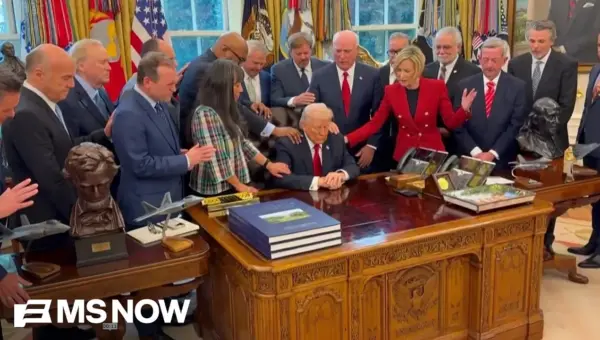
GOP Rhetoric Fuels Christian Nationalist ‘Crusade’ Fears
Concerns are rising over the infusion of Christian nationalist ideology into U.S. foreign policy, with critics warning of a 'crusade' mentality. Rhetoric from some Republican figures frames international conflicts and domestic issues through a specific religious lens, sparking fears of alienation and a departure from secular governance.