Iran Leader’s Hostility: ‘Ideological, Not Tactical,’ Says Ex-Prisoner
A former Iranian political prisoner and scholar argues that the regime's hostility towards the U.S. is ideological, not tactical. Kian Tajbakhsh believes the leadership transition will bring continuity in both external antagonism and internal repression. He also discusses the limited influence of external powers on Iran's internal politics and what might be needed to foster change.

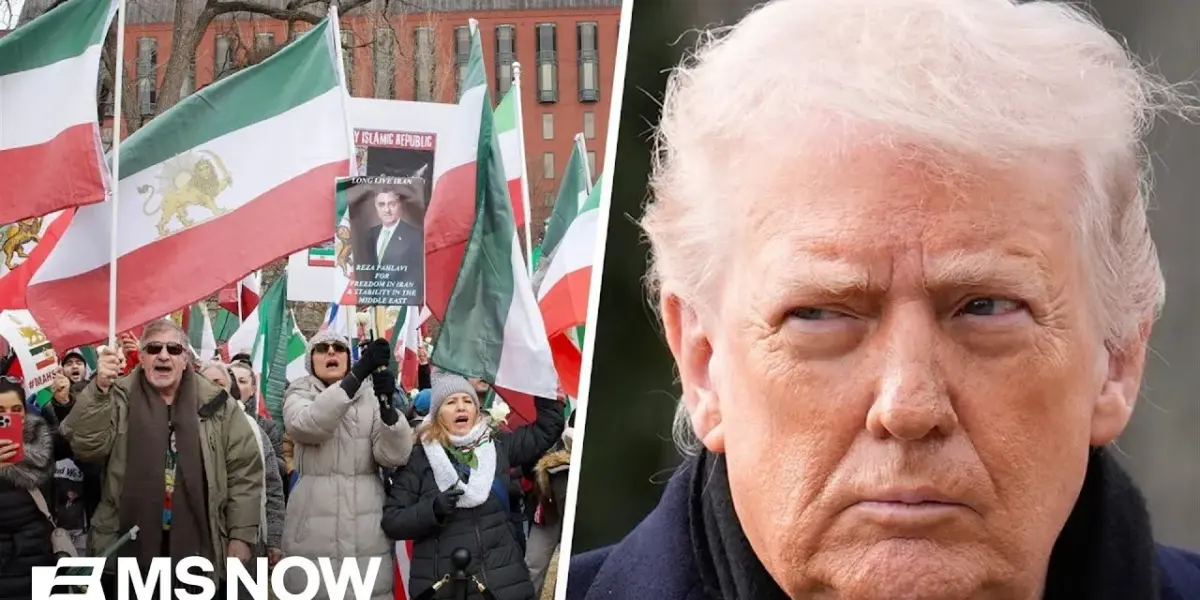
Iran’s Regime: Ideological Antagonism Toward U.S. Deeply Ingrained, Says Scholar
The Islamic Republic of Iran’s animosity towards the United States and Israel is not a matter of shifting political strategy but a fundamental, deeply embedded ideology, according to Kian Tajbakhsh, a former political prisoner and scholar of international relations. Tajbakhsh, who was held in Tehran’s notorious Evin prison for over a year, including eight months in solitary confinement, shared his insights on the implications of the leadership transition in Iran and the regime’s enduring stance towards the West.
Personal Experience Shapes Analysis
Tajbakhsh’s perspective is uniquely informed by his personal ordeal. Arrested as an American citizen, he spent considerable time being interrogated by the Islamic Revolutionary Guard Corps (IRGC). This direct experience, he explained, revealed the core nature of the regime’s hostility. “The regime’s hostility towards the United States and Israel is not tactical. It is ideological and deeply ingrained,” Tajbakhsh stated. He believes this ideological lens dictates how the leadership interprets and responds to external pressures, suggesting a lack of flexibility in their foreign policy approach.
Furthermore, his imprisonment as a democracy activist exposed him to the regime’s intolerance of dissent. “It also showed me how implacably opposed this regime is to dissident voices, to the voices of the young people, to the voices that disagree with that regime,” he observed. Tajbakhsh drew a stark parallel to recent events, referencing the brutal crackdown on protesters, which he noted may have resulted in thousands of deaths. He anticipates this repressive approach will continue under new leadership.
Continuity in External and Internal Policy
The selection of a new supreme leader, Tajbakhsh argued, signifies a commitment to continuity on two critical fronts: external antagonism and internal repression. “They’re going to dig in and they’re going to fight,” he predicted regarding the regime’s external behavior, citing its “implacable antagonism.” Internally, he foresees no abatement in the brutal treatment of society, particularly targeting those who voice opposition. “It shows continuity in terms of how brutally they’re going to deal with society, especially the group of Iranians that disagree with them,” he added.
President Trump’s Influence Limited
The conversation touched upon President Trump’s remarks regarding potential successors to Iran’s current leadership. Tajbakhsh expressed skepticism about the U.S. president’s ability to influence the outcome of Iran’s internal power struggles. He characterized the president’s statements as a “dramatic escalation in the stated war aims of the United States,” which have historically focused on Iran’s nuclear program, proxies, and ballistic missile capabilities.
Tajbakhsh posited that any new leader in Iran will emerge from internal power dynamics and factional jockeying. While acknowledging that President Trump might be attempting to “put his fingers on the scale” to prevent a leader perceived as overly antagonistic by the U.S. and Israel, he concluded, “I don’t think he’s going to be able to influence who decides who the leader is in the short term.” The process of leadership selection, he emphasized, is primarily an internal Iranian affair.
What It Would Take for Freedom in Iran
When questioned about the potential for democracy or freedom in Iran and what pressure points might be underutilized, Tajbakhsh offered a perspective that he acknowledged might be unpopular with some on the liberal and left sides of the political spectrum. Confronted with a regime that he described as “will brook no dissent from its people” and capable of “killing 7,000 people in two days,” he suggested that only a significantly stronger force could compel change.
He elaborated on this point, stating, “only a bigger force, they can give a massive bloody nose, more than a bloody nose, a bigger force that can crack the regime, push it back on its heels, destroy its repressive capacities.” Tajbakhsh then discussed reports, which he deemed “astonishing if true,” of potential Israeli and U.S. targeting of the Basij, Iran’s paramilitary internal security force. He suggested that degrading the Basij’s headquarters, weapons depots, and logistical centers could dismantle the regime’s repressive apparatus.
A Hypothetical Scenario for Uprising
Tajbakhsh outlined a hypothetical scenario where such actions could embolden the Iranian populace. “At some point they could be pushed back, so back on their feet, become so fearful that a few Iranians will begin to trickle out into the streets,” he posited. If this trickle were to swell into a mass movement, potentially involving “a million people in the street,” Tajbakhsh envisioned a dramatic confrontation. In this speculative future, he pictured a scenario with Iranian protesters on one side, Basij forces on the other, and U.S. and Israeli drones overhead, potentially deterring the militia from attacking the demonstrators.
However, he cautioned that this remains a distant and highly complex scenario. “But that seems to be so far off the way we are right now today. It’s so complicated, clearly,” he concluded, underscoring the immense challenges and the speculative nature of such an outcome.
“The regime’s hostility towards the United States and Israel is not tactical. It is ideological and deeply ingrained.”
“It shows continuity in terms of how brutally they’re going to deal with society, especially the group of Iranians that disagree with them.”
Source: Ex-Iranian prisoner: Regime's hostility against U.S. 'is not tactical, it's ideological' (YouTube)

Related Articles
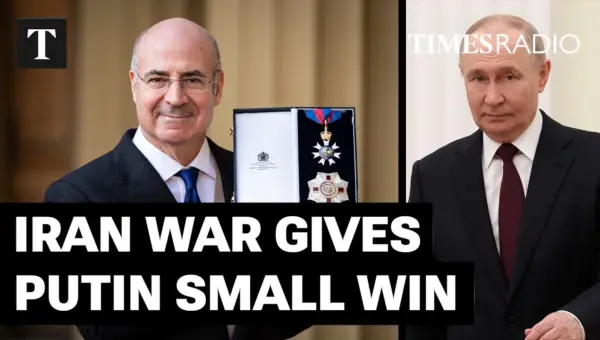
Trump’s Iran Policy Aids Russia, Hurts Europe, Expert Warns
A leading Russian finance expert warns that President Trump's actions regarding Iran and Russia are a "gift" to Vladimir Putin, enabling Moscow's war in Ukraine while harming Europe's energy security. The expert suggests Trump's policies prioritize business over geopolitical stability.
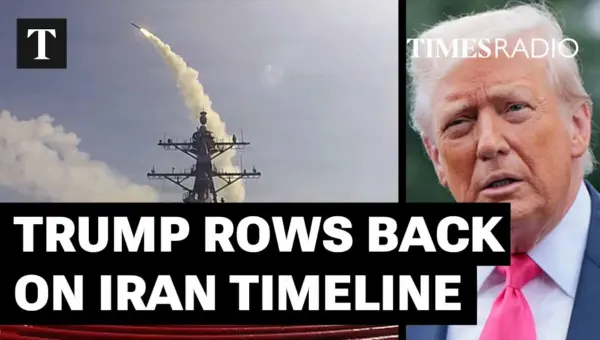
Trump’s Confident Iran Stance Faces Scrutiny Over Shifting Details
President Trump has projected "over the top confidence" regarding US operations in Iran, claiming decisive victories and rapid progress. However, reporters note shifting timelines, ambiguous threats to civilian infrastructure, and a lack of publicly shared intelligence, raising concerns about clarity and substantiation.
Iran’s Shadow: Could Ramstein Air Base Become a Target?
Ramstein Air Base, the largest U.S. Air Force base outside America, is reportedly under heightened security protocols amid escalating tensions involving Iran. Analysts suggest a direct attack on the strategically vital German base is unlikely due to the severe retaliatory consequences.