Oracle’s $300B OpenAI Deal Fuels AI Ambitions, Faces Funding Hurdles
Oracle's ambitious $300 billion cloud deal with OpenAI has propelled its stock to new heights and positioned it as a major AI infrastructure player. However, significant capital requirements, potential debt burdens, and evolving competition raise questions about the long-term sustainability of its AI-driven strategy.

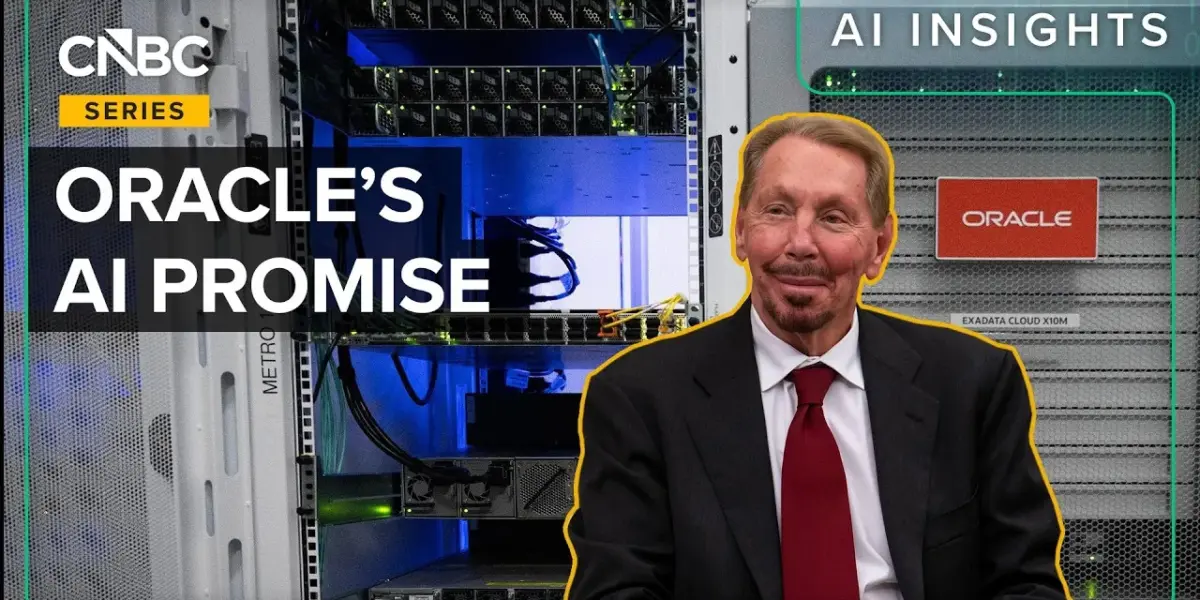
Oracle’s AI Gamble: A $300 Billion Bet on the Future
In the rapidly evolving landscape of artificial intelligence, where massive investments are reshaping industries, legacy enterprise software giant Oracle has emerged as an unlikely but significant player. Founded in 1977 by Larry Ellison, Oracle is now aggressively pursuing a strategy centered on AI cloud computing, a move that has captured Wall Street’s attention and sparked debate about its long-term viability.
Stargate Project Elevates Oracle’s AI Profile
Oracle’s commitment to the AI race was prominently showcased when co-founder Larry Ellison stood alongside figures like former President Trump and OpenAI CEO Sam Altman to announce Oracle’s pivotal role in the Stargate project. This ambitious AI data center campus in Abilene, Texas, significantly boosted Oracle’s profile, positioning it as a key contender in the burgeoning AI ecosystem and reinforcing its strategic pivot towards cloud computing.
A Landmark Cloud Deal with OpenAI
The true validation of Oracle’s cloud infrastructure investments came in September with the announcement of a colossal $300 billion cloud computing contract with OpenAI, the creators of ChatGPT. This deal, one of the largest cloud agreements ever, sent shockwaves through the market. Oracle’s stock experienced an extraordinary surge, hitting an all-time high and climbing as much as 43% in a single session, marking its best performance since 1992. Securing OpenAI as a major tenant for its data centers effectively placed Oracle on par with industry giants like Amazon, Google, and Microsoft in the AI infrastructure race.
“This contract really validated many of the things Oracle’s been investing in, specifically around their cloud infrastructure business. They were a laggard in sort of the traditional cloud build out. And so a contract of this size, especially from arguably the leader in AI, was a huge validation of everything that they built.”
The magnitude of this agreement briefly propelled Larry Ellison to the position of the world’s richest man. Further underscoring its AI ambitions, Oracle announced plans to build a data center utilizing 50,000 advanced chips from AMD, signaling an intensified deal-making spree in the AI sector.
Investor Concerns Emerge: Debt and Dependence
Despite the initial euphoria surrounding its AI endeavors, investor enthusiasm began to wane as the immense capital requirements for Oracle’s ambitious data center expansion came into focus. The prospect of Oracle needing to take on substantial debt to finance these projects raised concerns about the pressure it could exert on its investment-grade credit rating. These worries manifested in a rise in Oracle’s five-year credit default swaps in November, a key indicator of credit risk. Following its September peak, the stock experienced a notable downturn, pacing for its fifth consecutive week of losses as investors increasingly questioned the sustainability and pace of the AI boom.
The financial strain was palpable. If Oracle were to borrow significant sums, estimated between $50 billion and $100 billion, at interest rates potentially 30-40% higher than anticipated, it could severely impact its earnings power and the expected returns from its lucrative contracts. The period around November saw Oracle’s stock endure its worst month since 2001.
OpenAI’s Market Position and Oracle’s Reliance
Adding to the investor apprehension was Oracle’s apparent heavy reliance on OpenAI, which constituted the majority of its contract backlog. Reports suggesting that OpenAI’s ChatGPT was losing market share to Google’s Gemini fueled fears that Oracle might have backed a technology that was no longer at the forefront of AI innovation. The concern was whether Oracle’s strategic bet had been placed on a player that could falter, jeopardizing the fulfillment of its substantial investments.
December Earnings and the Path Forward
Analysts closely watched Oracle’s second-quarter earnings report in December. However, management’s inability to provide the detailed financial roadmap for data center expansion that the market desired led to continued stock underperformance.
A $50 Billion Capital Raise and Shifting Market Sentiment
A significant development occurred in February when Oracle announced its intention to raise $50 billion through a combination of debt and equity. This substantial capital infusion was met with a positive market reaction. Investors cheered Oracle’s proactive approach to securing funding, demonstrating a willingness to leverage both debt and equity markets. Consequently, Oracle’s five-year credit default swaps saw a notable decline of 17% in a single day, reducing the perceived risk of a credit downgrade.
Initially, the market viewed OpenAI as the dominant force in the AI landscape, citing its strong user momentum and model performance. However, the subsequent strong inroads made by Google with its Gemini model and the momentum of other players like Anthropic have diversified the competitive field. While Oracle is not in a precarious position, the evolving dynamics suggest it can build the necessary capacity to support OpenAI’s future needs, especially given the multi-trillion dollar potential of the AI market.
“The concern is that OpenAI may not actually be in the driver’s seat. And so is there a scenario where Oracle goes out levers. The company raises a lot of money to buy equipment to put in these data centers. And then OpenAI either can’t pay. They have to shorten the contract. And then Oracle is kind of left hung dry, so to speak. Our view is that is a very, very unlikely scenario because demand is massively outpacing supply. So even if there’s a change in terms of who that winner and buyer is of the AI infrastructure, chances are if it’s not OpenAI, somebody else will fill that.”
Market Impact and Investor Outlook
Oracle is increasingly being viewed as an unofficial barometer for the broader AI trade. Its success is intrinsically linked to its ability to secure capital, manage energy demands for its data centers, and OpenAI’s ongoing fundraising efforts. Ultimately, Oracle’s journey will serve as a critical case study, demonstrating whether its aggressive pursuit of the AI dream was a strategic masterstroke or an overly ambitious gamble.
What Investors Should Know:
- AI Infrastructure Race: Oracle is investing heavily in cloud infrastructure to capitalize on the AI boom, competing with established tech giants.
- OpenAI Partnership: A $300 billion cloud deal with OpenAI is a cornerstone of Oracle’s AI strategy, but also raises concerns about customer concentration.
- Funding Challenges: Oracle faces significant capital requirements for data center expansion, necessitating substantial debt and equity financing, which could impact its credit rating.
- Competitive Landscape: The AI market is dynamic, with competitors like Google and Anthropic gaining traction, potentially affecting OpenAI’s market dominance and, by extension, Oracle’s revenue streams.
- Market Sentiment: Oracle’s stock performance is closely watched as an indicator of investor confidence in the AI sector’s future growth and the viability of large-scale AI infrastructure projects.
Source: Can Oracle Deliver On Its AI Promise? (YouTube)

Related Articles


AI Giant Anthropic Sues Pentagon Over National Security Label
AI leader Anthropic is suing the Trump administration, alleging an "unlawful campaign of retaliation" after the Pentagon labeled the company a national security risk. The lawsuits stem from a dispute over the use of Anthropic's AI systems by the military. The White House has stated that President Trump will not allow any company to jeopardize national security.


OpenAI Teases GPT-6 with “Omni” Model, Bi-Directional Audio
OpenAI is reportedly developing a unified multimodal AI model called "Omni" and a bi-directional audio system "Baidu," signaling a major leap towards GPT-6. These advancements, alongside a push into dedicated AI hardware, aim to create an ambient AI ecosystem that could redefine human-computer interaction.

Pentagon Taps Ex-DOGE Official for Top AI Role Amid Scrutiny
The Pentagon has reportedly appointed Gavin Kliger, a former DIUx staffer with a scrutinized past, to lead its most ambitious artificial intelligence initiatives. This move places Kliger at the center of the Defense Department's cutting-edge AI efforts, raising questions about the selection process and the future of military AI development amidst growing strategic importance of the technology.