Belarus Exiles Fear for Loved Ones Amidst Regime Repression
Belarusian families in exile in Warsaw live with the constant fear for loved ones still in their homeland, where dissent is met with brutal repression and imprisonment. Stories of separated families and the psychological toll of political persecution highlight the ongoing human rights crisis under Lukashenko's regime.

Belarus Exiles Fear for Loved Ones Amidst Regime Repression
In Warsaw, Poland, a growing community of Belarusian exiles lives with the constant fear for their families back home, a stark reality shaped by Alexander Lukashenko’s decades-long authoritarian rule. For many, speaking out against the regime, even through a simple TikTok video or Telegram message, has led to imprisonment, torture, and forced separation, leaving behind a trail of shattered lives and anxious relatives.
A Generation’s Trauma: Families Torn Apart by Political Persecution
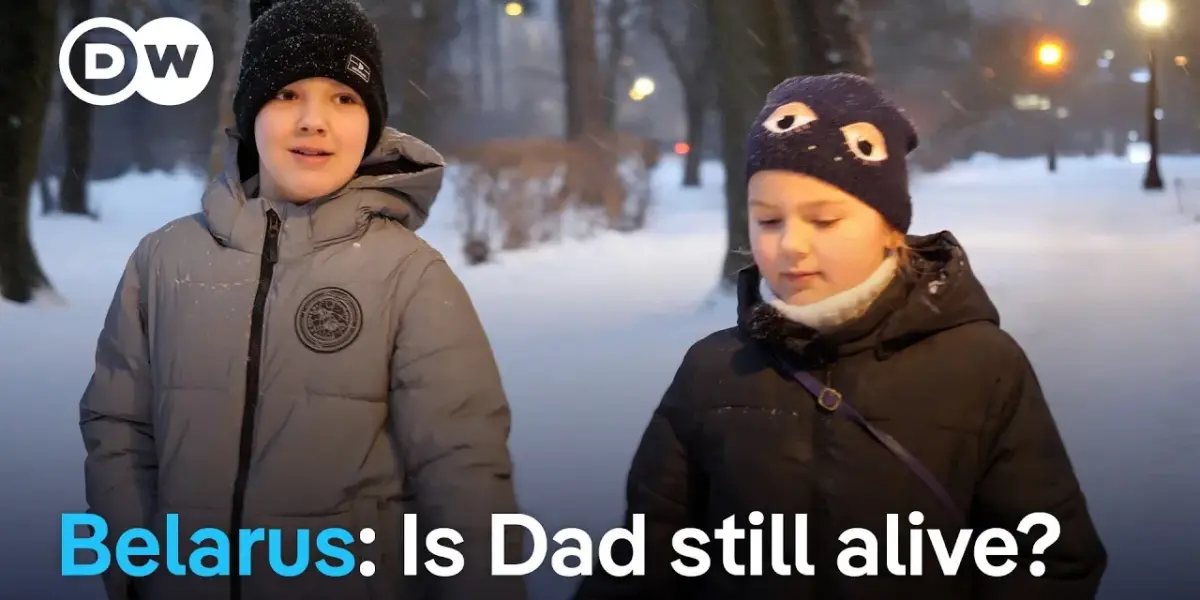
The stories emerging from Belarus paint a grim picture of a nation where dissent is brutally suppressed. Nastia, a teenager now living in Warsaw with her brother Vana, exemplifies the profound impact of this repression. Their parents, active participants in Belarus’s opposition movement, were arrested during the 2020 presidential election campaign. Fearing for their children’s welfare, their grandmother fled with Nastia and Vana to Poland. The mother, Antonyina, was eventually released after nearly five years of imprisonment and reunited with her children in Warsaw. However, the reunion was fraught with emotion, as years of limited contact, including five-minute monthly calls, had made recognition a challenge.
“I didn’t recognize her at first because the only contact we’d had was video calls. Then I cried with happiness and with sadness at what we’d gone through in those years.”
Antonyina’s imprisonment was a direct consequence of her support for Sviatlana Tsikhanouskaya, the opposition candidate who ran against Lukashenko in the 2020 elections. Independent observers believed Tsikhanouskaya had won, but Lukashenko declared himself the victor, sparking nationwide protests that were met with a violent crackdown. Thousands were arrested, including Antonyina, who was classified as an extremist and sent to a women’s prison camp in Gomel. She recounts the harsh realities of prison life, where emotional expression was suppressed, and the injustice of being equated with terrorists.
The Lingering Shadow: Missing Fathers and Fading Memories
For Nastia and Vana, the ordeal is far from over. Their father remains incarcerated in a penal colony for over five years. Communication is severely restricted, with phone calls forbidden and letters often failing to reach their destination. The children struggle to hold onto fading memories of their father, a pain amplified by the constant fear of his well-being.
“I’ve completely forgotten the sound of his voice. Sometimes I have this nightmare that they could come and kill my dad at any moment, any second, even any millisecond. That scares me. All we can do is wait for his release.”
The family’s plight is shared by many. Warsaw has become a refuge for hundreds of thousands of Belarusians who fled the country following the post-2020 crackdown. The Belarusian Human Rights Center ‘Viasna’ reports that approximately 1,200 political prisoners are currently held in Belarus, a testament to the ongoing repression. Organizations like the Belarusian Solidarity Center are providing crucial support to these exiles, offering practical assistance such as clothing and psychological support.
Youth and Resistance: Speaking Out, Paying the Price
The story of Aleh Baradzyonok, a 16-year-old at the time of his arrest, highlights the regime’s zero tolerance for youth activism. He was sentenced to three years in a juvenile prison camp for TikTok videos critical of the government. During his confinement, he endured solitary confinement and physical abuse for his political views.
“In the juvenile prison camp, there were orders that I should be beaten for my political views. Sometimes they beat me three times a day with a stick, with their hands, their feet. Afterwards, I had three hematomas.”
Upon his release, Aleh fled to Poland, where he sought freedom and anonymity, even dyeing his hair pink as a symbol of his newfound liberty. He now receives therapy and support, a stark contrast to the repression he faced in Belarus.
Exiled Leadership and the Fight for Release
Sviatlana Tsikhanouskaya, operating from exile, continues to be a leading voice for the Belarusian democratic movement. She tirelessly advocates for the release of political prisoners and mobilizes international support, urging global leaders to maintain pressure on the Lukashenko regime. Her efforts extend to keeping the world informed about the ongoing human rights violations and the plight of those imprisoned.
“Of course, there’s always a hope, but it’s huge work, you know, from democratic forces, our human right defenders, you know, diplomats, our civil society, not to let the world forget about political prisoners and do everything possible to release them. But what is more important that the repressions will end.”
The simple act of writing letters to prisoners, as seen at the Belarusian Youth Center in Warsaw, offers a glimmer of hope. While the delivery of these messages is uncertain, they serve as a vital connection for those isolated within the prison system. Tsikhanouskaya herself received a postcard from Antonyina, a gesture that provided strength during her imprisonment.
The Long Road to Freedom: Former Prisoners’ Ordeal
The release of political prisoners, though infrequent, offers moments of profound relief. In December 2025, 123 political prisoners were freed as part of a deal with the Trump administration, which saw the US ease sanctions. Alexey, one of the released individuals, described the immediate sense of safety and peace upon arriving in Poland.
“When I arrived here, I realized that I was finally truly safe and free. For the first time, I had a really deep and restful sleep. I wasn’t worried about anything anymore. Thoughts about the alarm going off about having to get up at 6:00 a.m., they just disappeared. I just lay down and slept. It was wonderful.”
Alexey’s journey was arduous. At 19, he was sentenced to six years for nine Telegram messages criticizing police violence. He endured torture by extreme cold in solitary confinement, resorting to physical exercises to stay warm.
“In my cell, I’d wake up every half hour shivering from the cold. I’d do squats, situps, and about 30 push-ups. Then I’d sleep for another half hour, and so on through the night.”
Now sharing a room with two other former prisoners in a Warsaw shelter, Alexey acknowledges the cost of freedom. Returning to Belarus is not an option, as he anticipates immediate arrest and imprisonment under the current regime. His parents remain in Belarus, and the uncertainty of when he will see them again weighs heavily on him.
A Call for Awareness and Hope for a Free Belarus
Every Sunday, exiled relatives of political prisoners gather in Warsaw, undeterred by weather, to make their voices heard. These small protests, unthinkable in Belarus, serve as a powerful reminder of the ongoing suffering within the country. Nastia, present at one such gathering, expressed her determination to ensure her father’s story is known.
“I know that we can’t give up. People can’t forget that we exist. They mustn’t forget that there’s a great suffering going on in Belarus. It’s a dictatorship that never ends.”
Though Belarus is only 200 kilometers away, it feels an unreachable homeland for now. Yet, the ultimate goal remains a life free from fear. The exiles dream of returning to a democratic Belarus, a place where they can choose their own paths and fight for their futures. For Nastia and Vana, who are growing up without their father, their message to him is one of enduring love and unwavering hope for his return.
“Hello, Dad. It’s us, Vana and Nastia. You haven’t been with us for a long time, but we think about you every day. We’ll wait for you as long as we have to. To us, you’re the best dad in the world.”
Source: Is Dad still alive? The fear facing Belarusian families in exile | DW Reporter (YouTube)

Related Articles

Iran Soccer Players Granted Asylum in Australia After Anthem Protest
Five Iranian women's soccer players have been granted asylum in Australia after a silent protest during their national anthem at a tournament sparked backlash at home. Australian Prime Minister Scott Morrison confirmed the players are in a safe location after receiving humanitarian visas. The move follows international calls for protection, with fears they would face severe consequences if returned to Iran.

Iranian Footballers Granted Asylum in Australia After Dramatic Escape
Five Iranian women's footballers have been granted asylum in Australia after seeking refuge during a tournament. The decision follows their public dissent against the Iranian regime and has been met with widespread public and political support in Australia. The situation remains complex for the remaining team members who have returned to Iran.


Trump’s Immigrant Prison Plan Falters Amid Outrage, Deaths
Democratic lawmakers successfully intervened to free a Texas family detained in Dilley, Texas, as concerns mount over conditions at the state's largest ICE facility. Camp East Montana has seen multiple deaths and disease outbreaks, leading to speculation about its closure. Meanwhile, proposed "mega-facilities" face backlash for lacking legal access provisions and sparking nationwide protests against their financiers.