Iran Appoints Khamenei’s Son as Supreme Leader
Iran has appointed Mojtaba Khamenei, son of the late Ayatollah Ali Khamenei, as the new Supreme Leader. This decision follows the assassination of his father amidst regional conflict and marks a shift towards security credentials over clerical authority in leadership. The move signals continuity and defiance, presenting complex challenges for international relations and global stability.

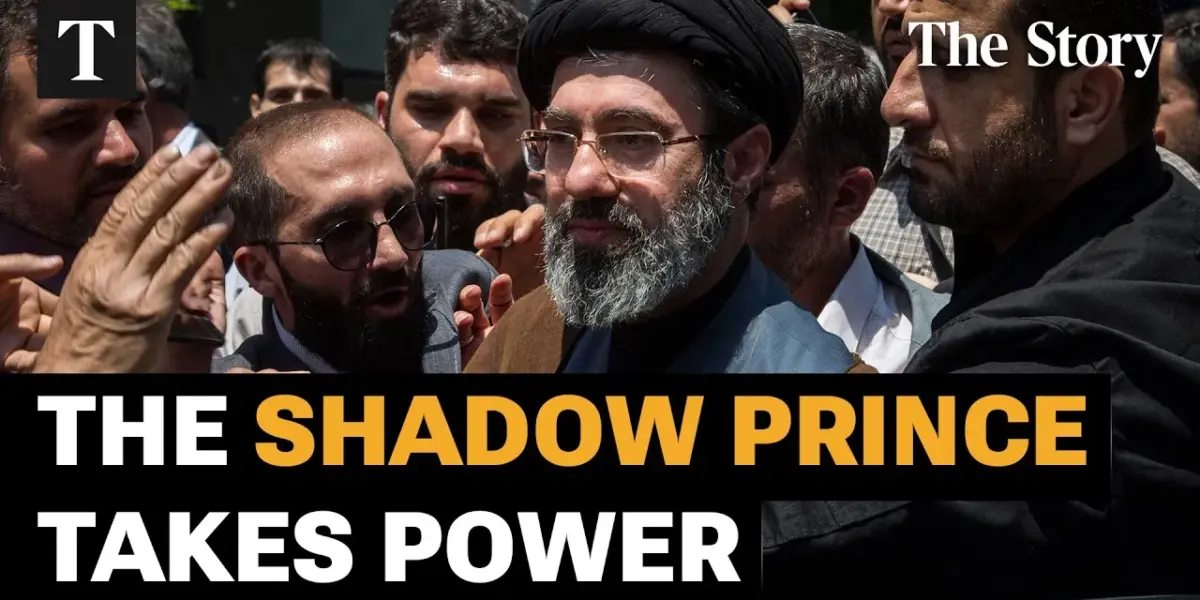
Iran Selects Mojtaba Khamenei as New Supreme Leader Amidst Global Uncertainty
In a move that reverberated globally and reshaped the geopolitical landscape, Iran has appointed Mojtaba Khamenei, the second son of the late Supreme Leader Ayatollah Ali Khamenei, as his successor. The decision comes in the volatile aftermath of Ayatollah Khamenei’s death, reportedly from Israeli and American strikes during a period of intense conflict in the region. The appointment has immediately drawn international scrutiny, with significant implications for the future of Iran, the Middle East, and global stability.
A Nation in Transition: The Power Vacuum and the Appointment Process
The death of Ayatollah Ali Khamenei, described by the US President as “one of the most evil people in history,” created an immediate power vacuum. Questions swirled about who would assume leadership of the Islamic Republic, a nation already grappling with internal protests and external conflict. The process of selecting a new Supreme Leader is intricate, involving an 88-member panel of clerics, the Assembly of Experts. This body faced considerable challenges in its deliberations, compounded by the ongoing war and the potential for further attacks on leadership gatherings.
According to Katherine Phelps, World Affairs Editor for The Times, the delay in announcing a successor was due to several factors. “First of all, we have to remember how this conflict began. There was a strike on the Supreme Leader’s compound which killed him and killed some of the people in the immediate ranks below him,” Phelps explained. “Secondly, you have to get together an 88-member panel of clerics to make this decision to tease it out.” The risk of repeated strikes on such meetings, coupled with the possibility that some initial candidates may have been casualties of the initial strike, further complicated the selection.
Mojtaba Khamenei: Security Credentials Over Clerical Authority
Mojtaba Khamenei’s ascent to the position of Supreme Leader marks a significant shift in the criteria for leadership. Unlike his father, who possessed strong clerical credentials, Mojtaba is primarily known for his security background. He joined the Revolutionary Guard at a young age and fought in the Iran-Iraq War. While he has pursued religious education, he has not attained the high level of scholarly qualification typically expected of a Supreme Leader.
Phelps elaborated on this distinction: “Mojtaba Khamenei, although he is the son of Ayatollah, he’s not known for his clerical credentials, he is known for his security credentials. And so I think that one of the reasons it took a while was that the Revolutionary Guard were coming down hard on everyone saying that this was their choice and they wanted to go in a security direction because he’s not just sort of slightly short of the scholarly qualifications he needs as his father was when he stepped up. He’s a long way short of them. So it really does mark a contrast and it shows that security is the most important thing.”
The Role of the Supreme Leader: Absolute Control and Regime Survival
The Supreme Leader in Iran holds immense power, overseeing all aspects of the state. This includes absolute control over the judiciary, command of the armed forces, and the powerful Iranian Revolutionary Guard. The position carries significant religious authority, with the capacity to issue fatwas. However, in the current climate, the primary focus appears to be on regime survival.
“At this moment, the survival of the regime and survival of the Islamic Republic is absolutely foremost, and so in that sense, his security credentials are what is needed at this point in time,” Phelps stated.
A Shadowy Figure Emerges: Mojtaba’s Background and Influence
Mojtaba Khamenei has long operated in the shadows, reportedly managing his father’s office and wielding considerable influence. His name surfaced in Wikileaks cables years ago, describing him as a “shadowy but very powerful character.” His early career in the Revolutionary Guard and his involvement in suppressing the 2009 protests in Tehran offer a glimpse into his approach to governance and dissent.
“Mojtaba himself jumped into that and took control of the Basij and the Revolutionary Guard who were putting down those protests,” Phelps recounted. “The Basij are a like a volunteer militia, very ideological. They work under the Revolutionary Guards and they pretty brutally put down those protests.” This history suggests a strong hand in maintaining internal order.
Continuity and Defiance: The Message of Mojtaba’s Appointment
Mojtaba Khamenei is widely seen as a continuity candidate, chosen to signal that the Islamic Republic remains steadfast despite the loss of its long-time leader. His intimate knowledge of his father’s operations and the regime’s established doctrines suggests little deviation from the existing path.
“The idea is to send a message of nothing’s changed. We soldier on. The Islamic Republic, you know, continues despite the killing of the previous Supreme Leader. So, I don’t see any real likelihood of any changes in his thinking or beliefs from the kind of beliefs that his father held,” Phelps observed.
Public Sentiment and International Reactions
Public reaction to Mojtaba Khamenei’s appointment is expected to be largely negative, given the widespread unpopularity of his father and the regime’s recent actions, including the brutal crackdown on protesters. Many Iranians identify as secular, and the leadership’s heavy-handed religiosity has alienated a significant portion of the population.
“His father was deeply unpopular at the time of his death, and I can’t see that they would have any more reason to like him than they did his father,” Phelps noted. “I think he’s a fairly unknown quantity to most people in Iran.” Investigations have also linked Mojtaba to alleged corrupt activities and money laundering, further diminishing his public appeal.
Internationally, the reaction has been stark. The US President has dismissed Mojtaba as a “lightweight” and unacceptable, indicating a desire for a leader who will bring “harmony and peace.” Conversely, former US State Department advisor Nega Enga suggested that this characterization is inaccurate, stating, “He’s not a lightweight at all.” The appointment is likely to redouble efforts by the US and Israel to target Mojtaba, though such actions carry significant strategic risks.
Regime Resilience and Iran’s Objectives Amidst Conflict
Despite the extraordinary stress placed upon the regime by the death of its leader, the ongoing war, and economic sanctions, the security apparatus remains intact. “The security apparatus… they all still appear to be intact and operational. There’s been no defections. And that matters far more for regime survival than any sort of public sentiment that may be out there,” Enga observed. This resilience signals a commitment to continuity and defiance.
Iran’s objectives in the current conflict appear centered on survival. The regime has shown a willingness to engage in aggressive actions, even contradicting its own interim leadership’s pronouncements. Enga described the approach as “attack on all fronts and see what happens.”
Geopolitical Ramifications: US Objectives, Israel’s Stance, and Energy Markets
The appointment of Mojtaba Khamenei presents a complex challenge for the United States, particularly concerning objectives like regime change. While military pressure has been applied, Iran’s doctrine of endurance suggests a long-term strategy.
Israel, under Prime Minister Netanyahu, maintains its focus on dismantling Iran’s ballistic missile capabilities and seeking regime change, envisioning a future where Iran could be a regional ally. The appointment of Mojtaba, seen as cut from the same cloth as his father and potentially more ruthless, does not alter Israel’s strategic calculus.
The conflict’s impact on global energy markets remains a significant concern. The Strait of Hormuz, a critical chokepoint for oil transport, is a key element of Iran’s deterrent strategy. Increased nervousness in the markets reflects fears of protracted conflict and soaring energy prices, which could domestically pressure the US administration.
What Lies Ahead: Strikes, Deals, and the Iranian People
The future trajectory of US-Iran relations under Mojtaba Khamenei remains uncertain. Enga suggests a dual approach: “I think they’re going to try both. I think the administration first needs to gauge again whether Mojtaba is going to be somebody they can make a deal with or not. And if they can’t, you know, they’ll continue with full force strikes.”
Meanwhile, the Iranian people continue to face severe economic hardship, fueling ongoing protests. While the regime employs propaganda and controls information flow, the underlying grievances related to economic instability persist. The prospect of a popular uprising remains, though its effectiveness against a resilient security apparatus is yet to be determined.
The appointment of Mojtaba Khamenei signals a period of continued defiance and potential escalation. The world watches closely as Iran navigates this new leadership chapter amidst a backdrop of war, sanctions, and deep-seated internal and external challenges.
Source: Mojtaba Khamenei: The New Supreme Leader of Iran Explained (YouTube)

Related Articles
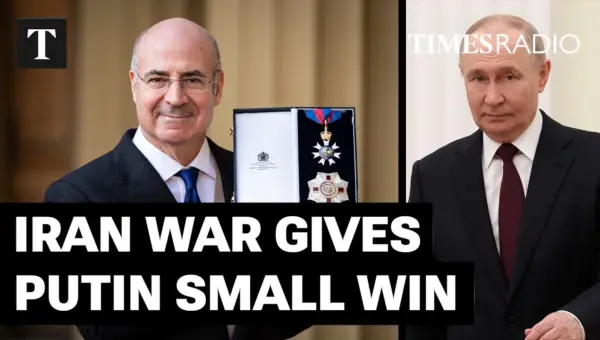
Trump’s Iran Policy Aids Russia, Hurts Europe, Expert Warns
A leading Russian finance expert warns that President Trump's actions regarding Iran and Russia are a "gift" to Vladimir Putin, enabling Moscow's war in Ukraine while harming Europe's energy security. The expert suggests Trump's policies prioritize business over geopolitical stability.

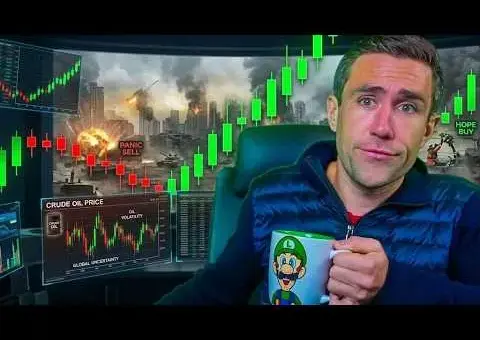
Oil Surges Towards $150 Amid Escalating Iran Conflict
Escalating tensions involving Iran and the effective closure of the Strait of Hormuz are fueling fears of oil supply disruptions and potential price surges towards $150 per barrel. While some analysts predict dire consequences, options market data suggests a less extreme outlook. Geopolitical risks continue to dominate market sentiment, though some economic indicators point to underlying resilience.

Ukraine Offers Drone Defense Expertise Amid Global Escalation
Ukraine is now offering its hard-won expertise in countering drone attacks to nations facing similar threats, a significant shift amidst global escalations. As the Kremlin issues dire warnings, European leaders reaffirm unwavering support for Kyiv, while economic and geopolitical landscapes are reshaped by regional conflicts and shifting energy dependencies.