Trump’s Conflicting Iran War Messages Shake Markets
President Trump's conflicting statements on the Iran war have sent shockwaves through global markets, causing significant volatility. While assuring the conflict is nearing its end, mixed messages about the Strait of Hormuz and ongoing military objectives have fueled uncertainty. Experts question the political viability of declaring victory amidst the current geopolitical landscape.

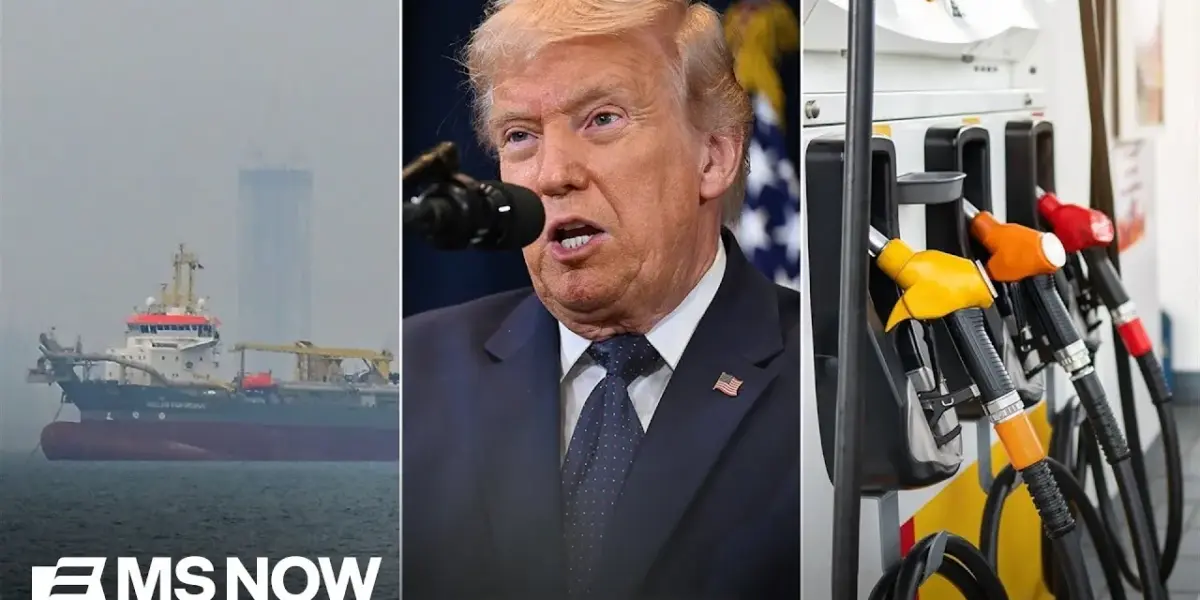
Markets Volatile Amid Shifting Iran War Narratives
Washington D.C. – In the days leading up to crucial midterm elections, global markets experienced significant volatility, largely driven by conflicting signals from President Donald Trump regarding the ongoing conflict in Iran. The Dow Jones Industrial Average saw a sharp decline, plummeting nearly 900 points in early trading on Tuesday. However, a late-day rebound, attributed to the President’s reassurances that the war was nearing its end, saw the index close with a gain of over 200 points.
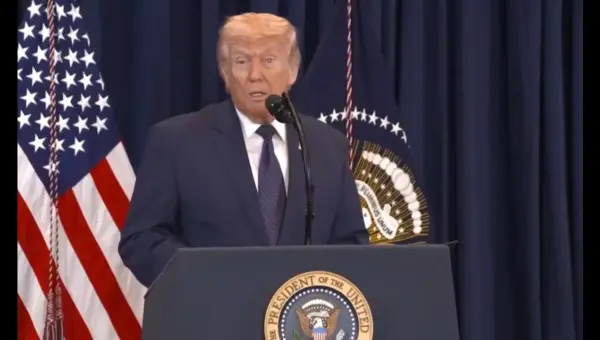
President Trump himself offered a range of statements that contributed to the market’s turbulence. In an interview with CBS News, he declared the war to be “very complete.” Yet, in the same breath, he asserted that the Strait of Hormuz was open and that he was “thinking about taking it over.” These remarks were followed by a more assertive message to Republican lawmakers and the media, stating, “WE’VE ALREADY WON IN MANY WAYS, BUT WE HAVEN’T WON ENOUGH. WE GO FORWARD MORE DETERMINED THAN EVER TO ACHIEVE ultimate victory that will end this long-running danger once and for all.” He further elaborated, “You know, Iran was supposed to be this big, powerful country. We wrapped the hell out of them… We’re ahead of our initial timeline by a lot.” He concluded this address with a firm warning: “I will not allow a terrorist regime to hold the world hostage and attempt to stop the globe’s oil supply. And if Iran does anything to do that, they’ll get hit at a much, much harder level.”
Reality on the Ground: Strait of Hormuz Under Strain
Despite the President’s optimistic pronouncements, on-the-ground reports and market data paint a different picture. The Strait of Hormuz, a critical chokepoint for global oil supply, remains effectively constrained. Data from Bloomberg reveals a significant drop in maritime traffic, with fuel tankers rerouting and oil prices surging past $100 a barrel at one point before settling lower after the President’s comments. The average price of gasoline in the U.S. also rose, reaching $3.47 a gallon.
Josh, reporting live from the UAE, described the situation as “mixed messaging, actually all around.” He noted that publicly available marine traffic GPS sites still showed clusters of ships waiting in the Gulf of Oman and Persian Gulf, indicating a reluctance to traverse the Strait due to safety concerns. “The reality is… it’s only really open when the merchant mariners who are on these ships transporting these goods deem it safe enough to risk their lives to cross,” Josh explained. He added that while ships can pass quickly once deemed safe, the disruption impacts industries reliant on the strait, including petroleum products, liquefied natural gas, aluminum, and fertilizer.
“The Strait of Hormuz is still effectively closed. Traffic is way down. Tankers are stranded… fuel tankers are now rerouting toward East Asia where energy buyers there are outbidding rivals to lure fuel shipments.”
Geopolitical Tensions and G7 Response
The conflict has also seen escalatory actions in the region. Iran reportedly struck targets in the UAE and Saudi Arabia, prompting stern rebukes. A ballistic missile incident over Turkish airspace even led to warnings from NATO about potential involvement. Concurrently, there was a notable decrease in reported projectile attacks on the UAE, dropping to 12 in a 24-hour period, a significant reduction from previous days. Analysts are speculating whether this signifies a reduction in Iranian drone supplies or a shift in strategy, potentially signaling a de-escalation.
In response to the market volatility and ongoing concerns about energy supply, energy ministers from the G7 nations are scheduled to hold a virtual meeting to discuss a potential coordinated release of oil reserves. This comes as the U.S. Strategic Petroleum Reserve is approximately 58% full, limiting the scope for significant long-term price impact from a U.S. release alone.
Expert Analysis: Conflicting Messages and Political Dilemmas
Financial journalist Ron Insana commented on the limited impact of potential oil reserve releases, stating, “IT ONLY HAD REALLY A SHORT-TERM IMPACT. 24 HOURS AGO OIL WAS TOUCHING $120 A BARREL… WHEN THE PRESIDENT SPOKE TODAY, WE GOT ALL THE WAY BACK TO $85 A BARREL FROM 120 LAST NIGHT.” He characterized such measures as “stopgap measures at best” given global daily consumption rates.
Susan Glasser, a staff writer for The New Yorker, highlighted the administration’s “conflicting things.” She observed President Trump’s tendency to say “the quiet part out loud,” noting his statement that the war was “almost over” but also his desire to “do some more winning.” Glasser suggested that the President faces a dilemma: while his past performance indicates a desire to exit conflicts, his fuzzy articulation of war goals makes declaring victory challenging, especially given the perceived lack of a decisive outcome against the Iranian regime.
Glasser also questioned the political viability of declaring victory, particularly after the killing of Supreme Leader Khamenei was followed by the ascension of his son to a prominent position. “For Donald Trump, even with his ability to brazen through… it’s going to be hard for him to just say tomorrow never mind uh and here’s this great victory i won,” she stated, suggesting the administration might be seeking an “off ramp” and pressuring to alleviate energy price concerns to buy time for a more favorable outcome.
Questioning the President’s Strategy
Peter Goodman, global economics correspondent for The New York Times, addressed President Trump’s remarks encouraging oil tanker crews to “show some guts and sail through the Strait of Hormuz.” Goodman dismissed this as an unrealistic strategy, recalling how Iranian proxy forces managed to disrupt Red Sea traffic. He emphasized that the Strait of Hormuz, carrying a fifth of the world’s energy supply, can be rendered effectively impassable through instilled fear, irrespective of military might.
“It’s very easy to go and question the manhood, if you like, of the people who are actually there on board these vessels. But no, that’s not going to be an effective recruitment strategy,” Goodman argued. He concluded that Iran is succeeding in its playbook of raising global economic costs, and the President’s mixed messages may be complicating his own decision-making process. The situation underscores the volatile nature of the conflict and its far-reaching economic implications.
Looking Ahead
As the G7 energy ministers convene and markets react to the shifting narratives, the true end game of the Iran conflict remains uncertain. The coming days will be critical in discerning whether the recent de-escalation in reported attacks is sustained and how the administration will navigate the complex geopolitical and economic pressures, particularly with the midterm elections on the horizon.
Source: 'Very conflicting': Trump sends mixed messages on state of Iran war (YouTube)

Related Articles
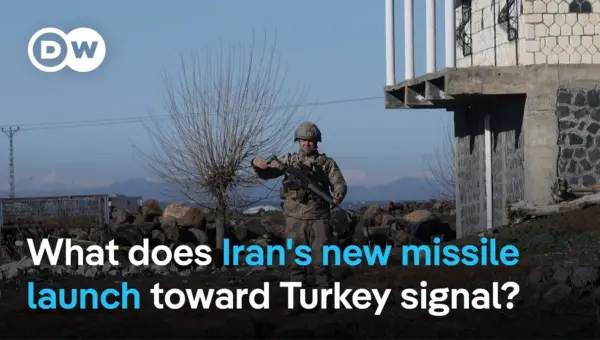
Iran Denies Turkey Missile Strikes as NATO Expert Casts Doubt
NATO defenses intercepted an Iranian ballistic missile over Turkey for the second time, prompting Iran to deny aggressive intent. However, a NATO expert expressed strong doubts, calling Iran's claims difficult to believe amidst escalating regional tensions. Turkey continues its delicate balancing act between its alliance obligations and regional diplomacy.

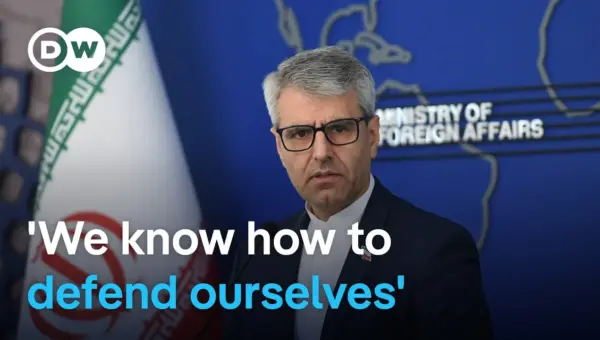
Iran Appoints New Leader Amidst Escalating Regional Conflict
Iran has appointed Moabah Hami as its new Supreme Leader amid escalating regional hostilities, drawing international scrutiny. The Foreign Ministry spokesperson defended the appointment as constitutional and asserted Iran's right to self-determination, while labeling the ongoing conflict as an "act of aggression" by the US and Israel.
Trump’s Iran War Claims Crumble Under Scrutiny
President Trump's claims of a "complete" war in Iran clash with his own defense secretary's view, revealing a concerning disconnect. This analysis examines the conflicting narratives, economic fallout, geopolitical implications, and political hypocrisy surrounding the conflict.