China’s Elite Signals: Unpacking the Puzzling Clues at the Two Sessions
Extraordinary security and a series of puzzling occurrences at China's Two Sessions have sparked intense speculation. From surreal snow inspections to subtle shifts in official broadcasts and pronouncements, these moments offer a glimpse into the opaque world of Chinese politics.

China’s Elite Signals: Unpacking the Puzzling Clues at the Two Sessions
The annual Two Sessions political gatherings in Beijing are typically tightly choreographed affairs, designed to project an image of unwavering unity and strong leadership. However, this year’s events, marked by extraordinary security measures and a series of seemingly unusual occurrences, have sparked intense speculation among political insiders and observers. From surreal security protocols to subtle shifts in official broadcasts, these moments, though small, could be interpreted as significant signals within the opaque world of Chinese politics.
Unprecedented Security and Surreal Scenes
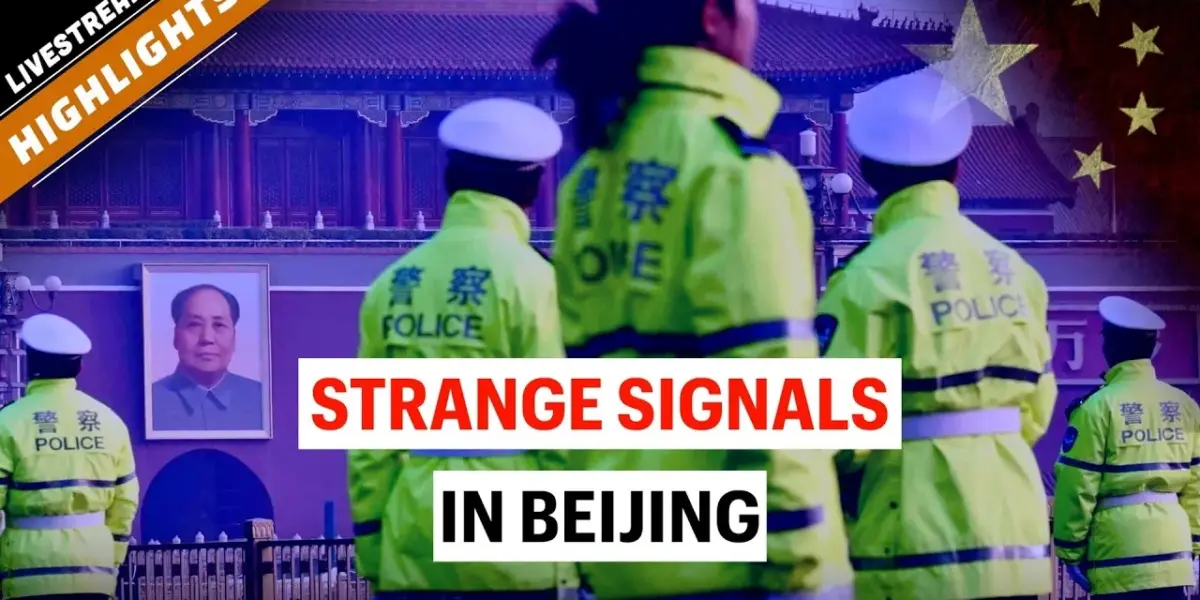
The atmosphere surrounding the Two Sessions was palpable, with security measures reaching an unprecedented level. Reports described guards meticulously inspecting personal belongings, even dismantling phone cases and flipping through notebooks. Security personnel were stationed across the capital, maintaining round-the-clock surveillance. This heightened scrutiny extended to the most mundane elements, with guards instructed to inspect the freshly fallen snow in Beijing. The image of officers sifting through snow piles, searching for concealed items, presented a surreal and almost theatrical backdrop to the political proceedings.
The Passing of a Political Elder
On the opening day of the Chinese People’s Political Consultative Conference (CPPCC), a significant announcement was made: the death of Song Ping at the age of 109. Song Ping was no ordinary retired official. Often referred to as a “living fossil,” his career spanned the Mao Zedong era, and he served as Premier Zhou Enlai’s secretary. He later rose to become a powerful figure in charge of personnel appointments, significantly shaping the careers of many future leaders, including Hu Jintao. He also had ties to Xi Jinping’s father. Even in his final years, Song remained politically engaged, notably attending the 20th Party Congress in 2022, where he witnessed the dramatic escort of former leader Hu Jintao out of the meeting.
The timing of Song Ping’s death, announced on the very first day of the Two Sessions, has led to considerable discussion. While some attribute it to natural causes, others find it curious. Traditionally, the Chinese Communist Party (CCP) tends to avoid announcing the deaths of senior political figures during major national political meetings. The announcement’s placement amidst the opening day’s proceedings has led to questions about whether it was a mere coincidence or a deliberate release of information at a specific moment.
Xi Jinping’s Seating Arrangement: A Visual Shift
Another moment that drew significant attention was Xi Jinping’s seating during a preparatory meeting. While typically positioned on the main stage with other top officials, footage from CCTV showed Xi Jinping seated among the delegates, off the stage. This visual departure from the norm, even if technically permissible under preparatory meeting rules, was unprecedented in official broadcasts. In previous years, such scenes of the paramount leader sitting amongst ordinary delegates were not shown. The inclusion of this footage has prompted observers to question why this change was made and whether it signifies a shift in power dynamics or a deliberate message being conveyed by state media.
A Bow of Loyalty or a Farewell?
Further fueling speculation was an interaction between CPPCC Chairman Wang Huning and Xi Jinping. As Wang Huning returned to his seat after delivering a speech, he paused and bowed slightly towards Xi Jinping. While this could be interpreted as a simple gesture of ultimate loyalty and respect, many observers have read deeper into it. Some speculate that it might carry a symbolic meaning, perhaps even a subtle political farewell, suggesting that this could be the last time Wang Huning would deliver a speech in front of Xi Jinping in such a capacity. This interpretation, however, is not universally shared, with others maintaining that it was primarily a display of respect.
Omitted Words in a Key Report
Premier Li Qiang’s government work report, a lengthy document, also contained a notable discrepancy. The official written text included the line, “We firmly oppose hegemonism and power politics,” a phrase often used by Beijing in its subtle anti-American narrative. However, when Li Qiang delivered the report aloud, he omitted this specific line entirely. The phrase was present in the written document but was not spoken. In the highly disciplined environment of the CCP, where every word is meticulously prepared and approved, such a discrepancy is extremely rare. The omission has led to questions about whether it was an accidental mistake or a deliberate choice, potentially indicating a divergence in thinking on this issue between the Premier and the top leadership.
Lingering Presence of Purged Officials
Adding to the intrigue, the official roster of delegates attending the Two Sessions included the names of two individuals who had been arrested in late January. Their continued listing as participants, despite their detention, has raised eyebrows among those closely watching the internal power struggles within the People’s Liberation Army (PLA) leadership. This detail suggests that either the purge was not as complete as assumed, or that their inclusion was intentional, perhaps to signal something about the ongoing consolidation of power.
Xi Jinping’s Stark Warning to the Military
During a meeting with the PLA and armed police delegation, Xi Jinping delivered a pointed message: “The military holds the guns. There must be absolutely no one in the armed forces who harbors divided loyalties toward the party.” This statement, while seemingly straightforward, carries a heavy subtext, potentially making generals in the audience question if the warning was directed at them. The accompanying visual of the delegates sitting in unnervingly perfect, straight lines further amplified the mood, suggesting an atmosphere of intense discipline, conformity, and perhaps underlying tension within the military establishment.
Why This Matters
The Two Sessions are more than just annual political meetings; they are a window into the inner workings of the CCP and the direction of China. The unusual signals observed this year, from the heightened security to the subtle shifts in official messaging and imagery, suggest a complex political landscape beneath the surface of planned unity. These moments, while open to interpretation, indicate that the usual predictability of Chinese politics may be giving way to subtle, perhaps even unintentional, disclosures of internal dynamics. Political insiders and international observers will continue to analyze these signals for clues about leadership stability, policy directions, and potential shifts in power within the world’s second-largest economy.
Implications, Trends, and Future Outlook
The observed anomalies could point to several ongoing trends. The extreme security might reflect a heightened sense of internal vulnerability or a desire to project an image of absolute control in uncertain times. The subtle visual and textual discrepancies could signal internal disagreements or evolving communication strategies within the leadership. The continued listing of arrested officials and Xi Jinping’s stern warning to the military underscore the ongoing emphasis on loyalty and discipline, particularly within the armed forces, a critical pillar of CCP power. The future outlook suggests a continued focus on consolidating Xi Jinping’s authority, maintaining stability, and navigating complex domestic and international challenges. The careful observation of such subtle signals will remain crucial for understanding the trajectory of China’s political and economic landscape.
Historical Context
The CCP has a long history of employing symbolism and carefully crafted messaging to consolidate power and project an image of authority. From the carefully managed propaganda during Mao’s era to the more sophisticated media control under Deng Xiaoping and Jiang Zemin, the party has always understood the power of perception. The Two Sessions have evolved from relatively low-key affairs to highly publicized events designed to showcase the party’s strength. This year’s events, however, appear to be deviating from the script, perhaps unintentionally, by offering glimpses of less controlled moments. The tradition of relying on elder statesmen like Song Ping for legitimacy and historical continuity has also been a recurring theme, making his passing and its timing significant. Furthermore, the emphasis on military loyalty has historical precedents, particularly during periods of political transition or consolidation, as seen in various purges and leadership reshuffles throughout CCP history.
Source: Inside China’s Two Sessions: The Signals Political Insiders Are Watching (YouTube)

Related Articles


Iran: The Geopolitical Lever in the US-China Tech Race
Geopolitical insights reveal Iran's pivotal role in the US-China tech race, acting as a lever that challenges China's influence. A historical memo outlining targeted countries underscores the strategic depth of this competition.

China’s ‘Robot Army’ Viral Videos Exposed as AI Fakes
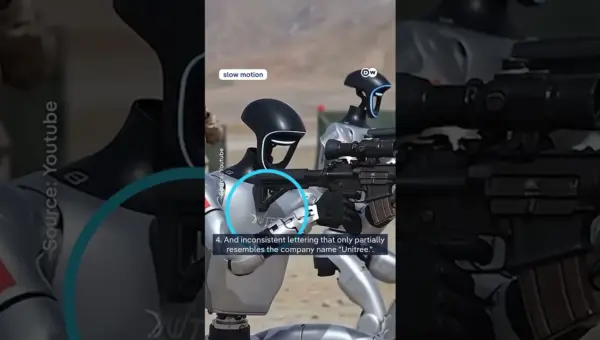
Viral social media posts claiming China has built a robot army have been debunked as sophisticated AI-generated fakes. Analysis of the videos revealed numerous glitches, proving they are not real footage of military robots. While humanoid robot development is ongoing, these specific viral clips are fabricated.
Xi’s Purges Deepen, Signaling Consolidation, Not Weakness
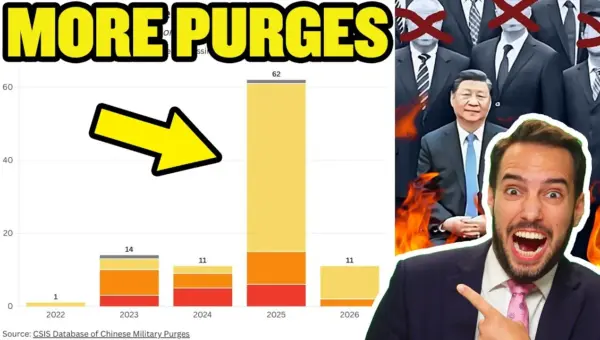
Xi Jinping's intensified purges within China's military and political elite signal a consolidation of power, not a weakening grip. This trend underscores a strategic focus on loyalty and ideological conformity ahead of crucial political events, with significant implications for global stability.