Banks Wage ‘Lawfare’ Over Crypto Clarity Act
Powerful banking lobbies are reportedly preparing for a protracted legal battle, dubbed "lawfare," to prevent the Clarity Act's passage in its current form. The bill aims to establish a clearer regulatory framework for digital assets but faces significant opposition from the banking industry, internal crypto divisions, and political complexities.

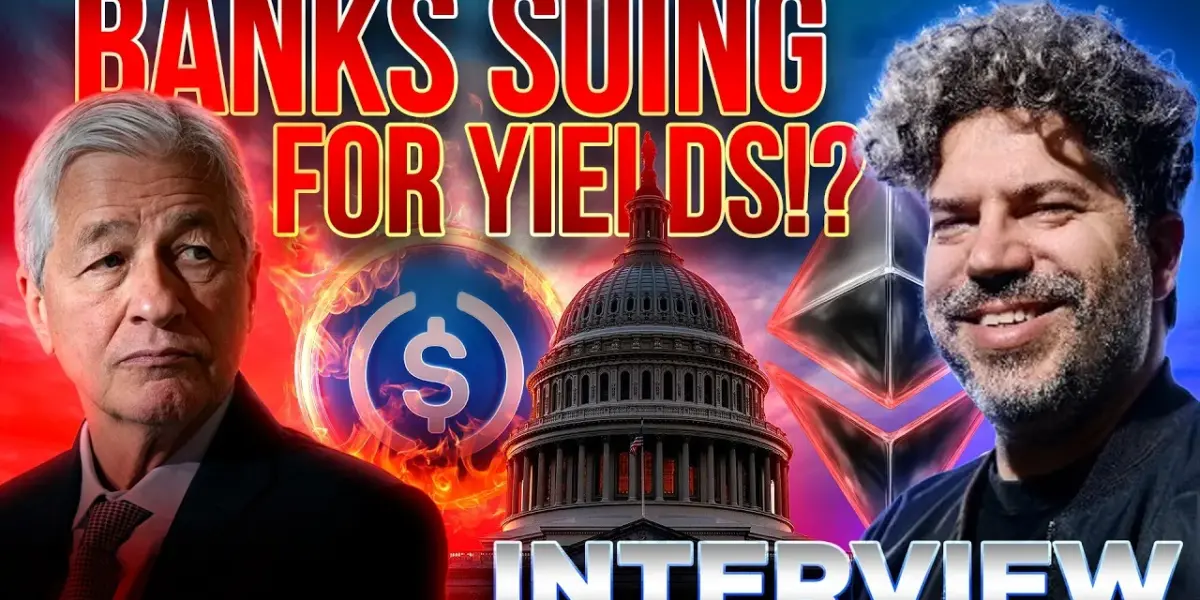
Banks Wage ‘Lawfare’ Over Crypto Clarity Act
The cryptocurrency industry is bracing for a potential legislative showdown as the U.S. Congress considers the Clarity Act, a bill aimed at establishing a clearer regulatory framework for digital assets. However, powerful banking lobbies are reportedly preparing for a protracted legal battle, dubbed “lawfare,” to prevent the bill’s passage in its current form, according to insights from Austin Campbell, a consultant at ZK Consulting, in a recent interview.
Clarity Act Faces Uncertain Future Amidst Industry and Political Clashes
The probability of the Clarity Act passing is currently fluctuating, with market sentiment on platforms like Polymarket showing a dip from a high of 74% to around 70%. This uncertainty stems from a complex web of competing interests. The banking industry, a historically powerful lobby, views the bill as a direct threat to its established dominance in the financial system. They argue that the proposed regulations could introduce undue competition and negatively impact their core business of deposit-taking and lending.
“The bank lobby is one of the more powerful lobbies,” Campbell noted. “And right now, even though I think it’s on incorrect like premises, they’ve come out against the Clarity Act very strongly.” He expressed skepticism about the current 70% probability, advising to “take the under on 70,” citing the inherent difficulties of passing major legislation in an election year and the significant influence of banking interests.
Adding to the complexity, internal divisions within the crypto community itself on what provisions should be included in the Clarity Act further complicate the legislative path. Moreover, political dynamics, including the influence of the Trump administration’s stance on financial regulation, are also at play.
Banking Lobby’s Strategy: Lawsuits and Opposition
The banking industry’s opposition is not limited to lobbying efforts. Reports indicate that banks are actively exploring legal avenues, including lawsuits against regulatory bodies like the Office of the Comptroller of the Currency (OCC), to challenge regulatory actions that could benefit fintech and crypto companies. These actions, such as the OCC’s consideration of master accounts for non-bank financial institutions, aim to maintain the status quo and prevent new entrants from accessing critical financial infrastructure.
Campbell explained the banks’ fundamental position: “We are deposit-taking institutions who lend to the average American, and anything and everything that could impact that in a negative way where negative definitionally is good for the banks, they are opposed to.” This includes opposing additional competition, “skinny” master accounts, and the Clarity Act itself, all driven by the banks’ self-interest.
The CBDC Debate: A Distraction or a Dealbreaker?
A significant point of contention within the Clarity Act discussions is the inclusion of provisions related to Central Bank Digital Currencies (CBDCs). While some lawmakers advocate for a ban on CBDCs, particularly concerning a proposed 2030 sunset provision, others view the entire CBDC narrative as a potential distraction that could derail the bill’s passage.
Campbell suggested that the CBDC aspect might be stripped from the bill to facilitate its approval. He highlighted the Federal Reserve’s current stance that a CBDC would require congressional authorization, making its current existence de facto illegal. The concern among some House members is that a sunset provision implicitly legalizes CBDCs after a certain date. Campbell also posited that the U.S. might benefit from not pursuing a CBDC, citing global examples where public adoption has been low due to concerns about government control over money. He believes the focus should remain on stablecoins and private market solutions.
Master Accounts and the Future of Payments
The granting of master accounts to entities like Kraken by the Federal Reserve represents a significant shift, potentially challenging the banking monopoly over the payment system. Campbell drew parallels to the early days of PayPal, explaining how banks have inadvertently gained a monopoly over payments, a role they were not originally designed for.
The “skinny master account” concept, proposed by Federal Reserve official Christopher Waller, aims to separate payment systems from deposit-taking and lending. This would allow entities like Kraken to facilitate payments without engaging in traditional banking activities like earning interest or borrowing from the discount window. This move could foster a more resilient and equitable payment system.
Campbell also addressed the evolving debate around stablecoin yields. He differentiated between offshore stablecoins with opaque reserves and regulated U.S. dollar stablecoins, noting that entities like Fidelity already offer cash management accounts backed by government money market funds, which are well-accepted within the U.S. financial system. The concern for the Fed appears to be around “narrow banks” – entities that solely hold deposits at the Fed and pass on interest, potentially creating a less resilient system.
Treasury’s Stance on DeFi and Asset Freezing
The Treasury Department has proposed a framework for freezing suspicious digital assets, urging lawmakers to define which Decentralized Finance (DeFi) actors should comply with Anti-Money Laundering (AML) and Counter-Terrorist Financing (CFT) obligations. This move aims to balance the desire for an accessible financial system with the need to combat financial crime within the crypto ecosystem.
Campbell explained that Treasury is attempting to strike a balance, not by unilaterally seizing assets, but by implementing controls to prevent illicit funds from moving freely. The Treasury’s focus on freezing suspicious assets, particularly those of stablecoins, acknowledges the reality that entities with control over transactions and funds, even in supposedly decentralized projects, must adhere to existing legal frameworks. He differentiated this from true DeFi, where autonomous operation is paramount, contrasting it with “decentralized name only” (DINO) projects that retain centralized control.
Concerns about a “dystopian” future where assets can be controlled or restricted were raised. However, Campbell pointed out that many U.S. dollar stablecoins already possess freeze-and-seize capabilities, often implemented at the request of law enforcement to comply with real-world laws. For those worried about such controls, he suggested that cryptocurrencies like Bitcoin or privacy coins offer alternatives, emphasizing that using real-world assets necessitates adherence to real-world regulations.
Florida’s Stablecoin Framework: A State-Level Precedent
In a significant development, Florida is poised to become the first state to pass a dedicated stablecoin framework with its State Bill 314. This legislation aims to provide legal clarity for stablecoin issuers, mandating 1:1 reserves and consumer protections. It also includes a pilot program allowing for the payment of certain government fees in stablecoins.
This move could have implications for major payment networks like Mastercard and Visa, potentially impacting interchange fees. Campbell suggested that while it might be challenging for banks and high-yield rewards programs, it could lead to increased overall payment volumes if implemented successfully, akin to the Jevons paradox where increased efficiency leads to greater demand.
The Path Forward: Self-Custody and the Future of Regulation
The discussion also touched upon the importance of self-custody, with Campbell strongly advocating for it as a means to keep financial institutions honest. He argued that the ability for individuals to hold their own assets, both traditional and digital, acts as a crucial forcing mechanism for good behavior within the financial ecosystem.
Looking ahead, the battle over the Clarity Act is far from over. The influence of powerful banking lobbies, the complexities of regulatory frameworks, and the evolving landscape of digital finance suggest a dynamic and potentially contentious period for the cryptocurrency industry in the United States.
Source: Banks Suing Government For Stablecoin Yields!?🚨Austin Campbell INTERVIEW (YouTube)

Related Articles


Bitcoin Dips Below $70K Amid Geopolitical Fears
Bitcoin has fallen below the $70,000 mark amidst rising geopolitical fears and weak economic data. Meanwhile, the CLARITY Act faces its final countdown, and AI-driven layoffs signal a shifting economic landscape.


Crypto Firms Gain Fed Master Accounts, Banks Lose Power
Cryptocurrency firms are reportedly gaining access to Federal Reserve master accounts, a move that challenges the traditional dominance of banks. This development could significantly impact XRP holders and the broader digital asset industry by fostering greater integration with the U.S. financial infrastructure.


Wall Street’s Tokenization ‘Trap’ Threatens Crypto’s Core
Institutional tokenization, led by giants like BlackRock, promises trillions in new capital but raises concerns about control. Standards like ERC-3643 embed KYC/AML at the wallet level, potentially undermining crypto's permissionless nature. While offering efficiency, this shift could lead to a 'permissioned finance' model on public rails.