Ex-Defence Secretary Wallace Slams UK Military Readiness
Former UK Defence Secretary Ben Wallace has sharply criticized the nation's military readiness amidst rising global tensions and economic uncertainty. He highlighted strategic deployment errors and systemic underfunding within the Ministry of Defence, arguing that current leadership prioritizes optics over essential capabilities.

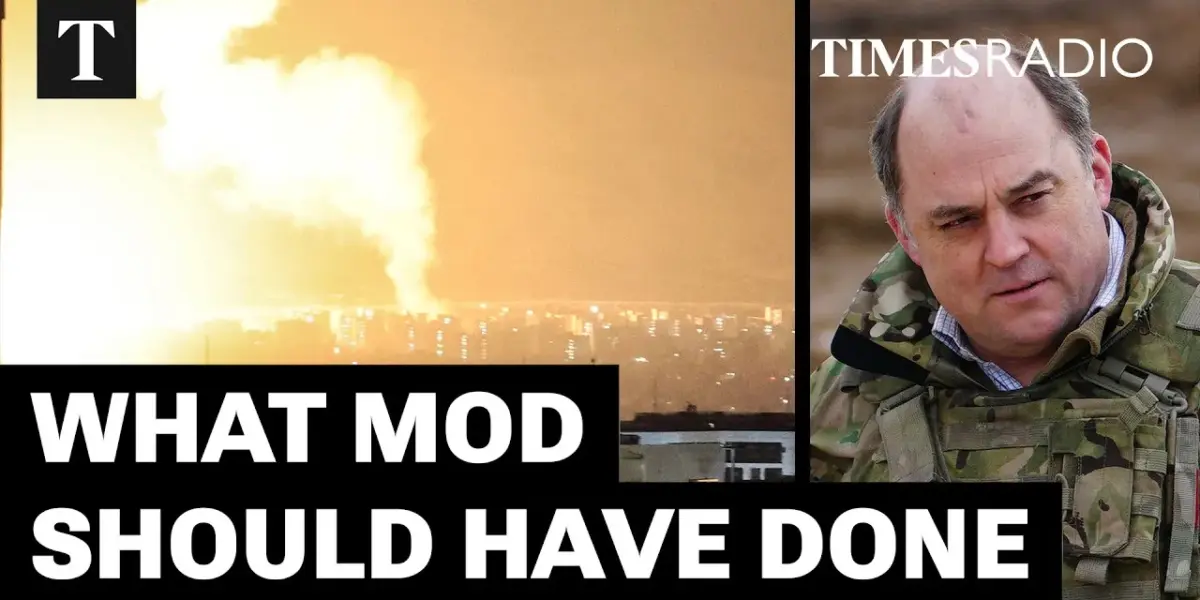
Ex-Defence Secretary Ben Wallace Criticizes UK Military Preparedness Amidst Iran Tensions
Former Conservative Defence Secretary Ben Wallace has voiced sharp criticism regarding the United Kingdom’s military preparedness, particularly in light of escalating tensions in the Middle East and the potential impact on global energy markets. Speaking on a recent broadcast, Wallace outlined a scenario where he, as Defence Secretary, would have positioned naval assets differently and highlighted systemic issues within the Ministry of Defence (MOD) that he believes have led to a hollowing out of capabilities.
Strategic Missteps in Naval Deployment
Wallace began by detailing a specific hypothetical decision he would have made differently regarding naval deployment. “I wouldn’t have let HMS Anchen attack submarine sail through the straits of down the Sewish canal and disappeared over the horizon to Australia,” he stated. “I would have made sure it was loitering in the Indian Ocean given it was very obvious to the public that America was building up to do something.” This suggests a belief that UK naval assets should have been more proactively positioned in a region of heightened geopolitical activity, rather than being sent on a long transit away from potential flashpoints.
Economic Fallout and Trump’s Stance
The discussion was framed against a backdrop of rising oil and gas prices, with the price of oil surpassing $100 a barrel. The head of an energy company utility expressed uncertainty about future price increases. Former President Donald Trump, commenting via social media, characterized these rises as short-term, asserting that oil prices would drop rapidly once the “Iran nuclear threat is over.” He further stated that the price increase was a “very small price to pay for the USA and world safety and peace,” dismissing any dissenting opinions as the view of “fools.”
“I think I’m probably a fool then,” responded Wallace, directly addressing Trump’s assertion, implying skepticism about the war ending quickly enough to mitigate economic damage.
Skepticism on War’s End and Regime Change
Wallace expressed doubt that the conflict would conclude swiftly. “I don’t think the war is going to end quickly. It might change in nature,” he commented. He also cast doubt on the notion of a popular uprising within Iran, noting the absence of such activity on the streets of Tehran. Referencing Trump’s claims of victory, Wallace stated, “He hasn’t really won anything yet when it comes to the changes of the nature of the Iranian regime.” While acknowledging that Israel may have achieved its primary objective of pushing back Iran’s nuclear program, Wallace was pessimistic about the prospect of internal regime change in the near future.
He further elaborated on the succession within Iran’s leadership, noting that the new leader, Ebrahim Raisi’s son, is expected to maintain the same operational methods as his predecessor. “He’s more of a hardliner than his father, which doesn’t bode well for the regional security,” Wallace observed, indicating that the change in leadership might not lead to de-escalation.
Gulf States’ Growing Resentment
Wallace predicted that Gulf States would likely become more vocal in their discontent towards the United States regarding the conflict. “They didn’t ask for this war and no one really did,” he stated, pointing out the adverse economic consequences for these nations. He specifically mentioned Dubai and Qatar, whose economies rely heavily on their status as global hubs, and suggested that the impact on air travel and related industries would be significant. While these states might be angered by Iran’s actions, Wallace believes there will be an underlying sentiment of, “what we didn’t ask for this and our loyalty only goes so far to the United States.”
Underfunding and Lack of Readiness: A Bipartisan Issue
Shifting focus to the UK’s military preparedness, Wallace addressed the public’s concern about the nation’s readiness for a predictable conflict in the Middle East. He argued that the issue of underfunding defense is not confined to one political party. “In every party there has been people like me calling for more defense spending over the years,” he noted, citing examples from both Labour and Conservative backbenches. The tragedy, according to Wallace, is that this crucial debate has been “reduced to, well, you didn’t or you did or you cut this.” He asserted that leaderships at various times failed to heed calls for increased defense investment.
Treasury’s Impact on MOD Spending
Wallace pinpointed a specific government decision approximately 20 months prior to his interview that he believes exacerbated the MOD’s financial constraints. He cited unfunded pressures placed on the department, including an unfunded pay rise and national insurance increases. These increases, while not directly affecting civil servants, allowed defense contractors to pass on the cost of national insurance contributions. This resulted in the MOD needing to find over £2 billion annually for day-to-day running costs, which had to be offset by cuts elsewhere.
“And running costs in the Ministry of Defense is training, is deployment, and is operating, which is why we didn’t have anything really operating in the Middle East,” Wallace explained. He contrasted this with his tenure as Defence Secretary, when the UK maintained an air defense battery in Saudi Arabia and had regular naval presence in the Gulf. He also mentioned his plans for additional army air defense batteries, which he claims the current government has paused or cut.
Leadership and Prioritization in Government
When asked about the dynamic between the Defence Secretary and the Treasury, Wallace emphasized the ultimate authority of the Prime Minister in setting national priorities. “It ultimately works when the Prime Minister sets his or her priorities,” he stated. While Prime Ministers often make public commitments to defense at international forums, Wallace argued that they frequently fail to translate these into concrete actions by directing the Chancellor to reallocate funds from other areas. This, he believes, leads to a disconnect between public perception and actual military capability.
“You get this awful place where the public thinks everything’s fine and the aspiration and the British sort of posing around the world of we’re a world leader is not backed up by money and so you get this. That’s why you get hollowing out,” Wallace lamented. He described this as “parade ground defense unfunded in its depth,” meaning the UK possesses visible military elements like the Red Arrows and ceremonial units but lacks essential resources such as ammunition stocks, electronic warfare capabilities, and signals intelligence, all of which require significant, consistent funding.
Bureaucratic Hurdles and Centralized Control
Wallace also criticized what he perceives as an overly centralized decision-making process within the current government, suggesting it hinders operational agility. He stated that, during his time as Defence Secretary, he managed the department autonomously and did not require constant approval for deployments. In contrast, he hears from his former department that there is now an increased layer of bureaucracy, with decisions needing to go through the National Security Adviser, Jonathan Pal, leading to delays in operational readiness.
“I would have looked at the region as I had done and I know the region to be fair. I had that advantage. I wouldn’t have let HMS Anen attack submarine sail through the straits of down the Sewish canal and disappeared over the horizon of Australia. I would have made sure it was loitering in the Indian Ocean given it was very obvious to the public that America was building up to do something,” he reiterated, emphasizing his belief in the Defence Secretary’s authority to make such strategic judgments.
Call for Long-Term Funding and Flexibility
Wallace concluded by advocating for a more consistent and flexible long-term funding model for the MOD. He suggested that a 10-year budget with greater flexibility could enable the department to deliver more for the taxpayer at a lower cost, as rigid Treasury rules can sometimes inflate expenses through delays and changing economic conditions. He pointed to past instances where delays in equipment programs, as happened when the Labour government came into power, significantly increased costs due to inflation and other factors.
The interview concluded with a brief mention of a report in The Daily Telegraph suggesting that the submarine Wallace referenced, which had sailed past the conflict zone towards Australia, might be on its way back, indicating potential shifts in naval positioning in response to evolving geopolitical events.
Source: What I Would Have Done As Defence Secretary In Iran War | Ben Wallace (YouTube)

Related Articles

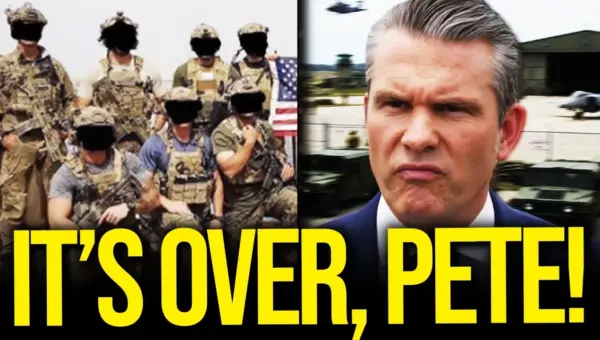
Pentagon’s Holy War Rhetoric Alarms Service Members
Reports of U.S. military commanders invoking religious prophecy and divine plans to justify the conflict in Iran have raised alarm bells. With top officials like Secretary of Defense Pete Hegseth encouraging troops to 'lean into their faith,' concerns are mounting over the separation of church and state within the armed forces and the potential for religiously motivated warfare.
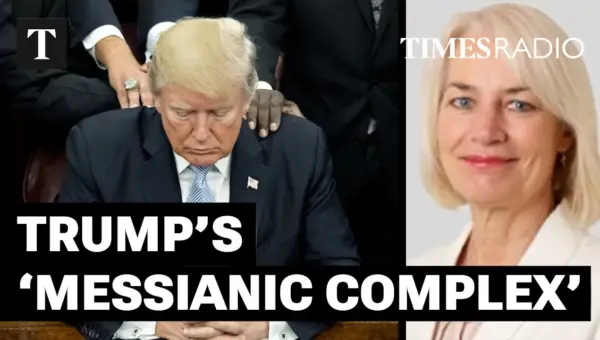
Trump’s ‘Messianic Complex’ Fuels Global Conflict, Analyst Says
Sarah Baxter, Director of the Marie Culvin Center for International Reporting, argues that Donald Trump's "messianic complex" is driving his foreign policy, potentially at the cost of domestic economic stability. The escalating conflict with Iran and rising oil prices have placed Vice President JD Vance in a difficult political position, fracturing the MAGA coalition and raising questions about future leadership within the Republican party.

Iran Conflict Backfires: Trump’s War Fuels Unrest, Profits
Donald Trump's approach to Iran is reportedly backfiring, fueling public unrest in Tehran and sparking accusations of family members seeking to profit from a new drone company. The conflict's economic impact is evident with disruptions to oil infrastructure, while political rhetoric focuses on internal divisions.