Greenland: Strategic Asset or Economic Mirage?
Greenland's strategic location and potential resource wealth have long attracted international interest, most notably from the United States. However, the economic viability of exploiting these assets is challenged by immense costs and logistical hurdles, while the islanders prioritize sovereignty and self-determination.

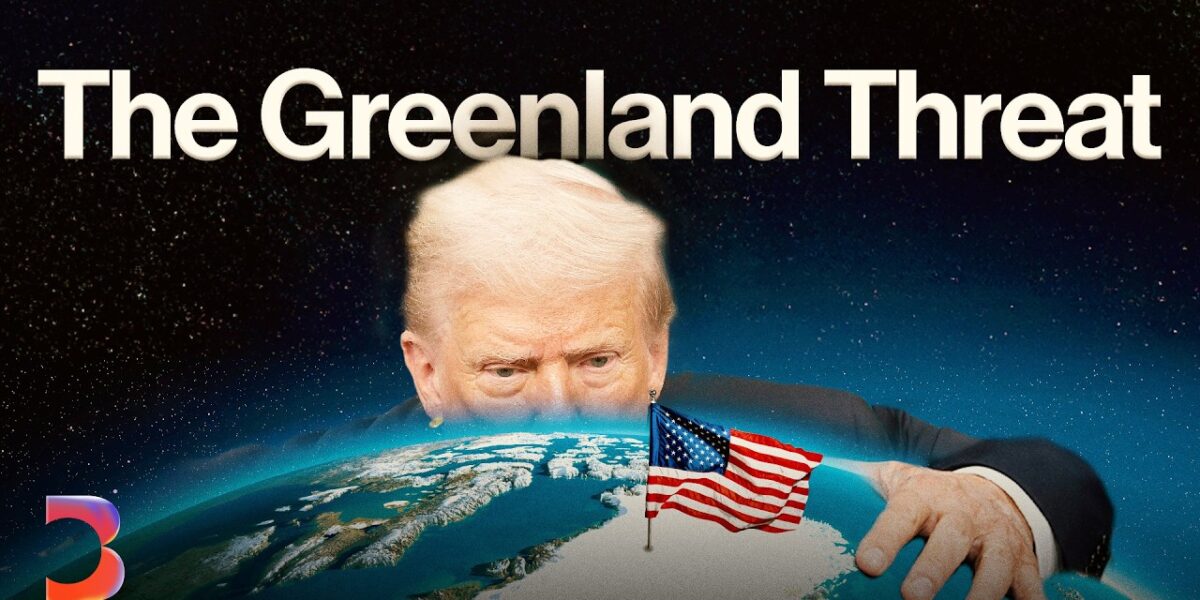
Greenland: Strategic Asset or Economic Mirage?
The strategic importance of Greenland has long been a subject of geopolitical interest, with the United States historically seeking to secure its presence on the vast Arctic island. While a 1946 U.S. offer to acquire Greenland from Denmark, rumored to be around $100 million in gold, was a non-starter, the allure of the island’s location and resources persists. More recently, former President Trump’s expressed interest in purchasing Greenland, first floated in 2019 and revived in 2024, reignited discussions about its value, not just for national security but potentially for economic gain.
The Security Imperative
Greenland’s Arctic location is undeniably a critical strategic asset. Its northern position makes it a vital listening post for monitoring missile threats, particularly from Russia, whose military activity in the region has intensified. The U.S. already operates the Pituffik Space Base in northern Greenland, equipped with radar systems to detect missile launches. Trump envisioned a more ambitious defense program, the “Golden Dome,” a proposed missile and air defense system leveraging both ground and space-based technology. While the specifics of this program remain speculative and its feasibility questioned by experts, the underlying rationale underscores Greenland’s perceived importance in a shifting geopolitical landscape.
The security rationale seems to be quite strong… One way or the other, we’re going to get it.
This strategic value is amplified by the increasing presence of both Russia and China in the Arctic. As climate change melts polar ice, new maritime trade routes are opening, making control of Arctic waterways essential for both commercial and naval vessels. Russia’s assertive posture and China’s growing Arctic ambitions have heightened concerns among Western allies, prompting initiatives like NATO’s “Arctic Sentry” mission to bolster regional presence.
Economic Prospects: A Murky Horizon
Beyond security, the economic case for Greenland is less clear-cut. Greenland is a semi-autonomous territory of Denmark, relying on approximately $600 million in annual grants from Copenhagen to fund its domestic policies. Its economy is heavily dependent on fishing, which accounts for the vast majority of its exports. While the island is actively seeking to diversify its economy through tourism and mining, progress has been hampered by significant challenges:
- High operational costs
- Limited infrastructure (roads, ports, power)
- Harsh weather conditions
- A lack of skilled labor
- Geographic remoteness, with many potential mineral deposits located far north, making exploitation extremely difficult.
The potential for mineral wealth, particularly critical minerals like lithium and rare earth elements, has been cited as a key economic draw. Danish geological surveys suggest Greenland may hold substantial deposits, with the U.S. Geological Survey estimating around 1.5 million metric tons of rare earths. However, these figures are often lower than those in other resource-rich nations, and the practicalities of extraction in Greenland’s extreme environment are daunting. Decades of exploration have yielded limited commercially viable operations, with only two small mines currently active.
The cost of developing the necessary infrastructure—roads, runways, ports, housing, and power grids—in such remote Arctic locations is staggering. Estimates for Trump’s proposed “Golden Dome” program alone have ranged up to $1 trillion, a figure that dwarfs the existing economic contributions of Greenland. Even the cost of maintaining a single overseas military base can range from $50 million to $200 million annually, before factoring in the immense expense of establishing new facilities in challenging terrain.
Greenland’s Sovereignty and Future
Despite these economic and strategic considerations, the most significant factor in Greenland’s future is the will of its people. Greenlanders are fiercely proud of their sovereignty and culture, deeply intertwined with their natural environment. The idea of being sold or acquired by another nation is antithetical to their desire to define their own future. While open to collaboration and partnerships, particularly for economic development, they emphasize that such ventures must respect their norms, values, and autonomy.
We want to collaborate. We want to set up partnerships and it has to be the economy, but it has to come through the Greenlanders. We are 56,000 people living here, we’ll be so reliant on external factors and collaborators.
The island’s efforts to boost direct international connections, such as the new international airport in Nuuk, have faced initial setbacks due to weather disruptions, highlighting the persistent logistical challenges. Greenlanders hope that tourism can play a vital role in their economic future, emphasizing its potential to preserve both their unique culture and their pristine natural environment, which they describe as one of the last untouched ecosystems on Earth.
Market Impact and Investor Considerations
The geopolitical maneuvering surrounding Greenland has implications for broader market stability, particularly concerning NATO and transatlantic relations. Trump’s rhetoric and actions over Greenland have, at times, strained relationships with European allies, raising concerns about the future of the alliance. A weakened NATO could embolden adversaries like Russia, potentially leading to increased regional instability and significant economic repercussions, with estimates suggesting a Europe-Russia conflict could cost the global economy over $1 trillion.
For investors, Greenland represents a complex proposition. The strategic value is evident, tied to global security dynamics and the emerging Arctic trade routes. However, the economic feasibility of extracting resources or developing large-scale infrastructure remains highly uncertain due to immense costs and environmental challenges. The island’s reliance on external support, coupled with its determination to maintain sovereignty, means that any significant development would likely require substantial, long-term investment with a high risk profile.
Ultimately, the value of Greenland may lie less in its quantifiable assets—military bases, mineral deposits, or potential trade routes—and more in its intangible importance as a sovereign entity and a unique, fragile ecosystem. The cost of losing such an environment, or destabilizing the region through aggressive geopolitical plays, could far outweigh any potential economic or strategic gains.
Source: Why Greenland Matters Now More Than Ever (YouTube)

Related Articles


Oil Prices Surge to $91 Amid Geopolitical Tensions
Oil prices have surged to $91 a barrel, driven by disruptions in the Strait of Hormuz. This is leading to higher gas prices across the U.S., with California facing particularly steep costs. The situation is fueling debate on energy policy, exports, and the transition to renewable fuels.


China’s Iran Gambit: Deception or a New World Order?
President Trump claims China will stop sending weapons to Iran, but deep skepticism remains due to China's past support and use of spy satellites to aid Iran. This move could be a strategic ploy to weaken the US military.
China Aids Iran Amid US Conflict Escalation
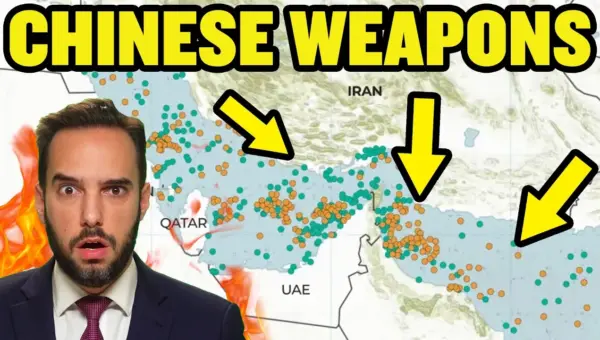
Recent intelligence suggests China is secretly supplying Iran with weapons like MANPADS and sharing critical intelligence, a significant escalation from its previous stance. This move, if confirmed, could deepen regional conflict and lead to severe US economic retaliation, while highlighting long-standing strategic ties between Beijing and Tehran.