US, Israel Launch ‘Epic Fury’ Strikes on Iran: What’s Next?
The US and Israel have launched significant air strikes on Iran, dubbed 'Epic Fury,' in a move framed as self-defense against nuclear and missile threats. Experts debate the legality, motivations, and potential regional fallout, with concerns over international law and the impact on the Iranian populace. The operation's true goals and exit strategy remain unclear amidst escalating tensions.

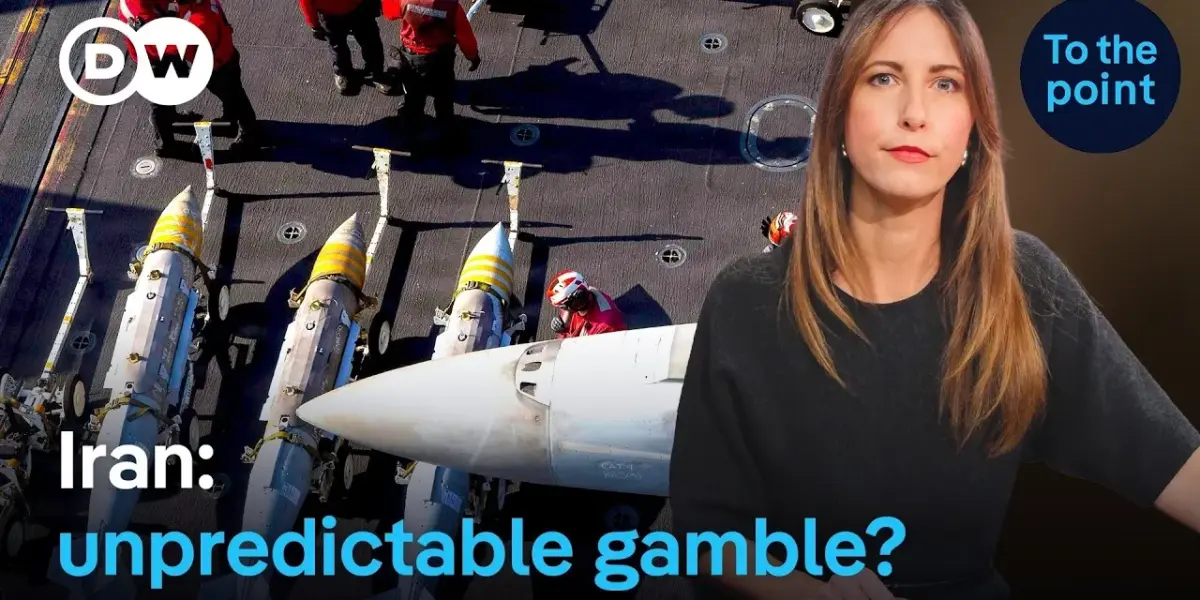
US and Israel Unleash ‘Epic Fury’ on Iran Amidst Escalation
In a dramatic escalation of regional tensions, the United States and Israel have launched a series of air strikes, codenamed ‘Epic Fury,’ targeting thousands of sites across Iran. The operation, framed by US President Donald Trump and Israeli Prime Minister Benjamin Netanyahu as an act of self-defense against Iran’s nuclear and ballistic missile programs, has drawn sharp criticism and raised urgent questions about international law and the potential for wider conflict. Iran’s retaliatory actions have already sown chaos, targeting both Israel and civilian infrastructure in the Gulf, leaving the region teetering on the brink.
Motivations Behind the Offensive
Journalist and Middle East expert Christine Hellberg suggests the primary objective behind ‘Epic Fury’ is to permanently halt Iran’s nuclear ambitions and missile development. However, she posits that the greatest threat the Iranian regime poses is to its own citizens, not external powers. “There was no imminent threat,” Hellberg stated, arguing that the operation is illegal under international law and that the threat to Israel was already diminished. She further contends that the offensive aims to reshape the Middle East to serve Israeli interests, with uncertain outcomes for the Iranian people’s self-determination.
Daniel Dylan, a senior editor at DW, highlighted that the timing of the US intervention appeared heavily influenced by Israeli plans. “Israel has many, many plans and designs on how to attack Iran. It’s its main adversary,” he explained, noting that Israel likely waited for American approval before acting. Dylan speculated that President Trump may have seized an unexpected opportunity to neutralize a significant portion of the Iranian leadership, including the supreme leader, viewing it as a chance to be a ‘hero.’
Domestic and International Repercussions
From New York, Hanzakov Shintla, head of the counter-extremism project, described the offensive as a “massive gamble” for President Trump, particularly with midterm elections looming. Shintla noted that the war is not broadly popular domestically, with less than half of Americans supporting it. He also pointed to existing divisions within the MAGA base, with some segments prioritizing an “America First” ideology that is critical of foreign interventions. The success or failure of this operation, he warned, could significantly impact Republican electoral prospects.
The situation for the people of Iran remains dire, with reports of over a thousand civilian casualties since the conflict began. Da Mira, an Iran expert, cautioned against generalizations about the Iranian populace’s reaction, citing the difficulty of obtaining reliable information from within the country. She indicated a mixed response, with some seeing external intervention as a potential catalyst for regime change, while others criticize the high civilian toll and damage to cultural sites. “You do see a bit of um hesitation amongst quite a few people in Iran with in terms of these external attacks,” she observed.
European Hesitation and International Law
European states have been notably reserved in their response to the US-Israeli actions in Iran, a stark contrast to their stance on Russia’s invasion of Ukraine. Daniel Dylan attributed this quietude to indecision and concerns over the legality of the operation and its potential destabilizing effects. He did, however, acknowledge a genuine danger emanating from Iran, citing the International Atomic Energy Agency’s reports of missing enriched uranium and Iran’s extensive missile arsenals as clear threats to regional stability.
Christine Hellberg expressed strong reservations about the implications for the international rules-based order. “This will backfire especially to middle powers and small countries like Germany that very much depend on the fact that the international law is applied for every state in the same way,” she argued. Hellberg stressed that while the Iranian regime’s downfall might be desired, it should not come at the expense of upholding international law, drawing parallels to the post-World War II order established to prevent future atrocities. She criticized the perceived double standards in international responses, citing the conflict in Gaza.
“The problem is that I think in the middle term this will be back this will backfire especially to middle powers in small countries like Germany that very much depend on the fact that the international law is applied for every state in the same way otherwise we will have a world order and it’s already we are already heading to that world order where the big powers can just do and enforce their own interests the way they do…”
Goals and Exit Strategies: A Muddled Picture?
The clarity of objectives for the US-led operation remains a subject of debate. While Hanzakov Shintla asserted that the goals of reducing Iran’s nuclear and missile threats and enabling regime change through popular support have been repeatedly stated by both President Trump and Prime Minister Netanyahu, Da Mira expressed confusion regarding the US administration’s concrete aims. She pointed to “very mixed messaging” and potential divisions within the US administration, suggesting that the US itself may not have a clear understanding of what it seeks to achieve, thus lacking a coherent exit strategy.
Shintla countered by emphasizing the continuous efforts by the Iranian people since the 1990s to reform or change the regime, highlighting the high casualty figures generated by the state in response to protests. He also framed the current conflict within a broader context, starting from the October 2023 Hamas attacks and subsequent actions by Iranian proxies, arguing that the current strikes are not unprovoked.
Christine Hellberg, however, pushed back on this timeline, stating that the conflict’s roots extend beyond October 7th, referencing the historical context of Israeli occupation. This point was acknowledged as a valid historical context, though distinct from the immediate trigger of the current state of war.
Potential for Internal Conflict and Regional Fallout
The US is reportedly considering arming and positioning Kurdish forces for intervention within Iran. While acknowledging the Kurds as a potentially organized opposition group with popular support in certain areas, Hellberg expressed skepticism about the wisdom of initiating an ethnic-based armed insurgency, warning of heightened internal antagonisms. She also noted the Kurds’ historical weariness of being used as proxy forces by external powers, recalling past instances of perceived betrayal.
Comparing the potential outcomes to Syria, Iraq, or Libya, Hellberg suggested that a scenario where the Iranian regime’s security forces, like the Revolutionary Guards, turn against the regime would be preferable to a prolonged, brutal war. However, she noted that the Iranian regime’s structure, not being centered around a single leader like Bashar al-Assad, presents a different challenge.
Hanzakov Shintla described the Iranian regime as destabilized by the killing of the supreme leader but still focused on survival. He characterized it as a resilient, multipolar oligarchy rather than a one-person dictatorship, built on various power centers, with the Revolutionary Guard playing an increasingly prominent role.
Iran’s Strategy and Regional Dynamics
The targeting of civilian infrastructure in Gulf states is seen by Shintla as an indication of the Iranian regime’s weakness, attempting to raise the political and economic costs of the conflict. He described a strategy of targeted attacks on security forces and headquarters, aiming to erode the regime’s internal power. He also noted that by attacking Gulf states, Iran risks pushing them further into the camp of the US and Israel, a move that could backfire.
Daniel Dylan believes that while direct military campaigns by Gulf states against Iran are unlikely due to capacity limitations, symbolic strikes are a possibility. He also indicated that Gulf states are actively lobbying Western partners, including the US and European nations, for increased support, with security of shipping in critical waterways being a major concern. France and Britain have already deployed naval assets to the region.
The Ultimate Price and Uncertain Future
Christine Hellberg concluded with a somber outlook, suggesting a worst-case scenario where all parties declare victory while the Iranian people, who desired change, are left to pay the highest price. The long-term consequences of ‘Epic Fury’ remain uncertain, with the potential for prolonged instability, further regional escalation, and an uncertain future for the Iranian people and the broader Middle East.
Source: Iran–USA–Israel: Escalation in the Middle East – what comes after the bombs? | DW News (YouTube)

Related Articles
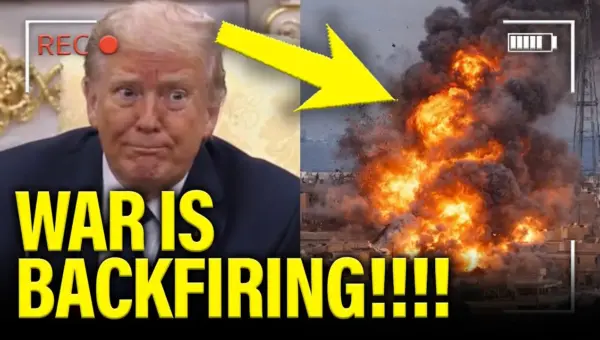
Trump’s Iran Gambit Backfires, Igniting Regional Chaos
Donald Trump's Iran policy appears to be backfiring spectacularly, igniting regional chaos and escalating attacks across the Middle East. The alleged lack of a coherent plan is leading to dangerous miscalculations and a volatile geopolitical landscape.

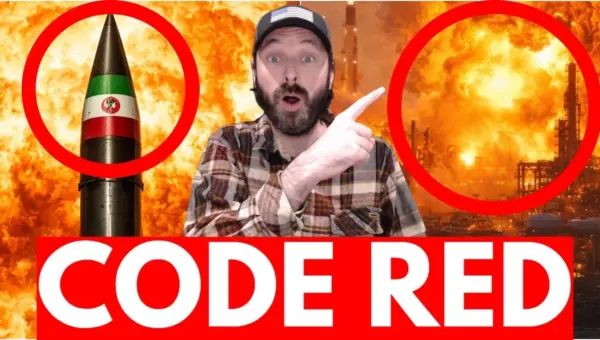
Iran’s Missile Barrage: Escalation Ignites Regional Firestorm
Iran has launched a significant ballistic missile attack across the Middle East, targeting Bahrain and the UAE with confirmed direct hits on key infrastructure. The escalation, met with U.S. retaliatory strikes, is further complicated by former President Trump's rejection of Iran's potential next leader, signaling a prolonged conflict.
Iran Closes Strait of Hormuz, Global Oil Flow Halts
Iran has effectively closed the Strait of Hormuz, halting global oil and gas shipments and causing a massive buildup of over 200 vessels. The blockade, coupled with ongoing attacks on shipping, is sending shockwaves through global energy markets. The conflict's implications are expanding beyond regional military concerns, with potential global economic ramifications.