Global Markets Reel as U.S. Imposes Blanket 15% Tariff, Eroding Trust and Economic Stability
The U.S. faces global economic isolation following the imposition of a sweeping 15% tariff, undermining trade agreements and eroding international trust. This move, enacted by executive order after a Supreme Court ruling, exacerbates domestic inflation and disproportionately burdens the American working class.

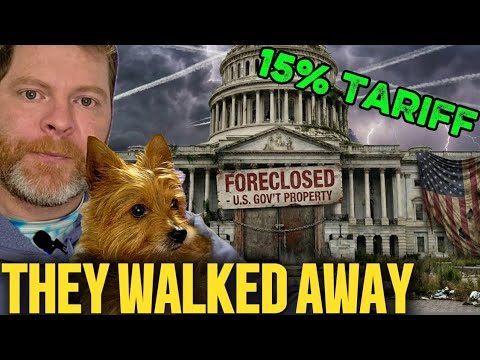
Supreme Court Ruling Overturned by Executive Action, Sparking International Outcry
In a stunning turn of events that has sent shockwaves through the global economic and political landscape, the United States has seemingly abandoned its role as a stable international partner. The recent imposition of a sweeping 15% tariff on all global imports, enacted through executive action, has not only undermined established trade agreements but has also eroded the trust of allies and created a climate of profound uncertainty for American consumers and businesses alike. This move follows closely on the heels of a Supreme Court decision that declared previous Environmental Protection Agency (EPA) tariffs illegal, a ruling that the executive branch appears to have swiftly circumvented.
The “Distressed Asset”: America’s Shifting Global Standing
The current economic climate for the United States is being described by observers as that of a “distressed asset.” The world, once reliant on American economic leadership, is now perceived as actively seeking to distance itself. This sentiment is amplified by the recent geopolitical and economic maneuvering originating from Washington D.C. The Supreme Court’s decision to deem the EPA tariffs of 2025 unlawful was a moment that offered a glimmer of hope for a return to predictability in international trade.
However, this brief respite was shattered when the President, in a public announcement, declared the Supreme Court’s ruling “disgraceful” and proceeded to implement a universal 15% tariff on all global imports. This action, taken under the guise of national security, has been met with widespread criticism for its arbitrary nature and disregard for established legal and trade frameworks.
Corporate Lawsuits and Consumer Burden
The ramifications of the Supreme Court’s initial ruling were significant. Corporations worldwide were reportedly preparing to file lawsuits against the U.S. government, seeking to reclaim an estimated $177 billion in tariffs previously paid. Ironically, the burden of these tariffs has historically fallen not on foreign entities, but on the American consumer.
Prices at grocery stores, retail outlets like Lowe’s and Victoria’s Secret, and across various sectors have been pushed upward, with citizens bearing the direct cost. The current executive action, by imposing new tariffs, risks exacerbating this situation, leaving American citizens to shoulder the financial weight of these policy shifts while foreign entities and even the judiciary’s rulings are seemingly disregarded.
European Union Denounces U.S. As “Rogue Actor”
The fallout from the new tariff regime has been particularly acute in Europe. The Turnberry Agreement, a significant trade deal intended to foster closer economic ties, is now in jeopardy. Under this agreement, the European Union had consented to a 15% cap on tariffs, with a few exceptions, and had committed to purchasing American energy.
This was partly in response to disruptions in global energy supplies, including the destruction of a major pipeline. However, the unilateral imposition of the universal 15% tariff by the U.S. has been interpreted by the EU as a breach of faith.
Valdis Dombrovskis, the EU’s trade chief, has publicly labeled the United States a “rogue actor” and has demanded that America honor its pledges. European officials emphasize that the U.S. Administration must uphold its commitments, a sentiment that is met with skepticism given the administration’s perceived pattern of “dishonorable” actions and its tendency to view international law as mere “suggestions.” The situation has been likened to attempting to negotiate with a partner who arbitrarily changes the rules of a game mid-play, leaving international partners questioning the reliability and stability of the United States as a trading partner.
Indo-Pacific Alliances Tested by Instability
The implications extend significantly to the Indo-Pacific region, a critical area for U.S. Strategic and economic policy. For years, Washington has emphasized the importance of strengthening ties with key nations like India and South Korea, recognizing their growing economic and defense capabilities as crucial counterweights to China’s influence. South Korea is now a significant player in defense industries, and India is increasingly becoming a global manufacturing hub.
The U.S. has been actively pursuing trade deals with these nations, including Japan, aiming to secure substantial investments in manufacturing and trade. However, the current climate of U.S. policy instability, where even Supreme Court rulings can be effectively overridden by executive action, casts a long shadow over these potential partnerships.
Nations like South Korea are hesitant to commit billions of dollars or open their domestic markets when the validity of U.S. Commitments can be called into question by the next judicial or executive decision. The lack of stability makes long-term trade agreements a risky proposition, as the value of a U.S. Signature is increasingly perceived as unreliable.
The Fragile Foundation of U.S. Trade Policy
The core principle underlying successful international trade is stability. Businesses and governments need predictability to make long-term investments and forge enduring partnerships. The United States, at present, is characterized by an acute lack of this essential stability.
The current economic and political environment is described as being built not on solid ground, but on a “fault line” of “executive ego and judicial ping-pong.” Trade agreements and commitments are being likened to contracts written with a dry-erase marker, easily altered or erased. This volatile environment makes it exceedingly difficult for international partners to contemplate or maintain significant economic engagement with the U.S.
Canadian Lumber Tariffs: A Case Study in Economic Self-Sabotage
Adding to the economic disruption, the imposition of tariffs on Canadian softwood lumber has drawn criticism. While framed by some U.S. Politicians as a victory for domestic industry and an “America First” policy, the reality on the ground paints a different picture. The United States is currently facing a severe housing crisis, characterized by a significant shortage of affordable housing.
By making lumber, a fundamental building material, 15% more expensive, these tariffs directly exacerbate the problem. The increased cost of construction further inflates housing prices, making homeownership even more unattainable for the average American. This policy, therefore, appears to be a form of economic self-sabotage, harming domestic consumers and hindering critical industries while being presented as a national success.
The American Working Class: Bearing the Brunt of Trade Chaos
The true victims of this “circus” of trade policy are not the politicians or high-level corporate executives who can absorb or pass on costs. Instead, it is the American working class that bears the brunt of this instability. While companies like John Deere and the automotive sector may see their earnings calls as opportunities to reassure investors by explaining how tariffs will be passed on to consumers, the average citizen faces direct price hikes.
These tariffs function as an aggressive domestic consumption tax. Whether it’s the cost of diapers for a baby, a replacement washing machine, or basic groceries, consumers are paying a premium dictated by arbitrary political decisions. This is not effective trade policy; it is chaos masquerading as economic nationalism, systematically failing the very citizens it purports to protect.
Seeking Stability Abroad: The “Ghosting” of America
The pervasive instability and perceived unreliability of the U.S. On the international stage are leading many Americans to seek alternatives. Searches for information on how to move to countries like Canada, the UK, Greece, Italy, Portugal, and Spain have reportedly surged.
This phenomenon, where the world is increasingly disengaging from the United States, is termed “ghosting.” When a nation can no longer guarantee the rule of law or uphold its trade agreements, its citizens and international partners naturally look for places that offer greater stability and predictability. The U.S. is increasingly viewed as a “clown show” by the rest of the world, leading to derision and a loss of respect, but more importantly, it is having a profound and detrimental impact on the lives of ordinary Americans.
Disconnection and the Erosion of Democratic Engagement
A significant contributing factor to the current predicament is the perceived disconnect of the American populace from global affairs and the geopolitical actions of their government. This lack of awareness, often attributed to the demanding nature of modern work culture – long hours, multiple jobs, and the pervasive “hustle culture” – leaves citizens with little time or energy to engage with complex domestic and international issues.
This deliberate or unintentional disengagement prevents the populace from holding their elected officials accountable and from preventing detrimental policies from being enacted. The result is a populace that is increasingly unaware of how their nation’s actions impact foreign nations and how their own government operates on the geopolitical stage.
A Call for Change and the Future of American Governance
The current political and economic trajectory is unsustainable. With potentially three more years of this administration’s policies, and a perceived inaction from corporate Democrats, the situation risks further deterioration. Figures like Bernie Sanders are highlighted as rare voices representing the concerns of the American people.
The argument is made that an “equal and opposite reaction” to unchecked capitalism, potentially through policies associated with democratic socialism, is necessary to counterbalance the current extreme economic policies. The author expresses a bittersweet sentiment about temporarily returning to Europe, finding life there superior in many ways, and believing that a more fruitful and fulfilling life is possible, either abroad or within the U.S. If fundamental changes are made.
The Erosion of Trust and the Potential for Disillusionment
The foundational principles of American governance – freedom, liberty, and justice – are seen as being eroded by a “corrupt and avaricious political class” that prioritizes self-interest over the well-being of its citizens. The author posits that America does not have to be this way, drawing parallels to the ability of individuals to control and shape their own households. Drawing inspiration from Thomas Paine’s “Common Sense,” the article suggests that a fundamental reevaluation of America’s direction is needed.
The increasing entrenchment in political narratives and the clashing of cultural values are seen as factors that could lead to the eventual “disillusionment” of the United States. This internal chaos creates immense consternation and aggravation for trade allies who see the potential for business within a large consumer market but are stymied by the U.S.’s unreliability.
Navigating the Storm: Options for Americans
Despite the bleak outlook, there is a belief that the current administration will eventually pass, and that the American people, despite their inertia, will eventually act when “enough will be enough.” However, the immediate future holds significant challenges. The imposed tariffs are expected to lead to further price hikes, a continued devaluation of the dollar, and the grip of stagflation on the American working class, making life increasingly difficult.
In light of these circumstances, the article presents stark choices for Americans: “pick up the pitchforks and torches” to demand change, or “pick up your passport” and consider emigration. These are presented as the most viable options for individuals facing the current economic and political reality in the United States.
Source: The World is Ghosting America: The 15% Tariff Chaos (YouTube)

Related Articles

Jet Fuel Crisis Looms: Global Travel Faces Disruption
A severe jet fuel shortage looms as the conflict in the Middle East has effectively closed the Strait of Hormuz, impacting global oil supply. Airlines worldwide are preparing for higher costs, route reductions, and potential flight cancellations. The crisis is expected to raise ticket prices and affect supply chains, leading to broader economic consequences.

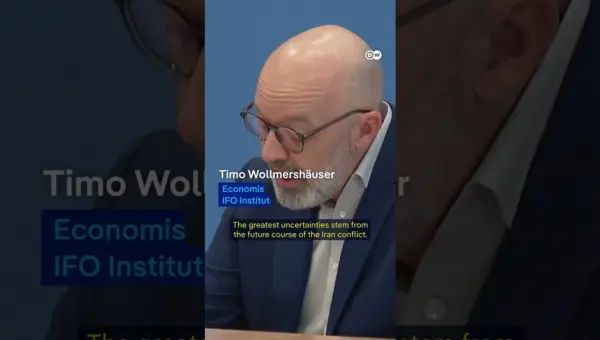
German Factories Hit Hard by Iran War’s Economic Shockwaves
German manufacturers are bracing for significant economic fallout from the Iran war, with 90% expressing concern. Rising energy costs, disrupted supply chains, and shrinking export demand are already impacting businesses. Economic forecasts for Germany have been cut, and inflation is at a two-year high, highlighting the global reach of the conflict's economic consequences.
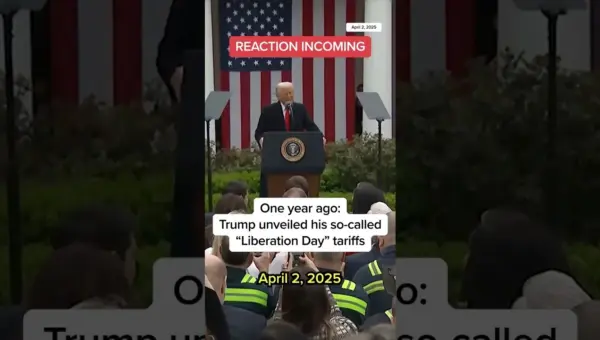
Trump’s Tariffs: A Year of Trade Turmoil
One year after former President Trump enacted sweeping "Liberation Day" tariffs, global markets are still experiencing the ripple effects. The policy aimed to boost American industries but led to widespread market volatility and retaliatory tariffs from other nations. The long-term economic consequences continue to be debated, with some sectors benefiting while others face significant challenges.