Trump Economic Adviser Kevin Hassett Calls for Punishment of New York Fed Economists Over Tariffs Study
A study by the New York Fed found that consumers are paying for 90% of Trump's tariffs, leading Trump adviser Kevin Hassett to call for economists to be punished. Hassett labeled the study an "embarrassment" and "highly partisan."

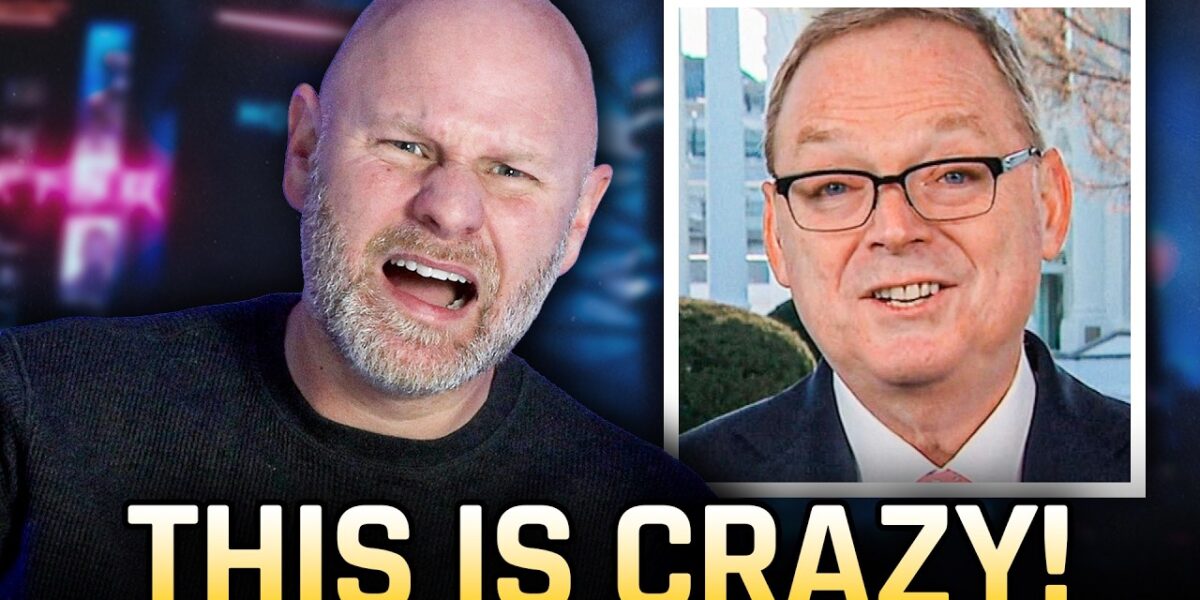
Controversy Erupts as Top Trump Adviser Criticizes Federal Reserve Research on Tariffs
A recent study by the Federal Reserve Bank of New York, indicating that American consumers are bearing the brunt of the costs associated with Donald Trump’s trade policies, has ignited a firestorm. Kevin Hassett, a prominent economic adviser to former President Donald Trump and a potential candidate for future leadership roles within the Federal Reserve system, has publicly denounced the research, calling it an “embarrassment” and advocating for disciplinary action against the economists involved.
Hassett’s Scathing Remarks on New York Fed Study
Speaking on CNBC, Hassett launched a vehement attack on the New York Fed’s findings, which suggest that at least 90% of the cost of tariffs imposed by the Trump administration is being passed on to consumers. He described the paper as “the worst paper I’ve ever seen in the history of the Federal Reserve system” and stated that “the people associated with this paper should presumably be disciplined.” Hassett further characterized the analysis as “highly partisan” and based on reasoning that would not be accepted in an introductory economics course.
The core of Hassett’s argument appears to be that the study’s conclusions are politically motivated rather than economically sound. He implied that the economists behind the research were acting out of partisanship, a claim that the source material strongly refutes. The transcript asserts that the New York Fed, and its economists, have no inherent political agenda that would lead them to fabricate findings detrimental to the Trump administration. It highlights the generally favorable conditions on Wall Street during the Trump era, with the Dow Jones Industrial Average reaching significant highs and deregulation policies benefiting the financial sector, suggesting that the Fed had little to gain from producing a critical report.
The Economic Reality of Tariffs: Consumer Burden and Corporate Admissions
The New York Fed’s study aligns with fundamental economic principles regarding the impact of tariffs. Economists widely understand that when import tariffs are imposed, domestic businesses that rely on imported goods or components face increased costs. In many cases, to maintain profit margins, these businesses pass these additional costs directly onto consumers in the form of higher prices. The transcript emphasizes this point, stating, “That’s exactly how tariffs work.”
Beyond the theoretical economic framework, the transcript points to direct evidence supporting the study’s conclusions. It highlights that corporations themselves have admitted to passing tariff-related costs onto consumers. This admission from the very entities implementing price increases serves as a powerful corroboration of the New York Fed’s findings, suggesting that the study is not an outlier opinion but a reflection of observable market behavior. The transcript underscores this by stating, “we have the admission, right? We have the people who are literally in charge of raising the prices telling us flat out, we’re raising the prices because of the tariffs, so you will be paying that.”
Hassett’s Potential Conflict of Interest and Public Trust
The controversy takes on added significance given Kevin Hassett’s potential future role in economic policy. The transcript notes that Hassett is “possibly gonna become the next chairman of the Federal Reserve.” If he were to attain such a position, he would indeed be in a place of power to influence policy and potentially enact the disciplinary measures he has called for against the New York Fed economists. His current stance, therefore, raises questions about his commitment to objective economic analysis versus political loyalty.
The transcript strongly criticizes Hassett’s position, arguing that while certain economic theories or projections might be debatable, the direct impact of price increases on individuals’ daily lives is undeniable. “You can’t lie to the public about what’s happening with their own personal finances,” the transcript asserts. It points to the everyday experiences of consumers – checking bank balances, grocery shopping, and witnessing price hikes – as tangible proof that contradicts the administration’s narrative, which the transcript labels as “fake news” and “absolute utter insanity.”
Calls for Accountability and Transparency
The author of the original transcript expresses a strong desire for accountability, suggesting that the situation warrants congressional hearings. Assuming a shift in political power, specifically a Democratic takeover of Congress, the transcript calls for figures like Kevin Hassett to be summoned for public testimony. The aim would be to compel him to publicly defend his position and explain why he is advocating for the denial of observable economic realities that directly affect the financial well-being of American citizens.
The call for hearings underscores a broader concern about transparency and honesty in government communication regarding economic policy. The argument is that the public deserves accurate information about the consequences of government actions, especially when those actions lead to increased costs for households. The disconnect between the lived financial experiences of many Americans and the official narrative promoted by some administration officials is seen as a critical issue that requires public scrutiny and explanation.
Broader Implications of Trade Policy and Economic Discourse
The dispute surrounding the New York Fed study highlights the complex and often contentious nature of trade policy. Tariffs, while intended by proponents to protect domestic industries and jobs, can have far-reaching and unintended consequences. The debate over who ultimately pays for these tariffs – foreign producers, domestic businesses, or consumers – is a crucial element in evaluating the overall economic impact of such measures.
This incident also touches upon the integrity of economic research and its role in informing public policy and public opinion. When economic findings become politicized, it can erode trust in institutions like the Federal Reserve and create a challenging environment for evidence-based policymaking. The insistence on disciplinary action against researchers whose findings are inconvenient underscores a potential willingness to suppress unfavorable data in favor of a preferred political narrative.
Furthermore, the transcript’s emphasis on the tangible impact on personal finances serves as a reminder that economic policies have real-world consequences for individuals and families. The ability of citizens to manage their budgets, afford necessities, and achieve financial stability is directly influenced by macroeconomic decisions. Therefore, open and honest communication about the costs and benefits of these decisions is paramount for maintaining public trust and enabling informed democratic participation.
The ongoing debate over tariffs and their economic repercussions, coupled with the controversy over the New York Fed study and Kevin Hassett’s reaction, signifies a critical juncture in economic discourse. It calls into question the balance between political objectives and factual economic reporting, and the responsibility of public officials to acknowledge and communicate the realities of economic policy to the public.
Source: Trump Adviser Demands Punishment For Economists Exposing Trump (YouTube)

Related Articles
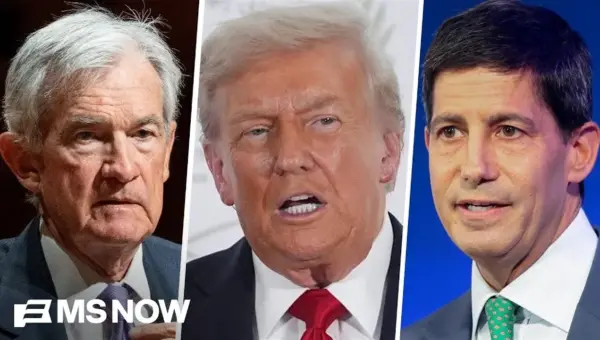
Trump Threatens Fed Chair Powell, Faces Nomination Blockade
President Trump is threatening to fire Fed Chair Jerome Powell over a renovation probe, creating a political stalemate. Senator Tom Tillis is blocking Trump's nominee, Kevin Warsh, until the investigation concludes. Warsh himself faces scrutiny over his vast personal wealth, estimated between $135-226 million, raising conflict of interest concerns.

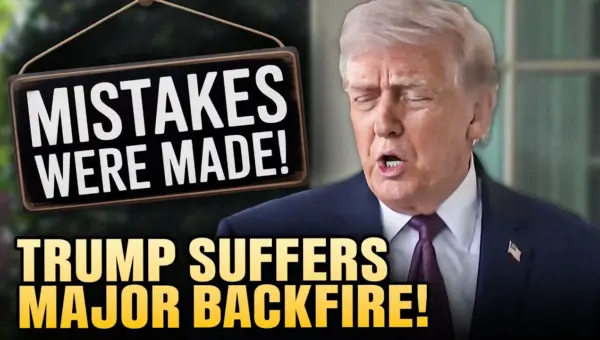
Trump’s Jesus Image Backfires, Staged Delivery Fails
Donald Trump's attempt to control the narrative after posting a Jesus-like image backfired spectacularly. A staged DoorDash delivery event meant to highlight economic policy instead drew scrutiny due to its implausibility and the exaggerated savings claimed.
Trump Threatens to Fire Fed Chair Powell Over Building Project
Former President Donald Trump issued a strong ultimatum to Federal Reserve Chair Jerome Powell, threatening to fire him over perceived incompetence and excessive spending on a building project. Trump also expressed support for lowering interest rates and the confirmation of Kevin Warsh.