Trump’s Tariff Strategy Crumbles as Own Lawyers’ Past Arguments Undermine New Plan
Donald Trump's recent 15% tariffs are facing significant legal challenges, largely due to his own administration's previous arguments against using the invoked statute, Section 122 of the Trade Act of 1974. Experts highlight that this law is designed for balance of payment crises, not trade deficits, and Trump's own claims of economic prosperity contradict the conditions required for its use.

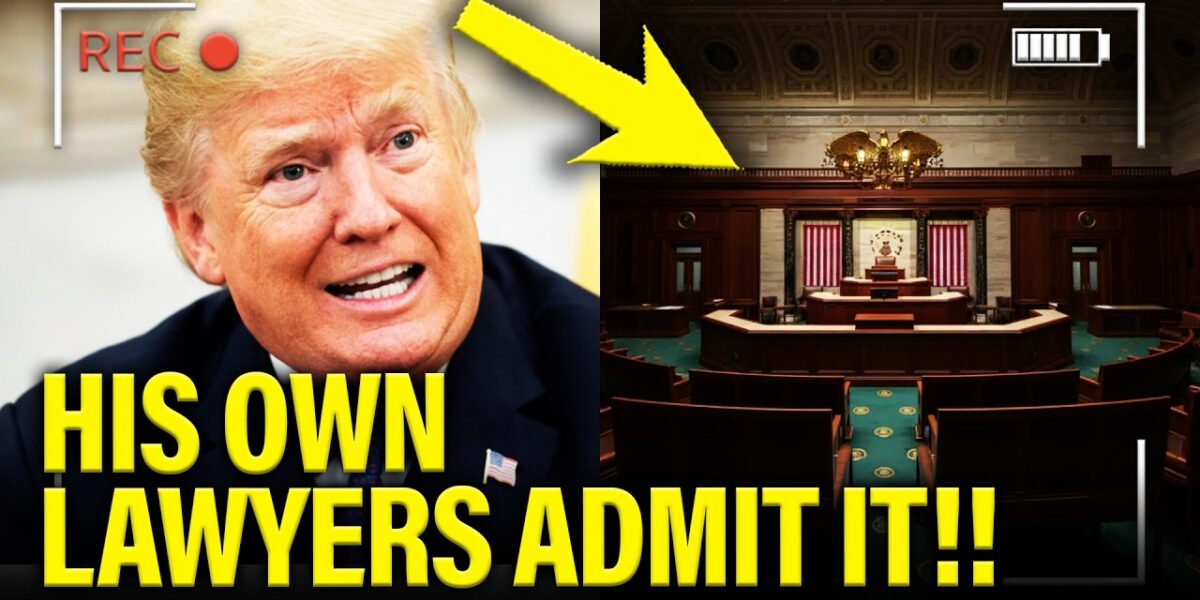
Trump’s Tariff Gambit Faces Legal Backlash as Past Legal Stances Haunt New Policy
In a significant legal and political development, former President Donald Trump’s recent imposition of 15% tariffs on global imports is facing a formidable challenge, not just from external critics but, crucially, from the very legal arguments his own administration previously made. The core of the issue lies in the invocation of Section 122 of the Trade Act of 1974, a statute whose applicability Trump’s legal team had previously contested, creating a self-inflicted wound in his current tariff strategy.
A Legal Precedent Undermined: The AIPA Statute and the Supreme Court Ruling
The current legal entanglement stems from a prior ruling where the Supreme Court struck down Trump’s tariffs enacted under the 1977 statute known as AIPA (Antidumping and Countervailing Duty Law). Following this defeat, which was perceived as a significant setback for his trade policies, Trump swiftly moved to implement new tariffs under a different legal framework: Section 122 of the Trade Act of 1974. However, this pivot has proven to be legally precarious.
Legal experts and analysts point out a critical inconsistency: during the legal battles over the AIPA tariffs, Trump’s lawyers explicitly argued that Section 122 of the Trade Act of 1974 was *not* applicable to the situation at hand. When pressed by federal judges and Supreme Court justices about the potential use of Section 122 as an alternative, Trump’s legal representatives stated that invoking it would be unlawful. This direct contradiction now forms the bedrock of the legal challenges against the new tariffs.
Section 122: A Statute Ill-Suited for Trade Deficits?
A central argument against Trump’s use of Section 122 is its intended purpose. The statute was enacted in 1974, in part as a response to the financial and monetary crises of the early 1970s, including President Nixon’s ‘Nixon Shock’ and the eventual collapse of the Bretton Woods system.
Its provisions are designed to address fundamental international payment problems, such as balance of payment deficits and the potential for significant depreciation of the dollar in foreign exchange markets. Crucially, legal interpretations suggest that Section 122 does not apply to circumstances primarily driven by trade deficits, which have been the focus of Trump’s complaints.
As articulated by legal professionals like Neil Katayel, who argued the AIPA case before the Supreme Court, the distinction is clear: “The concerns the president identified in declaring an emergency arise from trade deficits which are conceptually distinct from balance of payment deficits.” This means that Trump’s stated rationale for imposing the tariffs – namely, addressing trade imbalances – does not align with the statutory requirements of Section 122.
Trump’s Own Words as Evidence Against Him
Adding another layer of complexity to the legal challenge is Trump’s own public rhetoric. He has frequently boasted about the United States receiving trillions of dollars in investments and capital inflows, painting a picture of an exceptionally strong and prosperous economy. Statements such as claiming to have collected $17, $18, or even $22 trillion in investments, and asserting that “America’s never been stronger,” directly contradict the conditions required to invoke Section 122.
To invoke Section 122, a president must declare an emergency stemming from a balance of payment crisis, which implies capital flight, currency devaluation, and economic instability. By contrast, Trump’s own pronouncements suggest a robust influx of foreign capital and an overvalued, strong dollar. This creates a stark inconsistency: he claims the U.S. Is experiencing an unprecedented economic boom while simultaneously invoking a statute designed for severe economic distress and balance of payment crises.
Economist Steve Lythman highlights this paradox: “It’s like going to the bank, declaring you’re broke and that you’ve lost your job, but that they should give you the loan anyway. And you can’t have a balance of payment crisis when foreigners are supposedly investing trillions of dollars into your economy, as Donald Trump says. But consistency is never his strong suit.” This self-created evidentiary problem significantly weakens the legal basis for the tariffs.
The Historical Context of Section 122 and the ‘Nixon Shock’
Understanding Section 122 requires a look back at the economic climate of the early 1970s. The Bretton Woods system, which had governed international monetary relations since World War II, began to fray under the weight of growing U.S. Balance of payment deficits, fueled by extensive military spending, foreign aid, and private overseas investment.
As Europe and Japan recovered economically, their exports became more competitive, eroding U.S. Trade surpluses and leading to persistent current account deficits. This resulted in a “dollar glut” globally, while U.S. Gold reserves remained fixed, making the dollar overvalued and hurting American exports.
The situation culminated in President Nixon’s decision in 1971 to unilaterally suspend the dollar’s convertibility to gold, an action known as the “Nixon Shock.” This move, coupled with a 10% import surcharge imposed under different authority (the Trading with the Enemy Act), was intended to protect U.S. Reserves, curb speculation against the dollar, and pressure allies to revalue their currencies, ultimately leading to the Smithsonian Agreement. Section 122 of the Trade Act of 1974 was enacted partly in response to this crisis, providing a framework for temporary import measures in specific international payment emergencies.
Section 122 has never been invoked before through various economic downturns, including the dot-com bust and the Great Recession. Its invocation by the Trump administration signals, according to some analyses, an admission that the U.S. Economy is facing a crisis of “great depression” proportions, a claim that starkly contrasts with Trump’s optimistic economic narrative.
The Limited Scope and Duration of Section 122
Beyond the inapplicability to trade deficits, Section 122 itself has significant limitations. It authorizes tariffs of up to 15% but restricts their duration to a maximum of 150 days.
This short timeframe undermines the effectiveness of tariffs as a tool for long-term economic strategy, such as onshoring manufacturing. As economist Justin Wolfers explained, a 150-day tariff provides little incentive for businesses to make substantial, long-term investments like building new factories, as the policy could expire before such projects could even begin.
The statute is intended for situations requiring “fundamental international payment problems” or to prevent “imminent and significant depreciation of the dollar.” The current economic landscape, characterized by flexible exchange rates and, according to Trump’s own claims, massive capital inflows, does not appear to meet these stringent criteria.
Broader Implications: Trade Relations and Market Uncertainty
The repeated use of broad, potentially unlawful tariffs not only creates legal instability but also has tangible consequences for international trade relations and market confidence. The European Union has reportedly indicated it will freeze ratification of its trade deal with the United States, and Indian trade representatives are reconsidering visits. This suggests that allies and partners are wary of engaging in long-term trade agreements with a U.S. Administration that relies on such unpredictable and legally dubious trade measures.
The removal of the de minimis tariff exemption for goods valued at $800 or less is another aspect that directly impacts American consumers and businesses, increasing the cost of imported goods and potentially leading to higher prices. This move, coupled with the broader tariffs, is seen by critics not as sound economic policy but as a “primitive coping mechanism” for political setbacks.
The Question of Refunds and Treasury’s Stance
A contentious issue arising from the invalidated AIPA tariffs is the question of refunds for companies that paid them. Treasury Secretary Scott Bessant has indicated that the administration may not issue refunds, stating that the matter is for the courts to decide and that the government will litigate to make it difficult for companies to reclaim the funds. This stance appears to contradict earlier assurances from the Justice Department that refunds would be issued if the tariffs were ultimately deemed unlawful.
The legal battles surrounding these tariffs are expected to be protracted and costly, creating uncertainty for businesses and potentially leading to significant financial liabilities for the government if the tariffs are definitively ruled unlawful. The administration’s approach to refunds, combined with the questionable legal basis for the new Section 122 tariffs, suggests a pattern of prioritizing political maneuvering over established legal and economic principles.
Conclusion: A Pattern of Legal Inconsistency and Economic Uncertainty
Donald Trump’s latest tariff imposition under Section 122 of the Trade Act of 1974 appears to be a legally untenable strategy, undermined by his own administration’s prior legal arguments and inconsistent public statements. The statute’s limited scope, specific purpose related to balance of payment crises, and strict duration limit make it an ill-suited tool for addressing the trade deficits Trump decries.
As legal challenges mount, the administration faces the prospect of further defeats, potentially coupled with significant financial repercussions and a continued erosion of trust among international trading partners. The situation highlights a broader concern about the use of trade policy as a political instrument rather than a strategic economic tool.
Source: UH OH! Trump’s OWN Lawyers TURN AGAINST his TARIFF PLAN!! (YouTube)

Related Articles
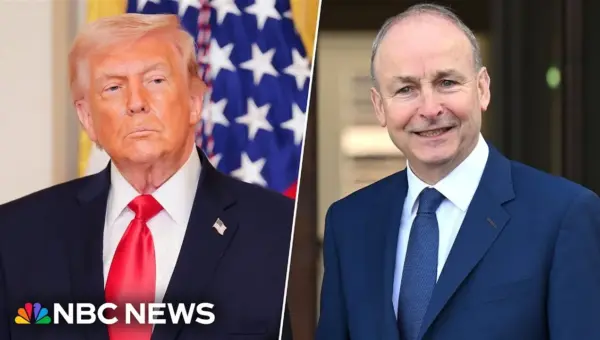
Trump Welcomes Irish Leader, Discusses Trade, Iran Tensions
President Trump welcomed Ireland's Taoiseach to the White House, discussing trade and the strong historical ties between the nations. The meeting also covered President Trump's views on Iran's military capabilities, his criticisms of NATO's support for U.S. initiatives, and upcoming foreign policy engagements.
Trump Reveals Congressman’s Terminal Diagnosis Amid Health Plea
Former President Donald Trump revealed that U.S. Representative Neal Dunn has a "terminal" heart condition. Trump stated he and Speaker Mike Johnson urged Dunn to stay in Congress despite the diagnosis. Dunn had previously announced he would not seek re-election, without specifying his health issues.
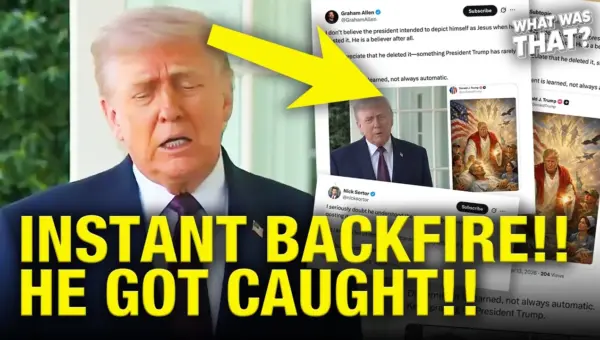
Trump’s Jesus Image Backfires, Sparking Outrage
Donald Trump's AI-generated image of himself as Jesus Christ has backfired, drawing widespread criticism and accusations of blasphemy. His shifting explanations and ongoing feud with Pope Francis have further fueled the controversy, potentially alienating key voter groups.