Trump’s Base Faces Shifting Sands: From Economic Promises to Foreign Policy Perils
Professor Scott Lucas discusses the precarious position of Donald Trump's political base, caught between promises of economic revival and a foreign policy that risks alienating core supporters. The analysis covers escalating tensions with Iran, economic headwinds, and diplomatic missteps, questioning Trump's electoral viability.

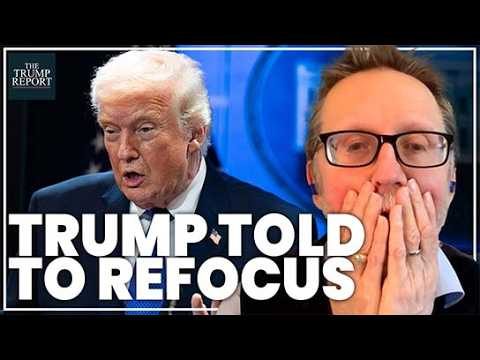
Trump’s Political Landscape Under Strain as Economic Woes and Foreign Policy Ambitions Clash
In a recent analysis, Professor Scott Lucas of University College Dublin’s Clinton Institute discussed the evolving dynamics within Donald Trump’s political base, highlighting a potential disconnect between his core supporters’ priorities and his administration’s recent foreign policy actions and pronouncements. The conversation, hosted by Maddie H on “The Trump Report,” delved into a range of issues, from the escalating tensions with Iran and the controversial proposal to purchase Greenland, to the economic challenges facing the United States and their impact on Trump’s electoral prospects.
Tensions with Iran: A Risky Proposition?
A significant portion of the discussion centered on the heightened military posture of the United States towards Iran. Reports emerged of a potential White House decision to launch airstrikes, a move that would coincide with the four-year anniversary of Russia’s invasion of Ukraine. Professor Lucas expressed skepticism regarding the reliability of certain sources, specifically mentioning former CIA officer John Kiriakou, while acknowledging the substantial military assets, including over a dozen warships and scores of fighter jets, deployed in the region. He noted the strategic parallels with the situation in Venezuela, where threats of airstrikes ultimately did not materialize into direct military action, but rather led to the “kidnapping” of President Nicolás Maduro.
However, Lucas cautioned against viewing the situation as a straightforward path to regime change in Iran. He pointed out that the Iranian regime, despite internal dissent and external pressures, has demonstrated resilience. The military option, he argued, is not simple, especially when compared to the swift collapse of the Venezuelan government. Adding another layer of complexity, Lucas highlighted the ongoing diplomatic discussions concerning Iran’s nuclear program, with further talks scheduled in the Gulf. The prospect of airstrikes, he asserted, would inevitably derail these negotiations, as Iran would be unlikely to engage in dialogue while under attack.
Drawing parallels with Israel’s actions in June, where a military strike on Iranian leadership did not break the regime, Lucas suggested that the Trump administration’s deployment of naval forces might be a strategic “sword of Damocles” – a tactic to pressure Iran into concessions regarding its civilian nuclear program. He critically examined statements made by individuals like Steve Witkoff, who expressed confusion over Iran’s lack of capitulation under pressure. Lucas characterized such remarks as either “cynical” or “dumb,” emphasizing that the Iranian regime has historically benefited from external threats by rallying domestic support against a perceived foreign adversary.
Economic Headwinds and Shifting Priorities
The conversation also pivoted to the economic anxieties of Trump’s voter base. A Republican strategist, Rob Godfrey, was cited by Reuters, emphasizing that Trump’s core supporters are inherently skeptical of foreign entanglements and “forever wars,” a sentiment that fueled his past campaigns. This perspective is echoed by broader public sentiment, with Joe Rogan expressing concern about the overwhelming news cycle and the potential for war with Iran.
Professor Lucas concurred that a shift in focus towards the economy is crucial for Trump’s electoral success. He pointed to recent economic indicators, such as a lower-than-expected GDP growth rate of 1.4% for the last quarter of 2025, which fell short of projections and lagged behind the growth rates seen during the Biden administration. Inflation, particularly core inflation at around 2.9%, remains a persistent concern, contributing to public dissatisfaction despite a slight decrease in gas prices due to global oil market fluctuations.
The impact of tariffs also came under scrutiny. Lucas noted that despite the implementation of tariffs, the U.S. trade deficit in goods actually increased by 2% last year, suggesting that these economic measures have not yielded the desired results according to Trump’s own metrics. This economic underperformance, coupled with the perceived distractions of foreign policy initiatives, could alienate key segments of Trump’s base who prioritize domestic economic stability and job creation.
Greenland Ambitions and Diplomatic Blunders
The discussion touched upon an unusual geopolitical episode involving Greenland. Following reports of a medical evacuation of a U.S. submarine crew member near Greenland, Trump announced via social media his intention to send a hospital ship to the island. The Prime Minister of Greenland, however, politely declined the offer, highlighting their robust public healthcare system and suggesting direct communication over “random outbursts.”
Professor Lucas framed this incident within a broader context of Trump’s competitive dynamic with Barack Obama, suggesting that Trump’s reaction to Obama’s comments on alien life prompted a similar, albeit misplaced, government initiative. He criticized Trump’s response as a missed opportunity to foster goodwill with NATO allies, instead opting for a grand, and ultimately unnecessary, gesture. The situation was further complicated by reports from U.S. officials who indicated that no such hospital ship was readily available, adding to the perceived “idiocy” of the proposal. Lucas also noted the subtle but significant message conveyed by Denmark to Greenland, reinforcing the benefits of their existing healthcare system and implicitly questioning the appeal of becoming America’s 51st state.
The “Manbaby” Dynamic and Electoral Consequences
Professor Lucas employed the term “manbaby” to describe a perceived pattern in Donald Trump’s behavior, suggesting that his administration struggles to maintain focus on critical issues like the economy. He likened attempts to redirect Trump’s attention to managing a screaming toddler, implying that such efforts are often met with tantrums and distractions, particularly when his ego is challenged, as seen in his reaction to the Supreme Court’s ruling on tariffs.
The implications for the upcoming midterm elections were starkly outlined. Lucas stated unequivocally that if Trump does not realign his priorities to focus on strengthening the economy for everyday Americans, the Republican party risks losing the House of Representatives and seeing its Senate majority significantly reduced, or even lost entirely. He emphasized that this electoral forecast is based on current facts and trends, including the slowing economic growth and persistent inflation that directly impact voters’ daily lives.
The interview concluded with a stark warning: the combination of perceived foreign policy overreach, economic missteps, and a failure to connect with the core concerns of his base could prove to be a critical turning point for Trump and the Republican party. The emphasis on ending “forever wars” and strengthening the domestic economy, promises that resonated deeply with his supporters, appear to be overshadowed by more contentious and potentially alienating initiatives, raising questions about whether this is the moment Trump’s voters begin to truly abandon him, or if that moment has already passed amidst a year of “madness” and “distractions.”
Source: This is the moment Trump’s voters abandon him | Scott Lucas (YouTube)

Related Articles
Trump’s Wild Claims Fuel GOP Chaos and Public Doubt
Donald Trump's recent erratic statements and Republican figures' defense strategies are causing political turmoil. Concerns over economic misrepresentation and the handling of the Jeffrey Epstein case are mounting, leading to a public demanding more accountability and truth.

Trump’s Allies Stumble, Exposing MAGA Movement’s Weaknesses
Recent events reveal cracks in the MAGA movement, from JD Vance's failed support for Viktor Orban in Hungary to disappointing Turn Point USA rallies. Trump's attacks on Pope Leo also alienate allies and expose strategic missteps. These challenges suggest a weakening of the movement's influence.
Trump’s “Malignant Narcissism” and Vance’s “Dark Emptiness”
Gerard Baker and Katy Balls discuss Donald Trump's "malignant narcissism" and JD Vance's perceived "dark emptiness." The conversation covers the US blockade of Iran, Vance's evolving role, and Trump's controversial "Jesus Christ" post, exploring its political implications and the nature of faith and authenticity in politics.