Russia’s Looming Collapse: Expert Warns of Spectacular Downfall Amidst War’s Unforeseen Consequences
Russia faces the prospect of a spectacular collapse due to the unsustainable human and economic costs of the Ukraine war, according to expert analysis. While diplomatic efforts continue, a swift resolution remains unlikely, and the US's leverage is constrained by domestic politics and a reluctance to fully engage.

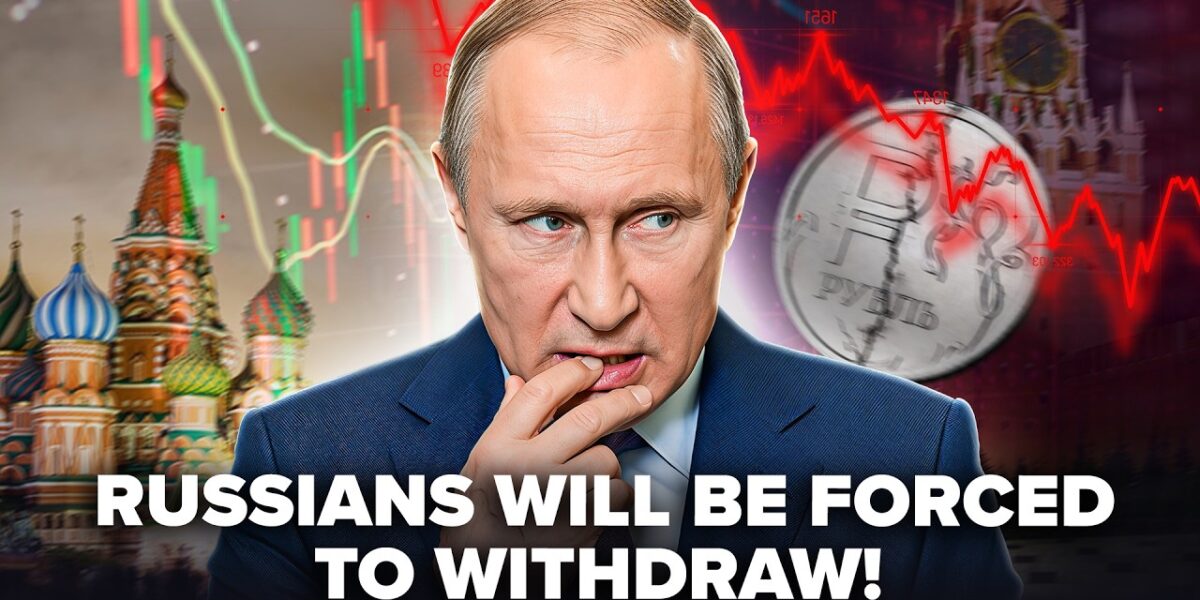
Russia on the Brink: An In-Depth Analysis of Putin’s Regime and the War’s Devastating Repercussions
Recent analyses and political discourse suggest a growing possibility of Russia’s spectacular collapse if its current trajectory continues. This potential downfall, long predicted by many observers, could stem from a confluence of factors including severe economic strain, the immense human cost of the ongoing conflict in Ukraine, and the internal pressures generated by a prolonged and costly war. The sentiment among many international analysts and politicians is that the Russian economy and political system are fundamentally fragile, a view that may become increasingly validated should Russia fail to achieve its objectives and face escalating domestic challenges.
The War in Ukraine: A Strategic Miscalculation with Long-Term Consequences
The decision by President Putin to invade Ukraine is increasingly viewed as a profound strategic mistake with potentially catastrophic long-term consequences for Russia. While the immediate aim may have been to consolidate power and prolong his rule, the invasion appears to be pushing Russia backward decades in terms of development. The human cost of the conflict, with millions killed and wounded, is a particularly potent factor that is expected to “come back to bite Russia.” This echoes historical precedents, such as the return of Soviet soldiers from Afghanistan in the 1980s, which contributed significantly to the rise of organized crime and the emergence of the Russian mafia in the 1990s. The current conflict, however, is anticipated to be exponentially worse, creating a cascade of domestic political issues, immense pressure on businesses, and a severe blow to the Russian economy.
Diplomatic Efforts: A Glimmer of Hope Amidst Protracted Negotiations
The diplomatic landscape surrounding the Ukraine conflict is complex, with varying assessments of the likelihood and timeline for a resolution. While some US officials, such as Steve Witkov, have expressed optimism about potential breakthroughs in upcoming weeks, a more nuanced perspective suggests that a swift resolution is unlikely. Myron W. Milwano, President of K School of Economics and former Minister of Economy of Ukraine, offers a dual perspective: as a Ukrainian and a global citizen, he hopes for a swift end to the war and sees positive signs in the ongoing dialogue between Russia, Ukraine, the US, and European nations. Publicly available information, such as French politicians’ visits to Russia, indicates a higher level of negotiation than previously observed.
However, Milwano also expresses pessimism regarding an immediate resolution. Drawing parallels with historical negotiations, such as those between North and South Korea which took two years to yield results, he suggests that a protracted process is more probable. This realistic outlook, informed by game theory and economic analysis, posits that significant outcomes may take considerable time, potentially extending into 2026. The cyclical nature of US political deadlines, such as former President Trump’s past pronouncements and the current focus on midterm elections, adds another layer of complexity to the negotiation timeline.
US Leverage and the Limits of Economic Pressure
The role of the United States in the conflict is a subject of intense debate. While the US possesses significant economic and military leverage that could, in principle, cripple Russia, its willingness to fully deploy these tools remains limited. Milwano argues that attempts to use future financial deals as leverage over Russia are ineffective, as President Putin’s motivations appear to transcend mere financial gain. Russia’s primary objective seems to be recognition as a great imperial power, an aspiration that the US is neither willing nor able to fully satisfy. Conversely, the US has been hesitant to impose comprehensive sanctions or provide overwhelming military support to Ukraine, partly due to concerns about escalation and the cost of direct confrontation.
The US approach is characterized by a mix of “carrots and sticks.” While offering potential future deals, the US also employs threats, such as withholding intelligence or restricting the use of American technology by allies supplying Ukraine. However, the effectiveness of these threats is questioned, especially as domestic political considerations, such as the upcoming midterm elections, increasingly constrain US foreign policy options. Milwano suggests that even former President Trump, despite his rhetoric, has historically imposed sanctions and continued arms supplies, indicating a pragmatic, albeit self-interested, approach.
Unconventional Warfare and the Potential for Russian Economic Destabilization
Beyond traditional economic sanctions, more unconventional methods could be employed to destabilize the Russian economy. These include cyberattacks leading to bank runs, targeting pension funds, or creating fears of hyperinflation through covert financial channels. Milwano also points to the possibility of targeting all Russian state-affiliated assets and individuals globally, both judicially and extrajudicially. The US, with its extensive global reach and legal framework, possesses the capacity to pursue such actions, though it has largely opted for a less confrontational strategy.
The current US strategy, described as a “business-like approach” reminiscent of former President Reagan’s Cold War containment policies, is seen by some as a more effective method than traditional diplomacy. However, Milwano cautions that this approach may also be vulnerable to criticism and could lead to unintended consequences. He posits that historical precedent, particularly the successful containment of the Soviet Union, suggests that robust pressure, rather than appeasement or a purely transactional approach, is what Russia truly understands.
The Soviet Parallel: Why History May Not Repeat Itself for Russia
The comparison between the current situation in Russia and the collapse of the Soviet Union is frequently drawn, but significant differences exist. While the Soviet-Afghan War was a major factor in the USSR’s downfall, it occurred alongside a struggling economy and external pressure from Reagan’s arms race policies. Today, Milwano argues, the ability of President Putin to suppress dissent and instill fear through the FSB has been underestimated. Unlike the Soviet era, where widespread public discontent could more readily manifest, a climate of fear currently prevents open opposition in Russia.
Despite this suppression, Milwano remains convinced that Russia’s capacity to absorb losses is not limitless. The staggering human cost of the Ukraine war, far exceeding that of the Afghan conflict, is expected to eventually create unbearable domestic pressure. The return of millions of wounded and traumatized soldiers is predicted to exacerbate existing social and economic problems, potentially leading to a “spectacular” collapse. This outcome, he suggests, will be a direct consequence of Putin’s “strategic mistake” and “awful tragic decision” to invade Ukraine, a move that, while perhaps prolonging his grip on power, is fundamentally undermining Russia’s long-term stability and development.
The Russian Economy: Beyond Surface Indicators
Economists note that the Russian economy is grappling with significant structural problems, including stagnant or declining GDP growth. While oil prices have fallen, impacting revenues, Milwano emphasizes a critical distinction between an economy that is “not doing well” and one in a state of crisis. A 5% GDP decline, for instance, might mean producing fewer missiles, but it does not necessarily cripple the state’s ability to wage war. True economic crisis, he explains, is generated by a lack of trust in leadership.
As long as the Russian population believes Putin is in control and capable of navigating the war, the economy, while perhaps underperforming, will continue to support the war effort. However, a loss of faith in leadership, a perception of being “stuck” without progress, could trigger a crisis that severely impairs the state’s functionality. Historically, power transitions in Russia have been non-democratic and often spectacular, associated with deep crises. Milwano believes a similar internal political crisis, fueled by a lack of trust, is a high probability if the conflict is not resolved through a ceasefire and peace agreement.
Ukraine’s Economy: Resilience Amidst War and IMF Negotiations
Despite the ongoing war, the Ukrainian economy is demonstrating remarkable resilience, according to Milwano. While acknowledging the need for international support, including a substantial €90 billion aid package (though facing potential hurdles from Hungary), he expresses confidence that the economy will persevere. The immediate concerns lie more with the morale of civilians and the impact of systematic Russian attacks on energy infrastructure, which have led to widespread power outages and frozen apartments.
Regarding negotiations with the International Monetary Fund (IMF) for an $8 billion loan, Milwano anticipates that an agreement will be reached, though not without political bargaining over reform demands. The IMF’s proposal to increase taxes on individual entrepreneurs is a point of contention, highlighting the inherent trade-offs in taxation. While such measures could help formalize the economy and increase state revenues for the war effort, they also risk pushing legitimate businesses into the shadow economy and increasing the cost of goods and services for consumers.
Reforming Ukraine’s Business Climate: Beyond Taxation
Milwano argues that the debate over VAT for entrepreneurs, while important, is secondary to more fundamental issues plaguing Ukraine’s business climate. He stresses the need for a cultural shift towards greater respect for businesses, which are the primary drivers of value creation, tax revenue, and job growth. The current environment, characterized by a pervasive fear of law enforcement, tax authorities, and corrupt officials who can arbitrarily shut down businesses, is a significant deterrent to investment and growth. He contrasts this with the US, where business rights are highly valued, even at the expense of individual rights in certain contexts.
The challenge for Ukraine, Milwano suggests, lies not merely in implementing tax policies but in fostering a clean and predictable regulatory environment. This requires cleaning up corruption within law enforcement, customs, and tax agencies, and cultivating a mentality that supports and protects businesses. Without these foundational reforms, even well-intentioned tax policies may prove counterproductive.
The Energy Crisis: Towards a Decentralized Future
Russia’s systematic destruction of Ukraine’s centralized energy infrastructure presents a formidable challenge. However, Milwano views this crisis as an impetus for a fundamental shift towards decentralization. Instead of merely rebuilding destroyed power plants, Ukraine is likely to focus on developing a distributed network of smaller, alternative energy generation sources across the country. This includes heating stations and renewable energy facilities, which will enhance resilience against future attacks and reduce reliance on large, vulnerable infrastructure.
The adaptation to this new energy landscape will be driven by market forces and the ingenuity of the Ukrainian people. While the immediate future may involve hardship, the transition to a decentralized energy system is seen as a long-term strategic advantage, fostering greater energy independence and security. The spring season is expected to mitigate the immediate impact of the energy crisis, providing a crucial window for repairs and adaptation.
In conclusion, the ongoing conflict in Ukraine presents a complex web of geopolitical, economic, and social challenges. While Russia faces the prospect of internal collapse due to the unsustainable costs of the war, Ukraine is demonstrating remarkable resilience, navigating diplomatic complexities, economic pressures, and an energy crisis with a focus on long-term adaptation and reform. The path ahead remains uncertain, but the underlying dynamics suggest a potential turning point for both nations.
Source: 💥Russia will COLLAPSE! Putin’s regime ON EDGE! Moscow struggles to REPLENISH losses (YouTube)

Related Articles
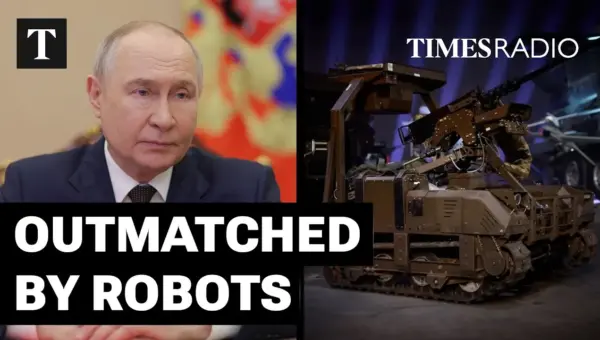
Ukraine War Robots Make Russian Tech Obsolete, Expert Says
Ukraine has achieved a historic military victory using ground robotic systems, marking a potential turning point in warfare. Defense tech expert Igor Novikov described the event as groundbreaking, highlighting the rapid evolution of conflict and Ukraine's role in pioneering its future. The conversation also touched upon concerns regarding UK defense spending and the global implications of proliferating autonomous weapon systems.

US Imposes Iran Port Blockade; Peace Talks Loom Amid Tensions
U.S. forces have fully implemented a blockade on Iranian ports, halting trade amid escalating Middle East tensions. Peace talks between the U.S. and Iran are reportedly on the horizon, though Iran's nuclear program remains a key obstacle. Meanwhile, historic direct talks between Israel and Lebanon took place in Washington, marking a significant diplomatic step.
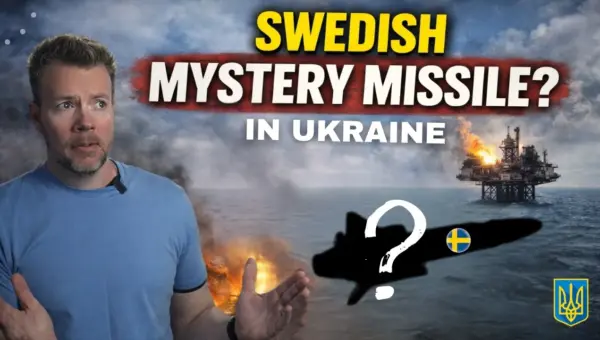
Sweden’s RBS-15 Missile Strikes Black Sea Targets
Ukraine has reportedly deployed the Swedish-made RBS-15 anti-ship missile, striking a Russian-occupied oil platform in the Black Sea. The missile's distinctive launch signature confirmed its origin, marking a significant escalation in Western arms transfers. The RBS-15's advanced capabilities, including long-range land-attack options, enhance Ukraine's ability to threaten Russian assets.