Europe Navigates Trump’s New Tariff Landscape: Uncertainty, Assertiveness, and Strategic Diversification
Europe is responding to new US tariffs by seeking a unified stance, leveraging diplomatic experience with the Trump administration, and strategically diversifying its trade partners to reduce dependence on the US market.

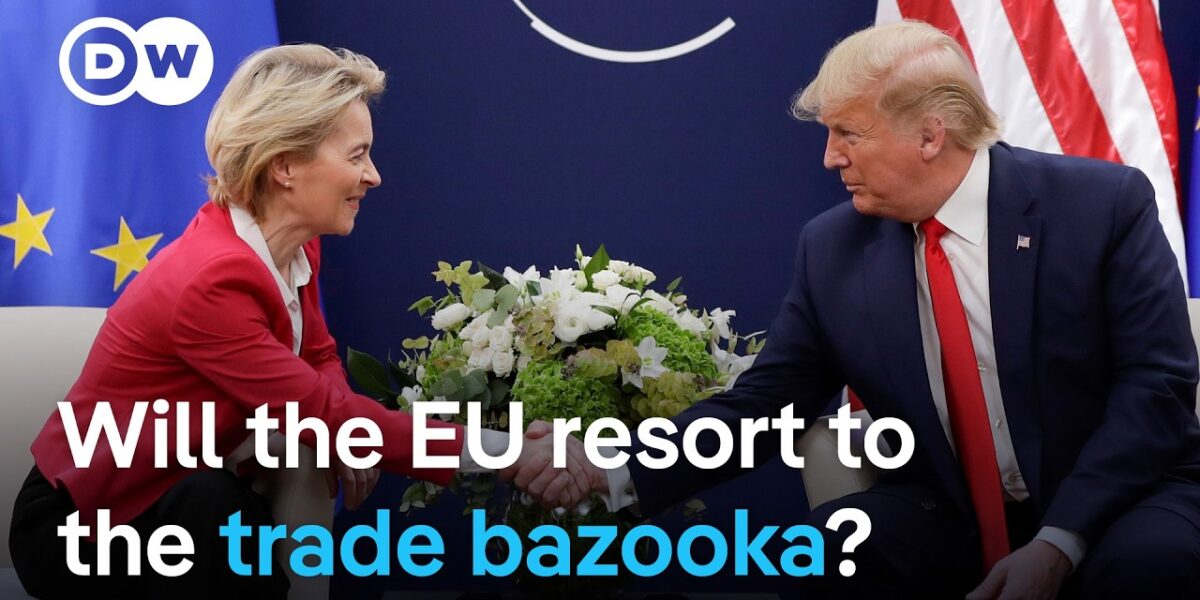
Global Trade in Flux as Trump Administration Imposes New Tariffs
The global economic order is once again facing significant disruption as the United States, under President Donald Trump, has announced a new regime of tariffs. Effective immediately, imports from a range of countries will face a new levy of 10% to 15%. This move comes on the heels of a US Supreme Court ruling that deemed many of the previous administration’s trade tariffs illegal, creating a complex and uncertain environment for nations heavily reliant on trade with the US.
European Leaders Grapple with Uncertainty and Call for Unified Response
The imposition of these new tariffs has sent ripples of concern through European capitals. German Chancellor Fred Mounts has articulated the prevailing sentiment, describing the constant uncertainty surrounding tariffs as “the biggest poison for the economies of Europe and the US.” This statement highlights the detrimental impact that unpredictable trade policies can have on investment, growth, and overall economic stability.
In response to the evolving trade landscape, European leaders are scrambling to formulate a cohesive and credible strategy. The head of the Center for Geopolitics and Geo-economics and Technology at the German Council for Foreign Relations, Claudia Schmuker, highlighted the difficulty in establishing a unified EU position.
While acknowledging the US Supreme Court’s decision on previous tariffs, she pointed to the persistence of numerous other tariffs that complicate matters. “Right now, we are hoping for a common European position, but this needs to be clarified,” Schmuker stated.
The Anti-Coercion Instrument and a Push for Clarity
One of the potential tools being considered by the EU is the anti-coercion instrument, a measure previously part of the response to the “Greenland tariff.” However, Schmuker noted that there isn’t yet a common consensus around its deployment. The immediate priority for European leaders is to gain clarity on the implications of the new US tariff policy, particularly for existing EU-US trade agreements. German Chancellor Olaf Scholz is expected to travel to Washington soon to engage in high-level discussions aimed at clarifying the situation and coordinating a unified European stance.
Navigating the ‘Trump Factor’: Experience and Transactional Diplomacy
Despite the challenges, there is a growing sense among political and economic leaders that they are becoming more adept at dealing with the “Trump factor.” Having experienced Donald Trump’s presidency since January 2025, global actors have gained insights into his transactional approach to diplomacy and his focus on securing outcomes that he can present as personal victories. “I think people know how to react. I mean, we’ve some experience.
He has been in office since January 2025 and we had lots of dealings with him. So we know that he is transactional. He we know that he wants wins that are that refer to him as a president,” explained Schmuker.
This experience, coupled with the importance of personal relationships in Trump’s dealings, highlights the significance of diplomatic engagement. Schmuker emphasized that while European leaders aim to protect their own interests, they are increasingly skilled in navigating these interactions. “We know what he wants.
We can’t give him everything that he wants because we are still the European Union. We have our own interests, but I think we have experience of how to deal with him.”
Europe’s Call for Assertiveness in Trade Policy
The current trade environment has also fueled a broader discussion about the need for Europe to adopt a more assertive stance as a global trade actor. Schmuker, who has written on this topic, believes that the chaotic Trump era has underscored this necessity. While Europe operates as a unified bloc in trade matters, its foreign and security policy remains fragmented among 27 member states.
“Europe needs to become more assertive, which is true because we are one of the major players in trade. We do have a problem when it comes to foreign and security policy because we still have 27 member states but in trade, we are one actor and therefore we need to have a more assertive trade policy,” she argued.
The interconnectedness of trade and security, particularly in the context of ongoing support for Ukraine, presents a delicate balancing act for the EU. This was evident in the cautious approach taken during the negotiation of the “Turnberry deal” in July of the previous year.
However, Schmuker indicated that when core interests are threatened, such as during the “Greenland tariff” incident which involved a threat to the territorial integrity of a European member, the EU has demonstrated its willingness to react assertively, including the potential use of the anti-coercion instrument. This suggests a firmer direction towards a more robust trade policy.
Strategic Diversification: Reducing Dependence on the US Market
Alberto Ritzia, a policy fellow at the European Council on Foreign Relations, offered further insights into Europe’s strategic response. He noted that European leaders are increasingly adopting a proactive approach, moving beyond mere reactions to US policy shifts.
A key element of this strategy involves diversifying trade partners and unlocking new markets. “Europe’s main strategy since the first introduction of tariffs has been to unlock and open up as much of new market as possible,” Ritzia observed, citing examples such as trade agreements with Mercosur, India, and ongoing discussions with the UAE.
This diversification aims to reduce Europe’s relative dependence on the US as an export market while simultaneously securing trade relationships where possible. Ritzia outlined what a clear and realistic EU position might entail. Initially, a “wait and see” approach is anticipated.
The European Parliament’s trade committee is expected to place on hold the trade deal agreed upon last year, given that a 15% tariff offers little competitive advantage. Subsequently, discussions on retaliatory measures are likely to occur.
Retaliation Measures and the ‘Trade Bazooka’
While the anti-coercion instrument might not be immediately deployed with full force, Ritzia suggested that the European Commission could remind the US of the significant package of retaliatory tariffs, amounting to $90 billion, that was put on hold last year. This package remains available for deployment, in full or in part, to counter any new tariffs imposed by the Trump administration. This suggests that while immediate escalation might be avoided, the EU retains considerable leverage.
When questioned about the feasibility of the EU walking away from the US market, Ritzia emphasized that such a move is not realistic given the sheer size and importance of the US market for European exporters. Instead, the focus is on a strategic effort to reduce its relative significance through diversification.
“It’s not a walking away, but it’s a a strategic effort to reduce its relative importance,” he clarified. This strategy leverages the growing purchasing power of emerging economies and their expanding middle classes, who represent a significant and increasing consumer base for European goods.
Conclusion: A More Assertive and Diversified Europe
The recent tariff announcements from the Trump administration have underscored the volatility of the current global trade environment. For Europe, this has spurred a dual approach: enhancing its capacity to deal with unpredictable US policies through experience and diplomacy, while simultaneously pursuing a more assertive and diversified trade strategy. By seeking new markets and reducing its reliance on any single trade partner, the EU aims to build greater resilience and secure its economic future in an increasingly complex geopolitical landscape.
Source: Trump's new tariffs: What are Europe's options? | DW News (YouTube)

Related Articles

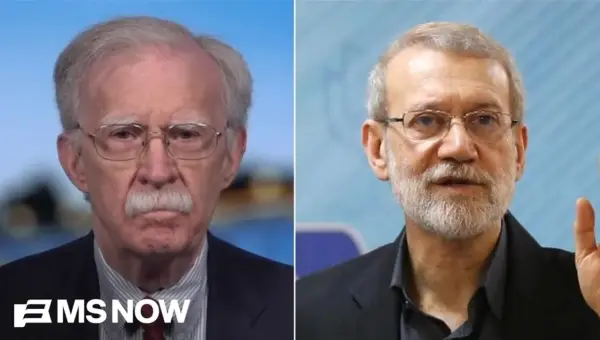
Bolton Slams Trump’s Iran Policy as ‘Snake-Like’
John Bolton, former National Security Advisor, has strongly criticized former President Trump's Iran policy as "snake-like" and lacking a clear strategy. Bolton stated that Trump's decisions were often impulsive, undermining U.S. credibility and creating instability in the Middle East. He called for a more consistent and strategically grounded approach to foreign policy.
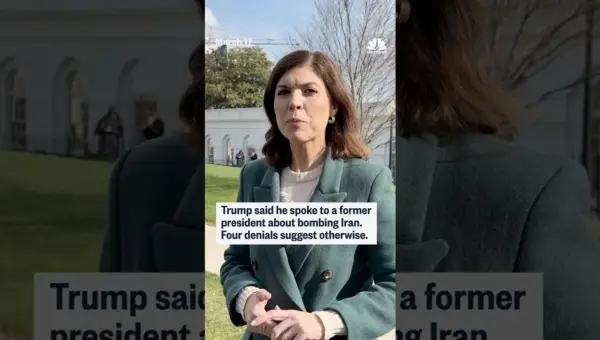
Trump Claims Presidential Call; Four Denials Emerge
Former President Donald Trump claimed he spoke with a past president who regretted not taking a certain action, implying approval of his own policies. However, aides for George W. Bush, Bill Clinton, Barack Obama, and sources close to Joe Biden have all denied any such conversations occurred. Trump has remained evasive when asked to identify the individual.
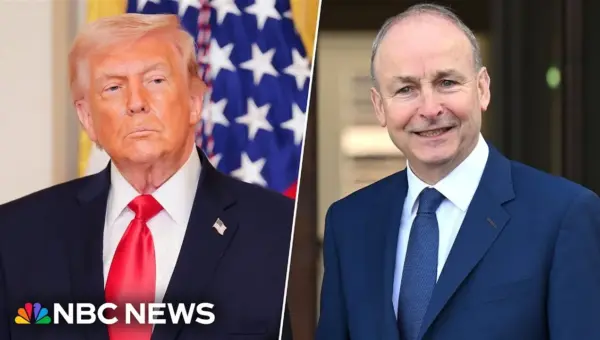
Trump Welcomes Irish Leader, Discusses Trade, Iran Tensions
President Trump welcomed Ireland's Taoiseach to the White House, discussing trade and the strong historical ties between the nations. The meeting also covered President Trump's views on Iran's military capabilities, his criticisms of NATO's support for U.S. initiatives, and upcoming foreign policy engagements.