US-Iran Tensions Soar: Military Buildup Signals Alarming Regime Change Intent, Expert Warns
A massive U.S. military buildup in the Middle East suggests an alarming intent for regime change in Iran, not mere coercion, according to expert Daniel L. Davis. He warns that such an endeavor lacks a compelling strategic rationale and risks a prolonged, costly conflict against a resilient adversary, potentially lacking American public support.

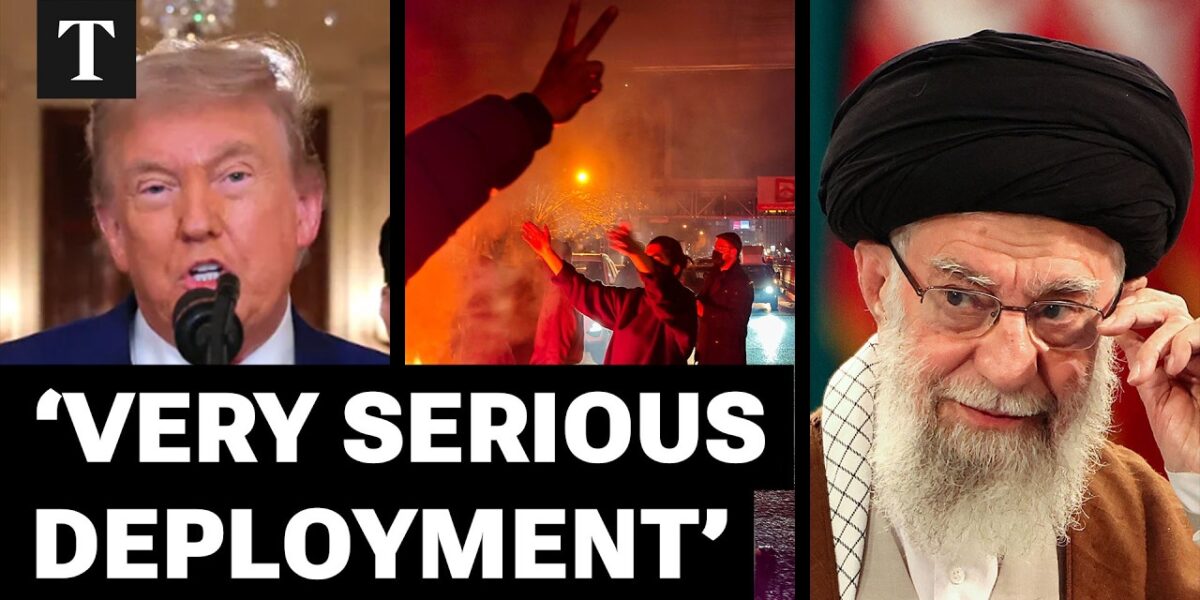
US-Iran Tensions Soar: Military Buildup Signals Alarming Regime Change Intent, Expert Warns
As geopolitical tensions between the United States and Iran reach a critical boiling point, the Middle East finds itself on the precipice of a potentially catastrophic conflict. A massive deployment of U.S. Military assets to the region has fueled intense speculation and concern, with one expert, Daniel L. Davis, a Senior Fellow at Defense Priorities and a former U.S. Army Lieutenant Colonel, asserting that the scale of the buildup points not to mere coercion, but to an “attempt at regime change” in Tehran.
Davis’s stark assessment, delivered during a recent interview, highlights the gravity of the situation, suggesting that the decision to strike Iran is now a purely political one awaiting presidential order. His analysis challenges the notion that the military posturing is merely a bargaining chip, arguing instead that it represents a significant escalation with profound and unpredictable consequences.
An Unprecedented Display of Force: The Scale of the Buildup
The sheer magnitude of the American military presence currently amassed in the Middle East is, according to Daniel L. Davis, unparalleled in recent history. “It is by any accounting the largest deployment of US military combat power, especially naval and air power, since the 2003 Operation Iraqi Freedom and then on something close to par with the 1991 Operation Desert Storm.
Not quite that big, but very, very close,” Davis explained. This formidable concentration of firepower signals a readiness for large-scale operations, far exceeding what would typically be required for limited strikes or deterrent actions.
The deployed assets represent the full spectrum of modern American military might. This includes multiple aircraft carrier strike groups, such as the one mentioned, though the Gerald R. Ford carrier strike group might still be optimizing its range, other elements are fully operational.
Accompanying these carriers are a host of destroyers, submarines, and an array of advanced fighter jets, including F-35s, F-22s, F-16s, and F-15s. The region is also fortified with robust missile power and significantly upgraded air defenses.
Troops have been strategically consolidated into larger, more defensible bases, further enhancing operational readiness. Davis emphasizes that, with the exception of the aforementioned carrier group’s optimal positioning, “everything else is absolutely set.” He suggests that President Trump could have initiated operations days prior, indicating that the delay is purely a political calculation.
The readiness of these forces means that the decision to engage in military action is not constrained by logistical or deployment timelines. This immediate readiness, combined with the sheer scale, suggests a preparedness for a comprehensive campaign rather than a surgical intervention.
The implications of such a deployment are far-reaching, sending a clear message of intent not only to Iran but also to regional allies and adversaries, as well as the international community. The rapid assembly of such a powerful contingent highlights the potential for a swift and decisive, albeit highly risky, military operation.
Beyond Coercion: The Regime Change Hypothesis
A central tenet of Davis’s argument is that the current military buildup is not merely a tool for diplomatic leverage. He dismisses the idea that such an overwhelming display of force is intended to coerce Iran into a more favorable nuclear deal or negotiate a settlement.
“I honestly don’t [believe it’s a bargaining tool] because Iran has been willing to negotiate and has been desiring to negotiate to get the nuclear program curtailed since the operation last year, really even before that during the Obama administration… During the first part of the Trump administration, they were always willing to negotiate,” Davis noted.
He recalls a period when, even amidst tensions, the U.S. And Iran had engaged in multiple rounds of negotiations, with a sixth round planned shortly before a strike occurred. The sticking point, Davis clarifies, has always been whether Iran is willing to concede to the specific demands of the U.S. To forestall an attack. The current situation, he argues, does not suggest a shift in Iran’s fundamental position that would necessitate such an immense military presence for negotiation.
Instead, Davis contends that the scale of the deployment points towards a far more ambitious objective: “This is this is something that’s either going to attempt, and I use that word carefully, attempt to have a regime change operation to destroy the government of Iran and its military, or it’s not going to be used.” This assessment challenges the prevailing narrative that the U.S. Seeks only to deter Iranian aggression or force compliance with international norms. The implication is that Washington may be contemplating a fundamental reshaping of the political landscape in Iran, a strategy fraught with historical complexities and potential for widespread instability.
The concept of regime change, particularly in a nation as large and complex as Iran, carries immense risks. Past U.S. Attempts at regime change, such as in Iraq and Afghanistan, have demonstrated the difficulty of achieving desired outcomes and the tendency for such interventions to lead to prolonged conflicts and unforeseen consequences.
Davis’s use of the word “attempt” is crucial here, reflecting a deep understanding of the challenges inherent in such an undertaking. It suggests that even with overwhelming military power, success is far from guaranteed, and the desired outcome of a stable, compliant government may prove elusive.
The Absence of a Compelling Strategic Rationale
Perhaps the most provocative aspect of Daniel L. Davis’s analysis is his assertion that there is “no compelling strategic security interest at stake for the United States that would necessitate an attack.” This statement directly challenges the hawkish rhetoric often employed to justify military action against Iran. Davis argues that the U.S. Already had mechanisms in place to prevent Iran from acquiring nuclear weapons, implicitly referring to the Joint Comprehensive Plan of Action (JCPOA), from which the Trump administration withdrew.
The JCPOA, signed in 2015, placed stringent restrictions on Iran’s nuclear program in exchange for sanctions relief. While critics argued it was flawed, proponents maintained it effectively curbed Iran’s path to a nuclear weapon.
The U.S. Withdrawal in 2018, followed by the re-imposition of crippling sanctions, dramatically escalated tensions and led Iran to gradually reduce its commitments under the deal. Davis’s argument suggests that the current crisis is, in part, a self-inflicted wound, stemming from a decision to dismantle an existing framework that, in his view, was already safeguarding U.S. Interests.
From Davis’s perspective, without a direct and immediate threat to U.S. National security that cannot be addressed through non-military means, initiating a large-scale conflict would be a grave miscalculation. He questions the necessity of such an aggressive posture, particularly when diplomatic avenues, even if difficult, had previously existed. This viewpoint aligns with a school of thought that advocates for a more restrained foreign policy, prioritizing de-escalation and diplomatic engagement over military intervention, especially when the strategic benefits are unclear or outweighed by the potential costs.
The lack of a clear, compelling strategic rationale for an attack, as articulated by Davis, raises fundamental questions about the objectives of the current U.S. Policy towards Iran. If the goal is not to prevent a nuclear weapon (given the existence of prior agreements) and if negotiation is deemed insufficient, then the underlying motives for such an aggressive posture become subject to intense scrutiny. This perspective suggests that the decision to strike may be driven by factors beyond conventional security interests, potentially including domestic political considerations or a desire for a more fundamental shift in regional power dynamics.
The Perilous Path of “Attempted” Regime Change: Why Success is Unlikely
Davis’s careful use of the word “attempt” when discussing regime change is not merely semantic; it reflects a profound understanding of Iran’s resilience and capacity for prolonged resistance. He contends that the U.S. Objective – to “win” by destroying the Iranian regime or its military, particularly the Islamic Revolutionary Guard Corps (IRGC) – is fundamentally different from Iran’s objective, which is simply “to survive.”
This asymmetry in objectives is critical. “All they have to do is continue on like the Taliban did for 20 years, like the Houthies have done for a decade and a half almost going back to when the Saudi Arabia was trying to quell them. All they have to do is survive,” Davis elaborated.
This comparison highlights the lessons learned from protracted conflicts in Afghanistan and Yemen, where technologically superior forces struggled to achieve decisive victory against resilient, adaptable adversaries deeply entrenched in their home territories. Iran, a nation of over 80 million people with a vast and varied geography, presents a far more formidable challenge than these smaller, less developed entities.
Iran has not been idle in the face of escalating tensions. Following previous U.S. Strikes and the ongoing pressure campaign, Tehran has invested significantly in strengthening its defenses and developing contingency plans. Davis points out that Iran has “learned lessons.
They have spread out their capabilities. They have spread out their command structure.
They have continuity of government plans. They are prepared as anybody can be and they know what’s coming.” This suggests a sophisticated and layered defense strategy designed to absorb an initial blow and continue resistance, making a quick, decisive victory for the U.S. Highly improbable.
The geographical reality of Iran further complicates any regime change effort. It is a country four or five times larger than Iraq, with rugged mountainous terrain conducive to guerrilla warfare and the concealment of assets.
The notion that a swift, targeted military intervention could easily topple the regime, as might have been envisioned in other contexts, is, in Davis’s view, a dangerous delusion. He explicitly dismisses the idea of a “quick short deal with an easy end like the Venezuela operation was,” highlighting the potential for a prolonged and costly engagement that the U.S. May not be equipped to sustain indefinitely.
The Mechanics of a Strike: US Offensive and Iranian Defensive Capabilities
Should President Trump give the order, Daniel L. Davis outlines a probable sequence of U.S. Military operations and the anticipated Iranian response, painting a grim picture of intense and unpredictable conflict.
US Offensive Strategy: Targeting Key Infrastructure and Leadership
The initial phase of any U.S. Strike would undoubtedly focus on neutralizing Iran’s air defense capabilities. “The most likely course of action is going to be the first thing that the United States is going to do, and they have a huge number of fighter jets for this, is to try to knock out the air defense capability. That’ll be target number one,” Davis explained.
This is a critical prerequisite for establishing air superiority and protecting U.S. Aircraft. However, Iran’s air defenses are not to be underestimated; they have been rebuilt, hardened, and strategically hidden, posing a significant challenge to U.S. Forces. The risk, Davis warns, is that initial strikes might destroy known sites, leading to a false sense of security before additional, hidden assets are deployed.
Once air defenses are sufficiently degraded, the focus would shift to Iran’s offensive missile sites – both hardened facilities and mobile launchers – which pose a direct threat to U.S. Bases in the region and to Israeli targets. Subsequently, the U.S. Would likely target the symbols and infrastructure of the Iranian regime itself. “I think they’ll try to take out the Ayatollah with maybe the political leadership, the IRGC, the military leadership,” Davis stated.
This would be coupled with attacks on the physical capacity of the IRGC and other security forces in major cities, with the theoretical aim of weakening them enough for internal protests to escalate into a popular uprising. Command and control centers and communication hubs would also be primary targets, repeatedly hit to achieve attrition. This multi-pronged approach aims to decapitate the regime, degrade its military, and potentially incite internal dissent, all while minimizing the risk to U.S. Forces by achieving air dominance.
Iran’s Counter-Response: Resilience and Asymmetric Warfare
Iran, however, is not a static target. Its response would be robust and multi-faceted. On the defensive front, Iran would deploy all available air defense assets, including mobile launchers and shoulder-fired missiles, which have historically proven difficult to neutralize.
The mountainous terrain of Iran, much like that of Iraq, is highly conducive to hiding and protecting these mobile assets, allowing them to resurface and continue firing even after initial strikes. “These mobile sites have been historically very very difficult to knock out…
The terrain is is conducive to hiding things in much of this mountainous area… And they really know how to use the terrain to their advantages,” Davis highlighted.
Offensively, Iran’s missile capabilities represent a significant threat. “If they just continue to fire these missiles, which we know can penetrate Israeli defenses, we know can penetrate American defenses, we could start suffering some real casualties,” Davis warned.
This raises the specter of direct hits on U.S. Military personnel and assets, as well as on key regional allies. The effectiveness of U.S. And Israeli missile defense systems against a large-scale, coordinated Iranian missile barrage remains largely untested in a real combat scenario, adding an element of dangerous uncertainty.
Perhaps the most unpredictable aspect of an Iranian counter-response involves its anti-ship cruise missiles and other naval assets in the Persian Gulf. “No one in the world has ever seen a naval engagement where all of these sophisticated defenses that we have have actually been put to a real test. So maybe they work, maybe they’re catastrophic failures,” Davis cautioned.
He highlights the immense gamble involved, noting that even a highly effective U.S. Defense system, say 95% successful, could still result in significant damage or destruction if Iran launches a sufficient number of missiles. The close confines of the Persian Gulf, coupled with Iran’s extensive naval capabilities (including fast attack craft, submarines, and mines), could turn a naval engagement into a devastating and unpredictable encounter, potentially leading to heavy casualties and severe economic disruption through impacts on global oil shipping lanes.
Domestic Implications: The Perils of a “Forever War”
Beyond the immediate military calculations, Daniel L. Davis casts a skeptical eye on the potential for sustained American public support for a prolonged conflict with Iran. He believes that President Trump would likely lack the backing of the American people, especially for a “sustained attack.”
This assessment is rooted in recent U.S. Foreign policy trends and public sentiment. Trump’s past military interventions, such as those in Venezuela, against drug boats, or the limited strikes in Iran, have largely been characterized by their “short sharp quick and cost us nothing” nature. These operations, often portrayed as decisive and low-cost, align with a public wary of entanglement in lengthy and expensive foreign wars, particularly after the experiences in Iraq and Afghanistan.
However, an “attempt at regime change” in Iran would be a fundamentally different undertaking. “If you start getting casualties and you can’t succeed and you can’t win and it just gets drawn on week after week and then into the months, then it’s going to be a real problem for the president,” Davis predicted.
The American public has a low tolerance for conflicts that drag on without clear objectives or achievable victories, especially when accompanied by mounting casualties. The political cost for a president who initiates such a conflict could be immense, potentially jeopardizing their domestic agenda and electoral prospects.
Davis also critiques the narrative often pushed by certain segments of the media and political establishment, which he perceives as “bending over backwards trying to paint a picture why we have to do this or why it’s necessary.” This suggests a potential disconnect between the motivations of certain political factions and the broader public’s appetite for military adventurism. The memory of past “forever wars” and their associated human and financial costs weighs heavily on the American consciousness, making any new, open-ended conflict a hard sell.
In conclusion, Davis’s analysis is a stark warning against underestimating the complexities and potential consequences of a military confrontation with Iran. The massive U.S. Military buildup, while formidable, faces a resilient and well-prepared adversary.
The absence of a clear strategic imperative, coupled with the high risk of a protracted conflict and significant casualties, suggests that such an undertaking would be a dangerous gamble with unpredictable domestic and international repercussions. The decision now rests squarely on the shoulders of the President, a choice that could define his legacy and reshape the geopolitical landscape for decades to come.
Source: US Iran Strike Would Be ‘Attempt’ at Regime Change | Daniel L. Davis (YouTube)

Related Articles
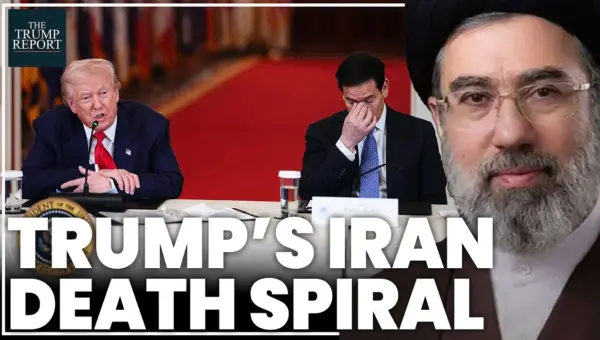
Iran’s Regime Thrives on Chaos, Not Peace
Iran's government thrives on chaos, using conflict for survival. Experts describe the regime as a 'cacistocracy,' run by the incompetent. Despite internal dissent and international pressure, the regime's survival is bolstered by external support from minority Shia groups and a strategy of ruthless suppression.

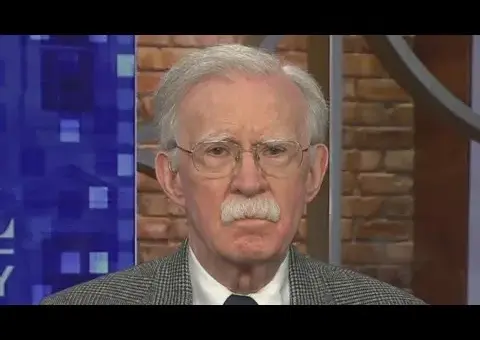
US Tightens Grip, Eyes Regime Change in Iran
John Bolton argues that the recent ceasefire with Iran was a mistake and advocates for a renewed military strategy. His proposal includes reopening the Strait of Hormuz and maintaining a blockade on Iranian oil to pressure the regime, with the ultimate goal of regime change.

Iran Talks: US Eyes Regime Change or Military Might
The U.S. is considering two main strategies for dealing with Iran: supporting regime change or building an international force to secure the Strait of Hormuz. These options come amid complex negotiations and concerns over Iran's nuclear program and regional influence.