Armenia at a Crossroads: A Nation for Sale in the Great Power Game
Armenia, a small, landlocked nation in the Caucasus, finds itself at a critical geopolitical and energy crossroads. With its traditional Russian protectorate faltering and its economy in despair, the country is now eyed by the United States as a potential strategic ally. This potential realignment, centered on a U.S.-funded nuclear power plant, offers Armenia a path to independence but requires navigating complex regional dynamics and significant financial commitment.


Armenia at a Crossroads: A Nation for Sale in the Great Power Game
In the rugged, landlocked heart of the Caucasus Mountains, a geopolitical drama of immense proportions is unfolding, with the ancient nation of Armenia at its epicenter. Long a client state of Russia, Armenia finds itself in an increasingly untenable position, economically destitute, militarily vulnerable, and grappling with an existential energy crisis. This precarious situation has opened a rare window for the United States to potentially reshape regional dynamics, albeit with significant financial and strategic risks.
The recent visit by U.S. Vice President JD Vance, and his engagement on nuclear power agreements, signals a potential shift in Armenia’s orbit, away from its traditional Russian protectorate and towards a Western alignment. However, the path is fraught with challenges, demanding an unprecedented level of U.S. investment and delicate diplomatic maneuvering, particularly with regional power Turkey. As analyst Peter Zeihan starkly puts it, Armenia is now “officially for sale to the United States,” presenting a unique, albeit costly, opportunity to anchor a strategic nation in the American sphere of influence.
The Geopolitical Crucible: Armenia’s Precarious Position
Armenia’s struggles are deeply rooted in its geography and history. Situated in a volatile corridor between Europe and Asia, it is bordered by Russia and Georgia to the north, Iran to the south, and its historical adversaries, Azerbaijan to the east and Turkey to the west. This geographical encirclement has fostered a profound sense of isolation and vulnerability among Armenians, who perceive themselves as “besieged by Muslims and Turks in all directions.” This historical narrative, shaped by centuries of conflict and the traumatic legacy of the Armenian Genocide, has historically driven Armenia into the protective embrace of Russia.
For decades, particularly since the collapse of the Soviet Union in the early 1990s, Russia has been Armenia’s primary security guarantor. This relationship manifested through military bases, arms supplies, and a collective security agreement (CSTO). However, this reliance has come at a significant cost to Armenia’s sovereignty and economic diversification. The post-Soviet period has seen Armenia’s population dwindle to approximately 4 million, largely due to emigration driven by economic hardship and lack of opportunity. The nation remains one of the most economically disadvantaged in the Eurasian world, with little prospect for self-driven improvement.
Russia’s Fading Guardianship
Russia’s traditional role as Armenia’s steadfast protector has demonstrably eroded in recent years. The ongoing war in Ukraine has severely strained Russia’s military and economic resources, limiting its capacity and willingness to intervene in other regional conflicts. This was starkly illustrated during the 2020 Nagorno-Karabakh War, a conflict that fundamentally reshaped the regional power balance.
For years, Russia had leveraged Armenia to “sow chaos throughout the entire region,” tacitly encouraging Armenian control over disputed territories within Azerbaijan. This strategy allowed Moscow to maintain its influence by acting as a mediator and peacekeeper. However, when Azerbaijan, bolstered by advanced Turkish military technology – most notably Bayraktar drones – launched a decisive offensive in 2020, Russia remained conspicuously absent. The Azerbaijani forces, previously considered militarily incompetent by some, “obliterated the entire Armenian military in a matter of a couple of weeks,” regaining significant territories. This non-intervention left Armenia feeling abandoned and exposed, stripping away the illusion of Russian invincibility and commitment.
The implications of this shift are profound. If Armenia successfully integrates into a new economic and security paradigm, “then the Russian position in the Caucasus basically goes to zero.” This loss of a strategic foothold would represent a significant blow to Russia’s regional influence, a development that undoubtedly weighs heavily on Moscow’s calculations. For Armenia, the experience has been a harsh lesson in geopolitical realities, forcing a reevaluation of its alliances and future trajectory.
The Ascendancy of Turkey and Azerbaijan
The 2020 Nagorno-Karabakh War also underscored the growing military and political might of the Turkey-Azerbaijan axis. Bound by deep ethnic, linguistic, and cultural ties, these two nations share a strategic vision for the South Caucasus. Turkey’s provision of military hardware and expertise, particularly drone technology, proved decisive in the conflict, demonstrating a potent new regional power dynamic. Azerbaijan, rich in oil and natural gas, has invested heavily in modernizing its military, transforming it into a formidable force capable of projecting power in the region. This alliance presents an existential threat to Armenia, which remains “largely defenseless” against its powerful neighbors. The transcript explicitly states that “Turkey could wipe Armenia off the face of the earth in a matter of a few weeks with a military campaign should it come to that,” highlighting the severe imbalance of power.
Armenia’s Desperate Search for Energy Security
Beyond military vulnerability and economic stagnation, Armenia faces a critical energy dilemma that underscores its overall fragility. “The issue that it’s basically comes down to is whether you can keep the electricity on because if you can’t then nothing else really matters,” emphasizes the transcript. At the heart of this challenge is the Metsamor Nuclear Power Plant, a Soviet-era facility located near the capital, Yerevan.
Constructed in the 1970s, Metsamor is an aging VVER-440/V-270 reactor design, which lacks a modern containment structure. It has long been a source of international concern due to its location in an active seismic zone and its outdated safety features. Critically, the plant is described as “generally considered to be the least safe nuclear reactor on the planet, complete with gaps in the reactor shell and the outer casing of the buildings so that the climate can just come right in complete with tree roots.” Despite these alarming conditions, Metsamor provides a substantial portion, if not most, of Armenia’s electricity, making its continued operation vital for the country’s survival.
Armenia’s economic woes mean it has “no money to update it, no money to put in a new power plant.” Furthermore, the country has been reliant on Russia for the supply of nuclear fuel, further entrenching its dependence on Moscow. The dilemma is stark: without a functioning power plant, Armenia faces systemic collapse. However, replacing or significantly upgrading Metsamor is an enormous undertaking, requiring massive capital investment and specialized expertise that Armenia simply does not possess.
The country’s landlocked status further complicates any energy diversification efforts. “There is no infrastructure in place to put in any other type of power plant unless you’re going to do it from scratch,” and even then, securing fuel supplies for alternative power sources “to a landlocked country who consider itself in a state of near de facto war with Azabjan which is really the only place the energy could come from” is a formidable hurdle. This leaves Armenia with an unenviable choice, as outlined by Zeihan.
A Fork in the Road: Two Stark Options for Survival
Armenia’s energy crisis, intertwined with its geopolitical vulnerability, presents two fundamentally different, yet equally challenging, paths forward:
Option 1: Capitulation to Azerbaijan and Regional Dependence
The first option involves Armenia “throwing itself at Azerbaijan’s mercy, agrees to everything that Azerbaijan is even thinking about without exception.” This would entail securing a natural gas pipeline from Azerbaijan and building gas-burning power plants. While this might offer a quick solution to Armenia’s energy needs, it would come at a profound cost: “they are forever dependent upon the country that they see as their single largest enemy.” Such a move would represent a significant loss of sovereignty, potentially leading to further political and territorial concessions, and a deep psychological blow to a nation that has historically defined itself in opposition to its Turkic neighbors. It would effectively integrate Armenia into a regional energy grid dominated by its adversaries, leaving it vulnerable to political pressure and economic coercion.
Option 2: The American Gambit – A New Nuclear Future?
The alternative, and arguably more appealing option for Armenia, is to secure a new nuclear power plant, thereby achieving “a degree a modicum of independence, probably with fuel supplies from the United States.” This is where the potential for U.S. intervention becomes critical. Given Armenia’s dire financial situation – “Armenia has no money at all” – any such project would require substantial external funding. “If they were able to replace their nuclear power plant, they would have paid the Russians to do it 10 years ago, 20 years ago, 30 years ago,” highlights the long-standing financial constraints. Therefore, “if this is going to happen, the United States is going to have to pay for almost all of the plant and then the Armenians can probably pay for the fuel.”
This prospect has clearly captured the attention of Washington, as evidenced by Vice President Vance’s visit and the signing of agreements on nuclear power. For the United States, such an investment represents a strategic opportunity to counter Russian influence in a critical geopolitical region. By providing Armenia with energy independence and a pathway to economic stability, the U.S. could effectively “buy a country and lock it into the American orbit” at a relatively modest cost of “2, three, four, six billion dollars.” In the grand scheme of global power projection and strategic alliances, this sum is indeed “the cheapest way to do it.”
The Turkish Conundrum: An Indispensable Partner
Even if the United States commits to funding a new nuclear plant for Armenia, the logistical and geopolitical realities of the region dictate that any successful implementation would require the cooperation of Turkey. “We’ll have to still do that with in in league with the Turks because the Turks control the entire western periphery and most meaningful access between Armenia and the rest of the world either has to go through north through Georgia and out or through Turkey,” explains the analyst. Turkey’s geographical position makes it a critical transit route for materials, expertise, and potentially even personnel for such a massive infrastructure project.
The relationship between the U.S. and Turkey has been complex and often strained in recent years, marked by disagreements over Syria, human rights, and Turkey’s acquisition of Russian S-400 missile systems. However, the current political landscape in Turkey, under President Recep Tayyip Erdogan, presents a unique opening. Erdogan, who has been in power since 2001, is described as having a “very Trumpian approach to the world, especially when it comes to the Europeans.” This transactional, national-interest-first approach could provide “a stable basis for the moment to work with in bilateral relations in a way that really doesn’t exist between the United States and any other country in the world.” Such pragmatism from Ankara, potentially prioritizing economic benefits or geopolitical leverage over historical animosities, could be crucial for facilitating U.S. efforts in Armenia.
However, the historical animosity between Armenia and Turkey, rooted in the Armenian Genocide and ongoing disputes, adds a layer of extreme sensitivity to any trilateral cooperation. Any deal involving Turkey would need careful diplomatic navigation to avoid alienating the Armenian populace while securing Ankara’s essential cooperation.
Risks and Rewards: A High-Stakes Bet
The prospect of the United States investing heavily in Armenia’s nuclear future is not without significant risks. The transcript acknowledges that “this would not be free and it does involve the United States investing in nuclear technology in a country that is so poor that any aspect of this is going to be a proliferation risk.” Ensuring the secure handling of nuclear materials and technology in a politically unstable and economically challenged nation would demand stringent oversight and robust safeguards, likely involving international bodies like the International Atomic Energy Agency (IAEA). The U.S. would need to deploy “a lot of different levers of American power” – diplomatic, technical, and financial – to mitigate these risks effectively.
Despite the challenges, the potential rewards for both Armenia and the United States are substantial. For Armenia, a new, safe, and reliable nuclear power plant would provide genuine energy independence, a critical foundation for economic recovery and long-term stability. It would allow the nation to reduce its reliance on adversarial neighbors and its former Russian patron, fostering greater sovereignty and resilience. This, in turn, could stem the demographic decline and attract much-needed investment.
For the United States, securing Armenia within its orbit would represent a significant geopolitical victory. It would weaken Russia’s foothold in the South Caucasus, strengthen democratic forces in the region, and establish a strategic partner in a volatile crossroads. It would also demonstrate U.S. commitment to supporting vulnerable nations against external pressures, reinforcing its global leadership role. The ability to work constructively with Turkey on such a project could also pave the way for improved bilateral relations and enhanced cooperation on broader regional issues.
Conclusion: A Pivotal Moment for Armenia
Armenia stands at a pivotal juncture, caught between the fading influence of its traditional protector and the looming shadow of its historical adversaries. Its economic fragility and critical energy needs have rendered it vulnerable, presenting a stark choice: dependence on Azerbaijan or a transformative, albeit risky, partnership with the United States. The potential U.S. investment in a new nuclear power plant represents not just an infrastructure project, but a profound geopolitical realignment, a chance for Armenia to forge a new path towards independence and stability.
The success of this “American Gambit” hinges on a complex interplay of financial commitment, diplomatic skill, and the willingness of regional actors, particularly Turkey, to cooperate. While the risks of nuclear proliferation and regional instability are real, the opportunity to secure a strategic ally and reshape the power dynamics of the South Caucasus is equally compelling. As the world watches, Armenia’s future hangs in the balance, a small nation’s destiny intertwined with the grand ambitions of global powers.
Source: Armenia’s Not Getting Off the Struggle Bus Just Yet || Peter Zeihan (YouTube)

Related Articles

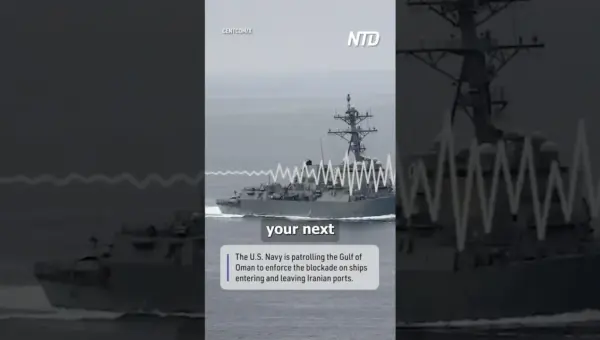
Navy Tightens Grip: US Enforces Strict Blockade on Iran
The US Navy has formally declared a blockade on Iranian ports, warning all vessels to turn back or face boarding and seizure. This significant move aims to exert economic and political pressure on Iran, with explicit threats of force for non-compliance.


Iran Blockade Sparks War Concerns, Backfires on US, Expert Warns
The U.S. blockade on Iranian ports, aimed at crippling its economy, is sparking concerns of an "act of war" and may backfire, according to former diplomat Barbara Leaf. While the U.S. and Iran prepare for potential peace talks, hardline rhetoric and the blockade's global economic impact complicate diplomatic efforts. A key concern is a potential confrontation with China if U.S. forces intercept Chinese vessels.

US Markets Surge as Iran Tensions Ease, Oil Prices Steady
U.S. stock markets are hitting new highs as tensions with Iran ease, with the S&P 500 reaching record levels. Despite persistent oil prices around $92 a barrel, the U.S. economy shows resilience, boosted by record oil exports. The focus is shifting to the economic confrontation with Iran, including the non-renewal of oil sales waivers, and long-term strategies to bypass the Strait of Hormuz.