Republican Revolt: Governor Stitt’s Scathing Critique Exposes Deep Cracks in GOP Leadership and Policy Direction
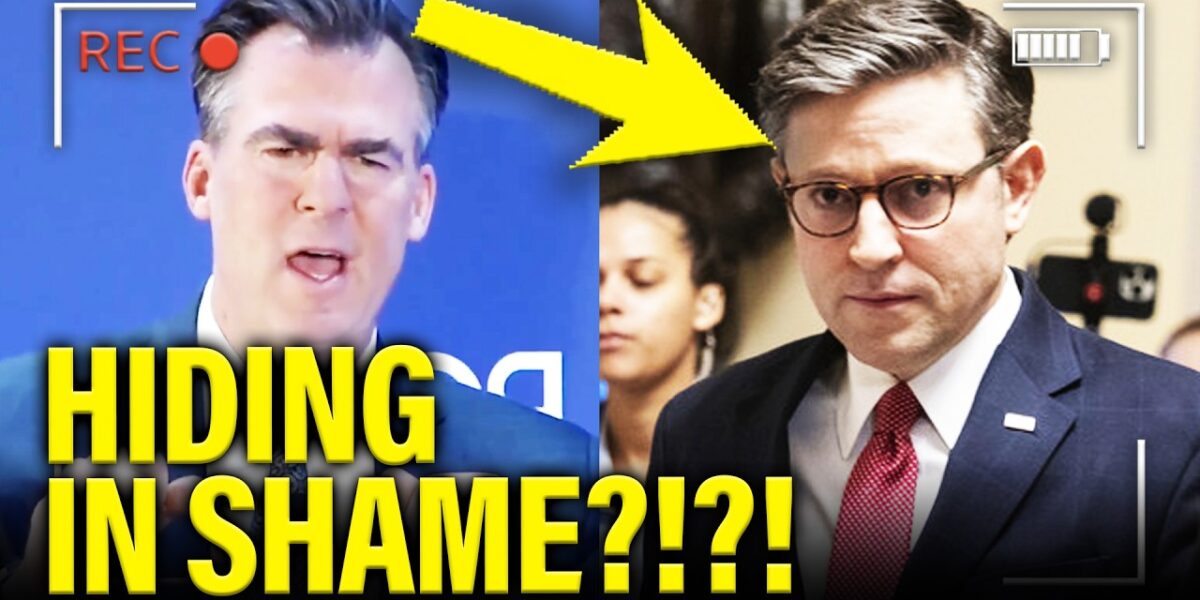
Oklahoma's Republican Governor Kevin Stitt has unleashed a scathing critique of current GOP congressional leadership, exposing deep internal divisions and policy paralysis. Stitt lamented the lack of a balanced budget since the 1990s, the absence of a healthcare plan, and Speaker Mike Johnson's perceived loss of control, while offering pragmatic solutions for immigration that contrast sharply with the party's hardline rhetoric.

Republican Revolt: Governor Stitt’s Scathing Critique Exposes Deep Cracks in GOP Leadership and Policy Direction
In a rare and striking display of intra-party dissent, Republican Governor Kevin Stitt of Oklahoma has launched a pointed critique against the current state of the Grand Old Party, particularly targeting congressional leadership and its perceived inability to govern effectively. His comments, made publicly, underscore a growing frustration within conservative ranks, painting a stark picture of a party grappling with internal divisions, policy paralysis, and a leadership crisis that threatens its very foundation. The governor’s remarks, which included an unexpected commendation of former Democratic President Bill Clinton’s fiscal record, have sent ripples through the political landscape, highlighting the profound challenges facing Speaker Mike Johnson and the broader Republican agenda.
The Unraveling of GOP Confidence: A Speaker Under Siege
The sentiment expressed by Governor Stitt is not an isolated incident but rather a symptom of deeper malaise afflicting the Republican Party. When a stalwart Republican governor from a deep-red state like Oklahoma publicly laments congressional dysfunction and praises a Democratic predecessor for fiscal prudence, it signals a significant loss of confidence in current GOP leadership. The individual at the epicenter of much of this scrutiny is Speaker Mike Johnson, often referred to by critics as “MAGA Mike,” whose tenure has been marked by a relentless series of challenges, both external and internal.
Johnson inherited a razor-thin House majority, a caucus deeply fractured along ideological lines, and a constant threat of a motion to vacate the chair, a political weapon wielded just prior to his ascension. This precarious position has rendered him particularly vulnerable to the machinations of his own party’s far-right wing, often forcing him into difficult compromises or, conversely, into a state of legislative stasis. Governor Stitt’s critique suggests that this internal strife is now bleeding into the broader party, eroding faith in Washington D.C.’s ability to deliver on core conservative promises.
Fiscal Fiasco: The Elusive Balanced Budget
One of the most damning indictments leveled by Governor Stitt concerns the nation’s fiscal health and Congress’s chronic inability to pass a balanced budget. “Congress is not getting anything done. We haven’t passed a balanced budget in Congress since the ’90s,” Stitt stated, explicitly crediting Bill Clinton’s presidency as the last time such an achievement occurred. This statement, coming from a Republican, is a stinging rebuke of decades of Republican-led Congresses, including the current one.
The concept of a balanced budget, where government expenditures do not exceed revenues, has long been a foundational tenet of conservative fiscal policy. The 1990s, particularly the latter half of the Clinton administration, saw a period of economic boom, reduced defense spending post-Cold War, and bipartisan efforts that led to budget surpluses. Since then, however, the federal budget has largely operated in deficit, contributing to a ballooning national debt. This trend has continued through Republican and Democratic administrations alike, fueled by factors such as wars, tax cuts, increased entitlement spending, and economic downturns.
For many conservatives, the failure to balance the budget represents a profound betrayal of core principles. It signals a lack of fiscal discipline, a disregard for future generations, and an inability to prioritize long-term economic stability over short-term political gains. Governor Stitt’s frustration is palpable, reflecting a widespread concern among many Americans who view the escalating national debt as an existential threat. The repeated failure to even propose, let alone pass, a comprehensive budget that addresses these issues underscores the gridlock that has come to define Washington.
Healthcare in Crisis: A Void of Policy and Leadership
Beyond fiscal responsibility, Governor Stitt highlighted another critical area of congressional inaction: healthcare. He pointed out that “healthcare premiums have expired,” leading to rising costs and a subsequent reluctance among many Americans to sign up for health insurance. This lack of coverage, he warned, will inevitably result in people foregoing preventive care and being unable to afford treatment for serious illnesses like heart attacks or cancer, leading to devastating personal and societal consequences.
The Republican Party has long campaigned on a promise to repeal and replace the Affordable Care Act (ACA), commonly known as Obamacare. However, after more than a decade, a cohesive and widely supported GOP alternative has yet to materialize. The transcript alludes to a perceived absence of any “amazing GOP proposal” or, indeed, “no proposal whatsoever,” leaving Americans to grapple with escalating healthcare costs. This policy vacuum is particularly glaring when existing subsidies or cost-containment measures expire, leaving consumers vulnerable to market fluctuations and higher out-of-pocket expenses.
The implications of this inaction are severe. A lack of affordable healthcare access can exacerbate public health crises, deepen economic inequality, and place immense strain on emergency services and charitable organizations. For a party that frequently champions individual responsibility and free-market solutions, the perceived failure to offer viable, accessible healthcare options represents a significant policy and political vulnerability. It fuels the narrative that the GOP is more adept at critiquing existing systems than at offering tangible, beneficial alternatives for the American people.
Speaker Johnson’s Precarious Grip: Instances of Lost Control
Governor Stitt’s broad critique extends to Speaker Johnson’s apparent loss of control over his own caucus, citing specific instances where the Speaker’s authority was openly challenged or circumvented. These incidents illustrate the deep fissures within the Republican Party and the formidable task Johnson faces in uniting a diverse and often rebellious conference.
One notable example cited was the release of the Epstein files. The transcript mentions that Representatives Ro Khanna (D-CA) and Thomas Massie (R-KY) were instrumental in forcing this through a “discharge petition.” A discharge petition is a rarely used procedural tool that allows a majority of House members (218 signatures) to bring a bill or resolution to the floor for a vote, bypassing the committee system and, crucially, the Speaker’s control over the legislative agenda. The successful use of such a petition, particularly with bipartisan support, is a direct challenge to the Speaker’s power and signals a significant loss of legislative command.
Another instance of Johnson’s wavering authority involved Canadian tariffs. The transcript notes that “enough Republicans passed a resolution against the Canadian tariffs.” While the specifics of these tariffs are not detailed, the fact that a segment of the Republican caucus actively worked against a policy potentially supported by the party’s more protectionist wing, or even the administration, further highlights the internal discord. Such a move demonstrates a willingness among some Republicans to prioritize their own policy positions or constituents’ interests over party unity or leadership directives, further complicating Johnson’s efforts to steer a coherent legislative course.
These episodes collectively paint a picture of a Speaker struggling to maintain order and cohesion within his ranks, often finding himself outmaneuvered by a coalition of Democrats and dissenting Republicans. This inability to consistently pass legislation, or even control the legislative process, undercuts the party’s effectiveness and fuels the perception of dysfunction that Governor Stitt so vocally deplores.
The ‘Car Racing Towards a Cliff’ Metaphor: A Call for Real Solutions
Governor Stitt’s most vivid and perhaps most potent metaphor for the current political climate is that of a “car racing towards a cliff.” He describes a scenario where his party is driving, Democrats are in the passenger seat, and both are “fighting over the control of the radio” while the vehicle hurtles towards disaster. This powerful imagery encapsulates the profound frustration felt by many Americans who perceive Washington as paralyzed by partisan bickering, oblivious to the urgent challenges facing the nation.
His plea for “real solutions” over constant fighting resonates deeply. It’s a call to move beyond ideological purity tests and political posturing, urging elected officials to address tangible problems that affect everyday Americans. This sentiment reflects a growing exhaustion with political theater and a yearning for pragmatic governance that prioritizes problem-solving. For Stitt, the focus should be on practical outcomes rather than endless partisan battles, especially when critical issues like the national debt and healthcare remain unaddressed.
Immigration: A Divisive Fault Line within the GOP
Perhaps one of the most surprising aspects of Governor Stitt’s critique is his stance on immigration, which the transcript describes as sounding “like a Democrat.” This surprising alignment with a more moderate, solution-oriented approach contrasts sharply with the hardline rhetoric often employed by former President Donald Trump and his fervent supporters.
Trump’s Approach: Theater and Exploitation
The transcript characterizes Trump’s immigration strategy as driven by “theater,” a desire to “scare people,” and an intention to “discourage people and specifically Hispanic and people of color from coming.” It also alleges that Trump’s policies aim to “enrich his oligarch friends who are making out huge with the $45 billion contract for detainment centers.” This portrayal suggests a strategy rooted in spectacle, intimidation, and financial gain for certain powerful interests, rather than a humane or efficient system.
The criticisms leveled against Trump’s approach include the rounding up of individuals, the separation of families, and the use of detention centers. These tactics have drawn widespread condemnation from human rights organizations, civil liberties advocates, and a significant portion of the public across the political spectrum. The transcript explicitly mentions that “people are horrified across the political spectrum about what’s happening on the streets,” particularly citing instances of ICE actions and allegations of federal agents “murdering American citizens rounding up children and families.” (It’s important to note the transcript’s phrasing here; while federal actions can be controversial, the term “murdering” is a strong and specific accusation, reflecting the heightened emotional intensity surrounding the issue.)
Stitt’s Pragmatic Vision: Efficiency and Workforce Needs
In stark contrast, Governor Stitt advocates for a more targeted and efficient approach. He emphasizes the need to focus on “violent criminals,” noting that such individuals are “known because by nature they have been convicted of a violent crime.” He points out that identifying and deporting convicted criminals is not difficult, as they have already been through the system. This aligns with traditional law enforcement principles and suggests a preference for prioritizing public safety over broader, indiscriminate round-ups.
Stitt’s pragmatic solutions extend to the operational aspects of immigration. He suggests that instead of detaining people unnecessarily, the government could “just hire more judges and deport them quicker.” This approach would address the backlog in immigration courts, streamline the deportation process for those who are deemed deportable, and potentially reduce the need for costly detention facilities.
Furthermore, Stitt, in his capacity as the head of the National Governors Association, addresses the contentious issue of federal immigration enforcement within states, particularly in light of incidents like the shooting of Alex Prey in Minnesota. He acknowledges the “deep concerns over federal tactics and accountability” and the public’s discomfort with “feds coming into their state.” While recognizing that President Trump was elected to address immigration and that the “Biden era of four years of open border policies was disastrous,” Stitt questions the “endgame” of the current strategy. He asserts that deporting “every single non-US citizen” is not what Americans want and calls for an end to politicization, advocating for “real solutions on immigration reform.”
His proposed solution is particularly innovative: giving states the authority to issue “workforce permits.” This system would allow employers to match with non-welfare, non-government assistance employees, potentially charging the employer a fee (e.g., $5,000) to help pay down the national debt. Critically, these permits would not grant U.S. citizenship, addressing concerns about permanent residency while meeting labor demands. Stitt argues that other countries have figured out similar systems and that the U.S. is “over complicating this,” leading to unnecessary “tempers going crazy.” This nuanced approach attempts to balance economic needs, border security, and humanitarian concerns, moving away from purely punitive measures.
The Broader Implications: A Party at a Crossroads
Governor Stitt’s outspoken criticism is more than just a momentary outburst; it represents a significant challenge to the prevailing narrative and leadership within the Republican Party. His comments highlight the growing tension between the party’s traditional conservative wing, which often emphasizes fiscal responsibility, limited government, and states’ rights, and the populist, nationalist wing that has largely coalesced around Donald Trump.
The struggles of Speaker Johnson to maintain control, the lack of legislative achievements on critical issues like the budget and healthcare, and the internal dissent over immigration policy all point to a party that is deeply fractured and searching for a cohesive identity. This internal strife has profound implications for the Republican Party’s ability to effectively govern, to present a unified front to the American electorate, and to articulate a clear vision for the nation’s future.
As the country heads into another election cycle, the ability of Republican leaders to address these internal divisions, bridge ideological gaps, and offer tangible solutions to pressing national challenges will be paramount. Governor Stitt’s frank assessment serves as a powerful wake-up call, urging the GOP to move beyond partisan squabbles and towards the “real solutions” that he believes the American people desperately seek. The question remains whether the party’s leadership can heed this call and navigate the treacherous political landscape before the “car racing towards a cliff” reaches its perilous destination.
Source: MAGA Mike PANICS as GOP Turn on HIM DURING TOWNHALL (YouTube)

Related Articles

GOP Faces Voter Discontent Over War, Diminished Support
Republican lawmakers are noticing growing voter discontent, particularly among younger demographics, regarding the ongoing war. This sentiment, coupled with economic pressures, could lead to diminished support and turnout in the upcoming midterm elections. The party faces significant challenges in messaging and addressing voter concerns.

GOP Touts Tax Cuts: ‘Bigger Refunds’ for Working Families
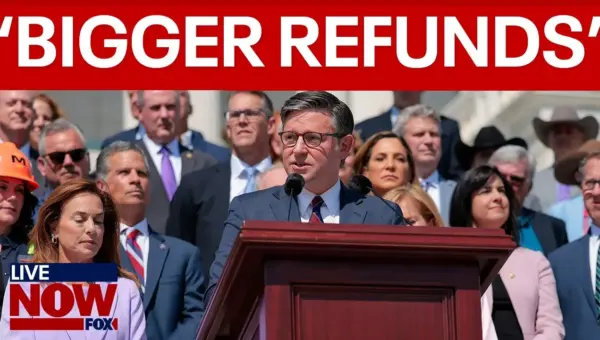
House Republicans are highlighting the "Working Families Tax Cuts" on the first Tax Day since its implementation, claiming it's delivering "bigger refunds" and financial relief to everyday Americans. They contrasted these benefits with "Bidenomics," asserting that Democrats voted against the cuts and for tax increases.


Trump’s Base Crumbles: Is MAGA’s Marketing Fading?
Donald Trump's core voter base is reportedly shrinking, even among historically loyal groups. This analysis explores whether the MAGA movement, seen by some as sophisticated marketing, is losing its appeal. The implications for the Republican party and the broader political landscape are significant.