Trump’s 2028 Chess Match: Is Marco Rubio Overtaking JD Vance for the GOP’s Future?
Former President Donald Trump is reportedly sounding out advisers on whether JD Vance or Marco Rubio would be a stronger Republican presidential nominee in 2028, signaling a potential shift in his favorability. This comes amidst Trump's public praise for Rubio and a noticeable reluctance to fully endorse Vance, raising questions about the future leadership of the MAGA movement and the broader ideological direction of the GOP.

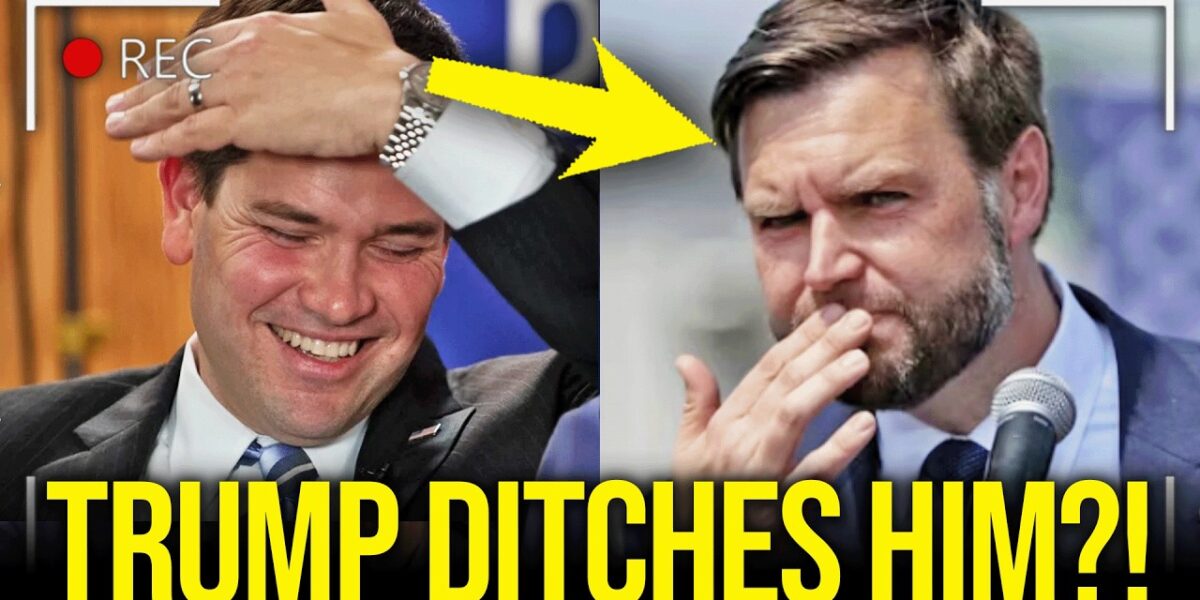
Trump’s 2028 Chess Match: Is Marco Rubio Overtaking JD Vance for the GOP’s Future?
In a political landscape perpetually shaped by the whims and pronouncements of former President Donald Trump, a new parlor game has reportedly emerged, casting a long shadow over the Republican Party’s future. Sources close to Trump indicate he has begun privately polling advisers on a critical question: Who would be a stronger standard-bearer for the GOP’s top ticket in 2028 – his chosen vice-presidential running mate, JD Vance, or Florida Senator Marco Rubio, who currently serves as his Secretary of State?
This internal deliberation, first reported by Axios and corroborated by multiple observers, signals a potentially significant shift in Trump’s favorability, raising questions about his confidence in Vance and highlighting a burgeoning appreciation for Rubio. The implications of this apparent re-evaluation are profound, suggesting a strategic repositioning by Trump as he considers his enduring legacy and the ideological direction of the party he continues to dominate.
The former president’s penchant for public flattery, combined with his characteristic refusal to offer full endorsements, has created a climate of intense speculation. While Vance was handpicked by Trump as his running mate, recent public remarks and private inquiries suggest a growing warmth towards Rubio, a former rival who has undergone a remarkable political transformation to align himself with the MAGA movement.
The Shifting Sands of Trump’s Endorsement
Donald Trump’s endorsement is often considered the most coveted, and sometimes most capricious, prize in Republican politics. His recent interactions concerning JD Vance and Marco Rubio exemplify this dynamic. Despite selecting Vance as his vice-presidential candidate, Trump has conspicuously refrained from offering a full-throated endorsement for Vance’s potential future presidential bid in 2028, even when prompted repeatedly by journalists.
During a recent press availability, when asked if he would support Vance at the top of the ticket in 2028, Trump demurred, stating, “Something I don’t have to worry about now. I’ve got three years to go.” While he acknowledged Vance as “fantastic,” his subsequent remarks quickly pivoted to lavish praise for Marco Rubio. “Marco did a great job in Munich,” Trump emphasized, referring to Rubio’s performance at the Munich Security Conference. This brief exchange, where Rubio’s name and achievements seemed to overshadow Vance’s, has been interpreted by many as a subtle but clear indication of shifting priorities.
This pattern is not isolated. Trump has been “gushing” about Marco Rubio in recent weeks, both publicly and privately. A video that recently went viral captured Trump praising Rubio with an almost theatrical flourish, even joking about firing him because his performance was too good. “Marco does it with a velvet glove, but it’s a kill, right?” Trump remarked, contrasting Rubio’s style with his own. “Marco, you really did yourself proud two days ago in Munich. In fact, so proud that I almost terminated his employee because they were saying, ‘Why can’t Trump do this?'” The jest, while delivered with a smile, underscored Trump’s admiration for Rubio’s effectiveness and public reception.
Such public accolades, particularly when juxtaposed with a noticeable silence on Vance’s future, have fueled the narrative that Trump’s confidence in his chosen running mate may be waning. Some initially speculated that Trump’s reluctance to endorse Vance was a deliberate tactic to “light a fire under JD Vance’s ass,” pushing him to perform better or demonstrate more loyalty. However, the Axios report, suggesting Trump is now directly asking advisers, “JD or Marco?” for 2028, indicates a more serious and strategic consideration, moving beyond mere motivational tactics.
Trump’s political style is characterized by a constant assessment of loyalty, performance, and public appeal. He enjoys fostering internal competition and often uses public platforms to test the waters or send subtle messages. This makes his current musings about Vance and Rubio particularly noteworthy. It suggests a genuine, albeit perhaps still evolving, contemplation about who best embodies and can perpetuate his political movement beyond his own tenure.
The Rubio Rebirth: From Critic to Confidant
Marco Rubio’s journey from a sharp critic of Donald Trump to a potential heir apparent is one of the most striking political transformations of the modern era. During the heated 2016 Republican primaries, Rubio was one of Trump’s most vocal and incisive opponents. He famously attacked Trump’s business practices, accusing him of using “illegal immigrant labor” to build Trump Towers and questioning the origin of his merchandise. “The second thing about the trade war,” Rubio declared in one memorable exchange, “I don’t understand ’cause your ties and the clothes you make is made in Mexico and in China. So, you’re going to be starting a trade war against your own ties and your own suits.” These were not mere soundbites; they were direct, pointed criticisms that highlighted significant ideological and ethical differences between the two men.
However, once Trump secured the nomination and subsequently the presidency, Rubio’s stance began to shift. Like many other establishment Republicans who initially resisted Trump, Rubio eventually embraced the former president’s agenda and leadership. This evolution saw him transition from a mainstream conservative voice to a staunch defender of the MAGA movement, culminating in his selection as Trump’s Secretary of State. Critics have characterized this transformation as “selling his soul” to become a “hardcore MAGA dude,” willing to do “anything Donald Trump asks him.”
This strategic realignment is not unique to Rubio. The post-Trump Republican Party has largely become defined by its loyalty to the former president, with many politicians finding that alignment is a prerequisite for political survival and advancement. Rubio’s pivot, however, is particularly notable given the intensity of his initial opposition. His current favored status with Trump suggests that this transformation has paid significant dividends, illustrating Trump’s willingness to forgive past transgressions in exchange for unwavering support and effective advocacy of his agenda.
Rubio’s ability to navigate complex diplomatic settings, as evidenced by his praised performance in Munich, combined with his newfound alignment with Trump’s populist base, makes him a compelling figure in the former president’s calculations. He presents a more polished, traditionally conservative image, yet speaks the language of the MAGA movement, offering a potential bridge between different factions of the Republican Party, all under Trump’s enduring influence.
Vance’s Vulnerabilities: Charisma, Gaffes, and the Shadow of Thiel
While JD Vance has been elevated to the national stage as Donald Trump’s vice-presidential pick, concerns about his political viability and public appeal have reportedly surfaced, potentially contributing to Trump’s wavering confidence. Observers have described Vance as “one of the least charismatic people possible,” a perception that can be a significant hurdle in national politics where personality and public speaking prowess are often paramount.
Recent public appearances have done little to dispel these concerns. A notable instance cited by critics involved Vance discussing sex offenders, where his comments were interpreted by some as lacking the necessary political tact and potentially undermining broader party messaging. “It’s really not that hard,” Vance stated, referring to addressing the issue, adding, “It’s a huge indictment of Jacob Frey and frankly the entire far-left that they made that their cause of the day letting violent sex offenders stay on the streets of America. The president’s just not going to go for that.” While ostensibly attacking progressive policies, critics suggested his delivery and framing might be perceived as clumsy or even inadvertently critical of the very administration he serves, as the transcript’s speaker noted, “throwing almost his own president under the bus.”
Another instance that garnered significant negative attention was Vance’s speech at the board of peace, reportedly in front of figures like Victor Orban. During this address, Vance attempted a joke referencing Congresswoman Alexandria Ocasio-Cortez’s viral moment of pausing during a speech. “I knew exactly what I wanted to say,” Vance began, “but then after the president said that I was so smart and that I didn’t want to repeat our congresswoman who froze for 20 seconds over in Munich, now I’m tempted, sir, just to freeze for 20 seconds and just stare at the cameras and maybe they’ll say nice things about me like they do about Congresswoman Cortez.” The joke, by all accounts, “did not land,” resulting in an “awkward silence” rather than laughter. AOC herself later quote-tweeted the clip, quipping, “The only thing that was longer than my pause was the awkward silence when JD Vance made this joke.” This moment, which garnered millions of views, reinforced the perception of Vance’s struggle with public charisma and comedic timing, crucial elements for a national political figure.
Beyond performance, there are also underlying ideological considerations that might factor into Trump’s assessment. Some theories suggest that Trump might be wary of Vance being “too groomed by people like Peter Thiel.” Peter Thiel, a prominent tech billionaire and venture capitalist, has been a significant backer of Vance, investing in his Senate campaign and providing crucial connections. Concerns have been raised by some observers that Thiel’s influence could steer Vance towards a “tech oligarchy” or a “surveillance state” agenda, which might not perfectly align with Trump’s own populist vision or his desire for unfettered ideological control over his political movement. While these are speculative concerns, they reflect the complex web of influences and allegiances that Trump likely considers when evaluating potential successors.
The Kingmaker’s Calculations: Legacy, Control, and the ‘Fighter’ Mentality
Donald Trump’s current contemplation over JD Vance and Marco Rubio is not merely a passing thought; it is deeply intertwined with his overarching political strategy, his focus on legacy, and his unique approach to power dynamics. Trump, known for “enjoying gossiping, reveling in playing people off one another, and freely airing private musings,” is likely engaging in a deliberate process of assessment and manipulation.
According to Axios, Trump’s “parlor game” of pitting Vance against Rubio is increasingly driven by his focus on his legacy as his “last midterm elections approach.” He views both Vance and Rubio as potential “standard bearers” for his movement, individuals who can carry forward the “America First” agenda and ensure his enduring influence on the Republican Party. The question then becomes, who can do it best, and under what terms?
One theory suggests Trump’s preference for Rubio might stem from a desire for greater “ideological control.” While Vance is undoubtedly loyal, his association with figures like Peter Thiel could introduce an element of independent ideological direction that Trump might find less appealing. Trump’s brand of populism, while often anti-establishment, is ultimately centered around his own personality and vision. A candidate perceived as too beholden to other influential figures, even allies, might be seen as less pliable or less directly reflective of Trump’s personal brand.
Conversely, Rubio, having publicly shed his past criticisms and embraced the MAGA mantle, might be seen as a more reliable conduit for Trump’s legacy, having demonstrated a willingness to adapt and align. His transformation could be interpreted by Trump as a testament to the irresistible force of his movement, and a sign of ultimate loyalty.
Another significant factor in Trump’s decision-making is his appreciation for “fighters.” Trump often praises individuals he perceives as strong, aggressive, and effective in political combat. The transcript suggests that Trump might view Marco Rubio as more of a “fighter” than JD Vance. Rubio’s “velvet glove” approach, which Trump acknowledged, masks a sharp political mind capable of delivering effective blows. This perceived strength and strategic acumen could be a powerful draw for Trump, who values an unyielding approach to political adversaries.
It’s crucial to note that some sources caution against interpreting Trump’s current inquiries as a definitive “souring on Vance.” Indeed, some still believe that a “Vance Rubio” ticket or vice-versa is Trump’s “dream ticket,” indicating a desire to leverage the strengths of both men. Trump’s political maneuvering is often complex and multi-layered, designed to keep all parties guessing and ensure his continued centrality to the Republican narrative. His public and private comments are rarely straightforward endorsements or condemnations, but rather strategic signals intended to shape narratives, test loyalties, and maintain his kingmaker status.
Beyond 2028: The Ideological Divide and the Democratic Imperative
Regardless of who ultimately emerges as Trump’s preferred successor, the discussion surrounding Vance and Rubio for 2028 underscores the profound ideological chasm that defines contemporary American politics. From a progressive perspective, both JD Vance and Marco Rubio represent a continuation of policies and ideologies that are deemed detrimental to the nation’s progress and social fabric. As the transcript states, “both of them would be despicable. Any Democrat that we could put up on our Democratic stage would be better than both JD Vance and Marco Rubio. Every single Democrat is meaningfully better.”
This stark assessment highlights the fundamental differences in vision between the two major parties. The transcript offers a compelling illustration of this divide by contrasting policies in neighboring states: Indiana and Illinois. In Indiana, a state often associated with conservative governance, a counselor might be mandated to inform parents if a minor expresses transgender thoughts or desires to change their name. This policy reflects a conservative emphasis on parental rights and often a skepticism towards gender-affirming care, particularly for minors.
In contrast, Illinois, under Democratic leadership, is described as a “sanctuary state” for gender-affirming care. This means it provides legal protections and often insurance coverage for such care when individuals are of age, reflecting a progressive commitment to LGBTQ+ rights, bodily autonomy, and comprehensive healthcare access. This example serves as a microcosm of the broader policy disagreements that separate the two parties, touching on issues of individual liberty, healthcare, and social inclusion.
Furthermore, the transcript touches upon a common economic argument made by Democrats: that “blue states are what we call donor states. We make so much money that we give it to red states.” This argument, often supported by analyses of federal tax contributions versus federal spending, suggests that economically vibrant, often more liberal states subsidize more conservative states. While the dynamics of federal funding are complex, this point underscores a narrative that progressive policies foster economic growth and innovation, leading to greater prosperity that can, in turn, support other regions.
For Democrats looking towards 2028, the challenge is clear: to present a candidate who is not only ideologically sound but also “exciting” and possesses a “forward-looking message” capable of galvanizing the electorate. The fear is that a Trump-backed ticket, whether featuring Vance or Rubio, would continue a political trajectory that many Democrats believe is regressive and harmful. The imperative, therefore, is to articulate a compelling alternative vision for the country that resonates with a broad coalition of voters, offering a stark contrast to the populist nationalism and social conservatism that the former president’s potential successors represent.
The Democratic Party’s ability to unite behind such a candidate, and to effectively communicate the tangible differences in policy and societal outcomes between the two parties, will be critical in determining the nation’s direction beyond 2028. The stakes, as framed by the current political discourse, are not just about individual politicians but about the fundamental values and future trajectory of American society.
Conclusion: A Battle for the Soul of the GOP and Beyond
Donald Trump’s reported internal polling on JD Vance versus Marco Rubio for the 2028 Republican ticket is more than mere speculation; it is a revealing glimpse into the former president’s ongoing influence and his strategic calculations for the future of his political movement. It highlights his complex leadership style, his focus on legacy, and his constant assessment of loyalty and effectiveness among his allies.
The contrasting trajectories of Vance and Rubio—one, a chosen protégé facing questions of charisma and influence, the other, a former adversary transformed into a loyal and effective proponent of the MAGA agenda—offer a compelling narrative of the modern Republican Party. As the nation looks towards a post-Trump presidential era, the former president’s choices, even in their nascent stages, will continue to shape the contours of the GOP and define the ideological battlegrounds for the years to come. The eventual outcome will not only determine who leads the Republican charge in 2028 but also profoundly impact the broader political and societal direction of the United States.
Source: Trump THROWS Vance UNDER THE BUS… Chooses Marco?! (YouTube)

Related Articles

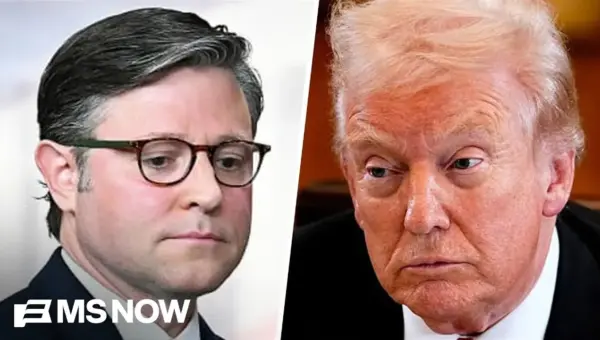
GOP Faces Voter Discontent Over War, Diminished Support
Republican lawmakers are noticing growing voter discontent, particularly among younger demographics, regarding the ongoing war. This sentiment, coupled with economic pressures, could lead to diminished support and turnout in the upcoming midterm elections. The party faces significant challenges in messaging and addressing voter concerns.
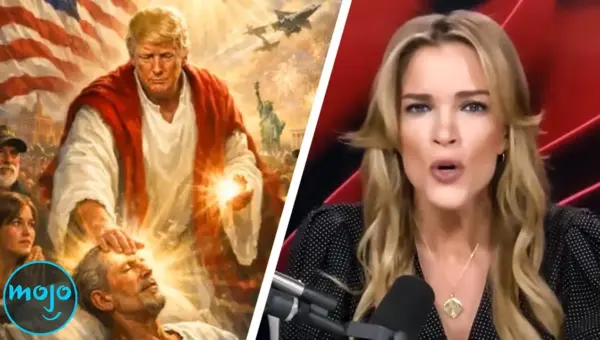
Trump’s Allies Rebel: Conservatives Slam President’s Policies
Prominent conservative figures and lawmakers are openly criticizing President Trump's policies in 2026, signaling a growing divide within the movement. From Candace Owens questioning the Iran conflict to Senator Rand Paul challenging trade policy, a wave of dissent is challenging the president's agenda.
Trump Threatens Fed Chair Powell, Faces Nomination Blockade
President Trump is threatening to fire Fed Chair Jerome Powell over a renovation probe, creating a political stalemate. Senator Tom Tillis is blocking Trump's nominee, Kevin Warsh, until the investigation concludes. Warsh himself faces scrutiny over his vast personal wealth, estimated between $135-226 million, raising conflict of interest concerns.