50-Year Economic Echo: Inflation, Oil Spikes Resurface
A potent mix of high inflation, soaring oil prices, and economic slowdowns, reminiscent of the 1970s, is re-emerging in 2026. This economic "rhyme" offers lessons for investors, highlighting the long-term benefits of strategic investing over chasing speculative trends.


50-Year Economic Echo: Inflation, Oil Spikes Resurface
History doesn’t repeat itself, but it often rhymes. About 50 years ago, a challenging economic mix of high inflation, surging oil prices, and a slowing economy created hardship but also opportunities for savvy investors. Now, in 2026, similar economic conditions are emerging, echoing the past and presenting a unique moment for those who understand market dynamics.
The Perfect Storm of the 1970s
In 1971, a pivotal decision was made when President Richard Nixon took the U.S. dollar off the gold standard. This move allowed the Federal Reserve to increase the money supply significantly, leading to a surge in government spending and, consequently, inflation. The economic picture worsened in 1973 when a conflict in the Middle East, the Yom Kippur War, drew the U.S. in. This involvement caused oil prices to skyrocket, further fueling inflation. In response, the Federal Reserve aggressively raised interest rates throughout the 1970s and 1980s. This policy, while aimed at curbing inflation, led to a slowdown in the job market and the broader economy.
Echoes in 2026
Fast forward to 2026, and history appears to be rhyming. The COVID-19 pandemic led to substantial money printing by the Federal Reserve and significant government spending, creating inflationary pressures. More recently, a conflict in the Middle East has driven oil prices to high levels, exacerbating inflation concerns. The current economic landscape also includes job market shifts driven by artificial intelligence. The Federal Reserve faces a delicate balancing act: pressure to cut interest rates exists, but rising inflation and oil prices might force them to consider raising rates again to cool the economy.
Investor Strategies: Then and Now
The economic turbulence of the 1970s created a wave of new millionaires for those who invested wisely. Let’s examine three distinct investor profiles and their outcomes based on a hypothetical $100 monthly investment from 1971 to 1981:
- The S&P 500 Investor: Investing $100 per month for 10 years meant a total investment of $13,200. By 1981, this investment grew to approximately $21,500, a 60% increase. However, with inflation at around 124% during this period, the real purchasing power of this money decreased, meaning investors effectively lost value despite nominal gains.
- The Saver: Simply saving the $13,200 resulted in about $20,000 by 1981. During the 1970s, high interest rates meant savings accounts offered returns of 8-12%. While savings grew, they still fell short of inflation, leading to a loss in purchasing power. The growth was about 53%, significantly less than the stock market’s nominal return.
- The “Opportunist” (Gold Investor): Investing $100 monthly into gold during the same decade saw a dramatic increase. The initial $13,200 investment grew to roughly $45,500 by 1981. This represented a 245% gain, significantly outperforming both the S&P 500 and savings accounts. Gold benefited from its role as a hedge against inflation and fears about the U.S. dollar.
Long-Term Perspectives (1971-1991)
Looking at a longer, 20-year horizon (1971-1991) reveals a different story. Inflation over this period reached approximately 236%.
- S&P 500 Investor: Continuing the $100 monthly investment grew the portfolio to over $133,000 by 1991. This represents a substantial 430% growth, successfully outpacing inflation over the long term.
- Saver: The savings account, benefiting from high interest rates early on, grew to around $60,000 by 1991, a 115% increase. However, as interest rates fell, returns diminished, and savings still lost significant value to cumulative inflation.
- Gold Investor: While gold performed exceptionally well in the first decade, its performance waned. Continuing the $100 monthly investment into gold resulted in approximately $52,000 by 1991. This equates to about a 100% overall gain, lagging behind both the S&P 500 and even simple savings over the full two decades.
This shift highlights a crucial lesson: gold’s strength as an investment often peaks during periods of high uncertainty and fear about the dollar. As stability returned and interest rates rose, gold’s appeal diminished.
What Investors Should Know
The key takeaway from the 1970s and 1980s is the importance of a long-term strategy and understanding what you are investing in. Blindly chasing hot trends, whether from financial news or social media, often leads to buying assets after they have already peaked and selling during downturns. This is not a strategy; it’s a recipe for losses.
Key Considerations for Today’s Investor:
- Understand Your Goals: Are you looking for short-term gains or long-term wealth building? Your objectives should guide your investment choices.
- Invest in What You Understand: As legendary investor Warren Buffett advises, if you don’t understand a business or asset, you shouldn’t invest in it. This means researching industries and companies thoroughly.
- Inflation is Persistent: With inflation remaining a concern, simply saving money in a bank account, even a high-yield one, is unlikely to preserve or grow your purchasing power. Your investments need to grow faster than inflation to build wealth.
- Long-Term Investing Wins: The data from the 1971-1991 period shows that consistent, long-term investment in diversified assets like the S&P 500, through market ups and downs, has historically yielded superior results compared to short-term speculation or holding cash.
- Sector Opportunities: In periods of economic stress, certain sectors naturally benefit. Concerns about oil crises boost energy stocks. Geopolitical tensions can favor defense companies. Shortages in critical materials, like those needed for semiconductors or AI infrastructure (data centers, cooling, power), can create opportunities in related industries.
The current economic environment, with its echoes of the past, underscores the need for a well-researched, strategic approach to investing. By understanding historical patterns and focusing on long-term goals, investors can better position themselves to navigate market shifts and potentially build wealth.
“The mistake that so many people make today is they have no idea what their strategy is. They chase what’s hot on CNBC. They chase what’s hot on Reddit. You chase what’s hot on Chat GPT. And then you buy that after it’s already seen these huge gains.”
Source: This Setup Only Happens Once Every 50 Years — It's Happening Again (YouTube)

Related Articles


Oil Prices Plummet as Iran Ceasefire Ends Strait of Hormuz Standoff
A last-minute ceasefire between the U.S. and Iran has averted a crisis in the Strait of Hormuz, sending oil prices tumbling and stocks soaring. The deal brings relief to global energy markets, though verification of Iran's compliance and the role of other nations remain key concerns.


Iran’s Hormuz Toll Likely to Stay After Conflict
A recent ceasefire has brought relief, but Iran's control over the vital Strait of Hormuz and potential for continued tolls remain significant concerns. Experts suggest that compromise will be key to a lasting peace, while oil markets grapple with ongoing supply disruptions despite the recent price drop.

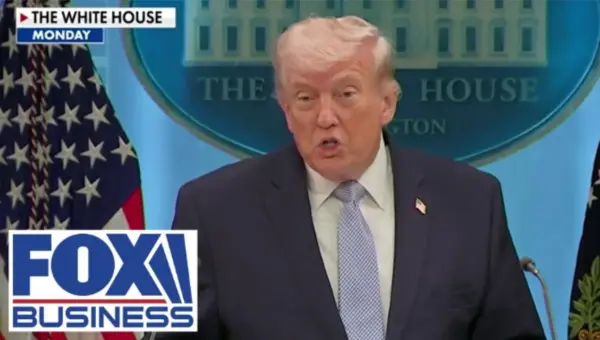
Trump’s Iran Deal Sparks Market Rally, Oil Plummets
President Trump's announcement of a two-week suspension of bombing Iran has triggered a significant market rally and a sharp drop in oil prices. The potential reopening of the Strait of Hormuz is seen as a key factor, promising relief for consumers and broader economic benefits.