2026 Toyota Camry: A Hands-Free Hopeful, But Not Quite There
The 2026 Toyota Camry, a hybrid powerhouse, undergoes the demanding Woolly Mammoth Challenge for hands-free driving. While packed with safety features, it falls short of true autonomy, scoring 45 points and highlighting Toyota's conservative yet value-rich approach.

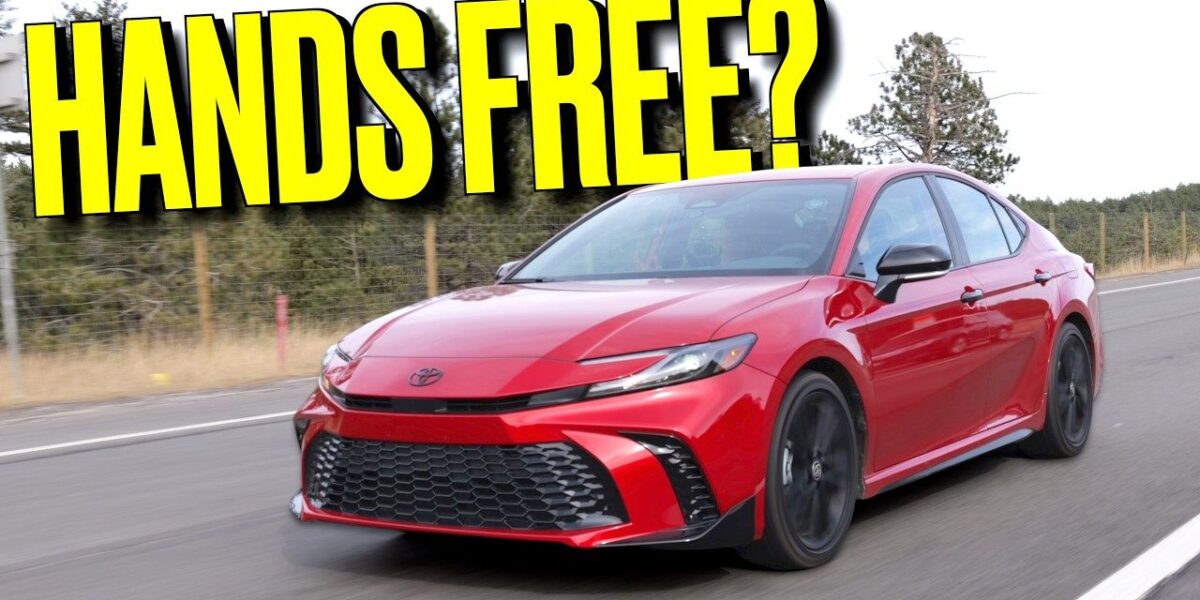
2026 Toyota Camry: A Hands-Free Hopeful, But Not Quite There
The automotive landscape is rapidly evolving, with driver assistance systems becoming increasingly sophisticated. Toyota, a stalwart in the sedan market, has updated its legendary Camry for 2026, and with it comes a suite of advanced safety and convenience features. But in the realm of hands-free driving, the question remains: how capable is the new Camry? We put it to the ultimate test – the “Woolly Mammoth Challenge” – a grueling 18-mile course designed to push any self-driving system to its limits, featuring traffic, mountain roads, construction zones, and variable weather.
The Woolly Mammoth Challenge: A Rigorous Test
This isn’t your average cruise control. The Woolly Mammoth Challenge employs a point-based system to objectively evaluate driver assistance technologies. A perfect score is 100. Significant deductions are made for the absence of hands-free driving (-255 points) and point-to-point capability (-25 points). Subscription costs also factor in, with a deduction of 1 point for every $10 per month. More critically, disengagements where the driver must intervene incur penalties of -5 or -10 points depending on severity. “Nagging” alerts for inattention also cost 5-10 points. A system “jail” – where the system disconnects completely until a power cycle – results in a hefty 25-point deduction. And the most severe penalty, a dangerous situation or imminent accident, leads to an immediate fail with -100 points.
Decoding Toyota’s Acronym Soup
Toyota equips the 2026 Camry with an impressive array of acronym-laden features. While the sheer number can be overwhelming, understanding their purpose is key:
- PCS (Pre-Collision System) with Pedestrian Detection: Enhanced to detect motorcyclists, bicyclists, and even guardrails, offering braking and steering support.
- PDA (Proactive Driving Assist): Provides gentle braking and/or steering to support driving tasks like maintaining distance from vehicles, pedestrians, and bicyclists.
- LDA (Lane Departure Alert) with Steering Assist: Detects lane markings and provides alerts and minor steering corrections if the vehicle drifts.
- LTA (Lane Tracing Assist): Uses cameras and radar to keep the vehicle centered in its lane, with improved lane recognition.
- DRCC (Dynamic Radar Cruise Control): Full-speed range adaptive cruise control with four following distance settings and smoother operation.
- RSA (Road Sign Assist): Identifies speed limits, stop signs, and yield signs, displaying them on the multi-information display.
- AHB (Automatic High Beams): Automatically switches between high and low beams based on traffic detection.
- EDSS (Emergency Driving Stop System): Designed to bring the vehicle to a stop if it detects the driver is unresponsive.
- OTAA (Over-the-Air Updates): Allows for software updates without a dealership visit.
Performance and Efficiency: A Hybrid Powerhouse
As the best-selling sedan in the United States, with over 310,000 units sold in 2025, the Camry’s success is undeniable. For 2026, all Camry models are exclusively hybrids. This powertrain delivers remarkable efficiency, achieving an EPA-estimated 46 MPG combined (46 MPG city/46 MPG highway). This is an impressive feat for a full-size family sedan. While specific performance figures like horsepower and torque for the 2026 model were not detailed in the test, the hybrid system typically offers a balanced blend of responsiveness and economy. The tested Nightshade edition, based on the SE trim with sporty enhancements like dark badging and blacked-out wheels, had a price tag of $37,930.
On the Road: The Hands-Free Verdict
During the Woolly Mammoth Challenge, the Camry’s driver assistance systems were put to the test. While the car features a comprehensive suite of aids, it’s crucial to note that it is not a hands-free system. The torque sensor in the steering wheel requires driver input to confirm attention, typically disengaging after about 15 seconds of no steering input. This is a key differentiator from true Level 3 or higher autonomous systems.
The system’s lane centering and lane departure features performed adequately on straighter highway sections, but struggled in more dynamic situations. The testers noted instances where the system disengaged unexpectedly, particularly in construction zones and during sharp turns, leading to point deductions. While the system never created a dangerous situation, its interventions were sometimes described as “aggressive” or “like a toddler,” lacking the smooth, confident operation of more advanced systems like Tesla’s Autopilot or GM’s Super Cruise. The confusion surrounding the differentiation between LDA, LTA, and PDA also detracted from the user experience.
Despite the advanced acronyms, the core functionality for hands-free highway driving is limited. The system does not offer automatic lane changes and requires constant driver supervision. The testers rated the system’s autonomy level at a 3 out of 10, highlighting its role as a sophisticated Level 2 system rather than a true hands-free solution.
Value Proposition: Safety First, Autonomy Later
The 2026 Toyota Camry, particularly in its hybrid configuration, offers exceptional value in terms of fuel efficiency and standard safety equipment. The fact that Toyota includes a vast array of driver assistance features as standard, without costly subscriptions or optional packages (unlike some luxury brands that charge for basic features like blind-spot monitoring), is commendable. The as-tested price of just under $38,000 for the well-equipped Nightshade edition represents strong value for a segment-leading sedan.
However, for buyers prioritizing advanced hands-free driving capabilities, the Camry falls short. Its strength lies in its comprehensive suite of driver *assistance* features, designed to enhance safety and reduce driver fatigue, rather than to automate the driving task. The system’s limitations in complex scenarios and its requirement for constant driver attention mean it’s best suited for drivers who appreciate the safety net but prefer to remain fully in control, especially on challenging roads.
The Verdict
The 2026 Toyota Camry is a superb hybrid sedan that continues its reign as a best-seller, offering outstanding fuel economy, practicality, and a wealth of standard safety technology. However, when judged against the stringent criteria of the Woolly Mammoth Challenge for hands-free driving, it scores a respectable but ultimately low 45 points. The absence of true hands-free capability and point-to-point navigation are significant drawbacks in this specific evaluation. While the system is helpful for highway cruising on long, predictable stretches, it requires constant driver vigilance and can become frustrating in more demanding environments. Toyota’s conservative approach to autonomy, while prioritizing safety and reliability, means the Camry is an excellent driver’s aid but not yet a self-driving car.
Source: New 2026 Toyota Camry vs the World's Toughest Self-Driving Test! (YouTube)

Related Articles

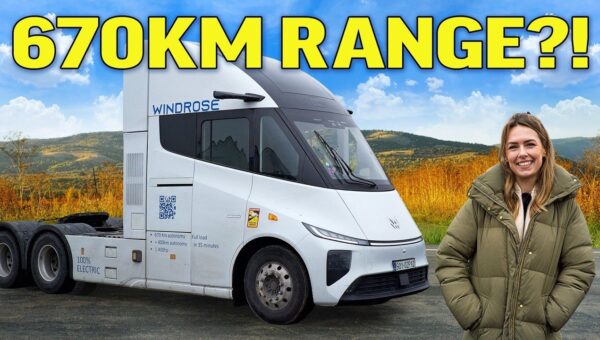
Windrose E700: A Serious Electric Truck Contender
The Windrose E700 electric truck emerges as a strong contender in the heavy-duty segment, boasting an impressive 670 km range, LFP battery technology for longevity, and a driver-focused interior. With a target price of around $250,000, it aims to disrupt the market.
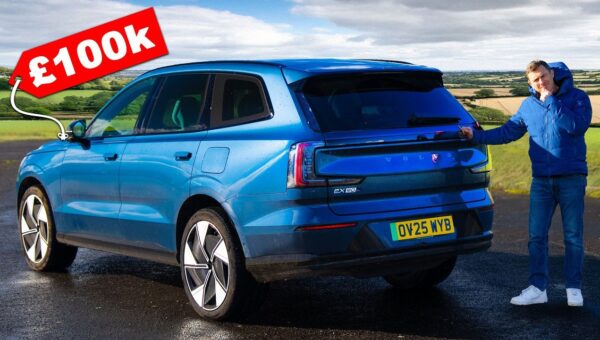
Volvo EX90: A Flawed Luxury EV King?
The new Volvo EX90 aims for luxury EV SUV supremacy but falls short due to a high price, disappointing real-world range, and uninspired driving dynamics. While comfortable and practical, it struggles to justify its premium cost against strong competition.

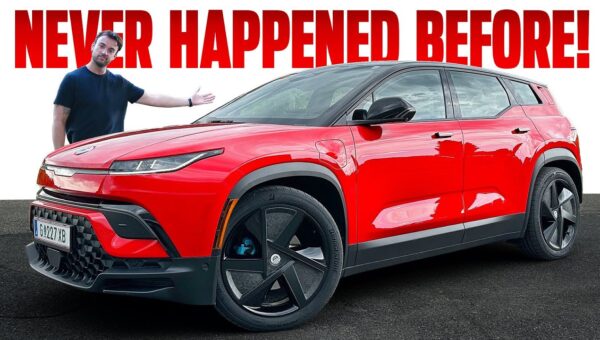
Fisker Ocean: A Second Life For A Flawed Electric Gem?
Once a symbol of electric vehicle ambition, the Fisker Ocean now finds a second life thanks to its dedicated owners. After the company's bankruptcy, the Fisker Owners Association has stepped in to provide parts, service, and software updates, transforming the flawed EV into a community-supported marvel. This has created a unique, albeit niche, bargain for adventurous buyers.