2026 Mazda CX-5: Solves Old Problems, Creates New Ones
The 2026 Mazda CX-5 gets a much-needed interior space upgrade and refined ride, but its move to a large touchscreen for climate controls and lack of powertrain options raise questions. It remains a great driver's SUV, but faces stiff competition.

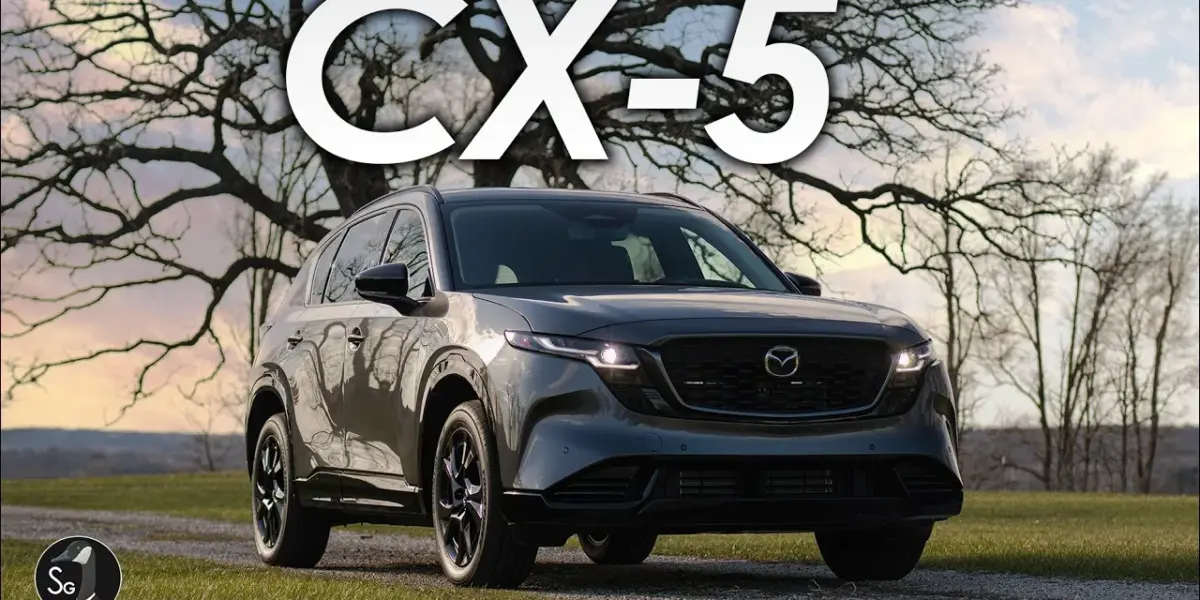
Mazda CX-5 Gets a Much-Needed Update, But Is It Enough?
The 2026 Mazda CX-5 has finally arrived, and it’s a significant step forward for the popular compact SUV. Mazda has clearly listened to customer feedback, addressing key complaints about interior space and usability. However, in its quest to modernize and streamline, the CX-5 introduces some polarizing changes that might not sit well with every driver.
Pricing for the new CX-5 starts around $30,000 for the base model and can climb to about $40,000 for the fully loaded Premium Plus trim. While the top trims offer luxurious features like Bose audio, heated and cooled seats, and a panoramic sunroof, buyers will likely find themselves spending closer to $35,000-$38,000 to get the desirable options. This means carefully navigating trim levels to ensure you get the features you want, like wireless Apple CarPlay and Android Auto, which are not standard on lower trims.
Styling: A Familiar Face, Refined
On the outside, the 2026 CX-5 is an evolution, not a revolution. It shares its platform with the previous generation, meaning it retains that familiar, attractive Mazda silhouette. Updates include a new grille and headlights, giving it a slightly more modern look. While the design was already a strong point, these subtle tweaks keep it looking fresh, especially in brighter color options.
Interior: More Space, Less Tactility
The biggest improvement is in usability and passenger space. Mazda has significantly increased rear legroom and overall passenger comfort, making it a much more practical choice for families. The rear doors now open wider, allowing for easier access, especially for installing child seats. The cargo area also sees improvements, with a usable space and a convenient mechanical lever to fold the rear seats flat. A spare tire is also tucked away under the cargo floor, a welcome sight for many.
Inside, Mazda’s signature clean design language remains. The center console is tidier, and storage solutions are more practical. Physical controls, like the gear shifter, still feel solid and well-made, reflecting Mazda’s commitment to quality. However, the competition, particularly from Korean automakers and even the Nissan Rogue, has upped its game significantly in terms of interior storage and innovative features. The CX-5’s door pockets, for instance, aren’t as accommodating for larger bottles as some rivals.
Where the CX-5 truly departs from its roots is in the removal of physical HVAC controls. In a move likely aimed at cost savings and easier integration across its model lineup, Mazda has replaced them with a large touchscreen. While the Android Automotive-based system is responsive and easy to navigate, the loss of tactile buttons for climate control might be a step too far for many enthusiasts who appreciate Mazda’s driver-focused approach. Steering wheel controls have also seen a similar simplification, moving to a single-click membrane design.
Material quality is generally good, with plenty of soft-touch surfaces. However, the interior can feel a bit monochromatic, lacking the visual contrast found in some competitors. The seats offer excellent ergonomic support for posture, but the bottom cushions are notably firm, which could lead to fatigue on longer journeys. While many rivals, like the Nissan Rogue and Honda CR-V, offer softer seat bases, the CX-5 prioritizes driver engagement over plush comfort.
Performance: Familiar Engine, Refined Ride
Under the hood, the CX-5 sticks with its tried-and-true 2.5-liter naturally aspirated four-cylinder engine. It produces 187 horsepower and 186 pound-feet of torque. This engine is paired with a six-speed automatic transmission that has been recalibrated for quicker, more predictive shifts. The all-wheel-drive system’s torque coupling has also been strengthened for better performance in demanding conditions.
While the powertrain is familiar, Mazda has made significant strides in refining the ride and handling. The wheelbase has been lengthened, and suspension components have been revised. The goal was to smooth out harsh impacts from small road imperfections without sacrificing body control. The result is a quieter, more composed ride that still feels connected and engaging to drive. Mazda’s signature linear steering remains, offering precise feedback.
However, the lack of powertrain options is a notable drawback. There’s no hybrid option available, and the popular turbocharged engine has been dropped due to low demand. This puts the CX-5 at a disadvantage against competitors like the Toyota RAV4 Hybrid and Honda CR-V Hybrid, which offer better fuel economy and quicker acceleration. The base engine, while adequate for daily driving, can feel sluggish, especially when merging or passing, and the start-stop system can be particularly jarring.
Value and Verdict
The 2026 Mazda CX-5 is a compelling package that addresses the critical shortcomings of its predecessor, particularly in interior space and overall refinement. It offers a more comfortable and practical experience for families while retaining the engaging driving dynamics that Mazda is known for. The improved ride quality and quieter cabin are significant wins.
However, the move away from physical controls for climate and the simplified steering wheel buttons might alienate some loyal customers. The lack of a hybrid powertrain and a more powerful engine option also leaves it trailing key rivals in performance and efficiency. At nearly $40,000 for a top-trim model, the value proposition becomes less clear when compared to more tech-forward or fuel-efficient alternatives.
The target buyer is likely someone who prioritizes driving engagement and a premium feel over cutting-edge technology or maximum fuel efficiency. If you appreciate a well-built interior and a car that feels connected to the road, the CX-5 is worth considering. But if you’re looking for the latest tech, the best MPG, or the quickest acceleration in the segment, you might need to look elsewhere. Mazda has done an admirable job refining its core product, but it faces intense competition that has rapidly evolved.
Source: 2026 Mazda CX-5 | What's the Problem Now? (YouTube)

Related Articles


Porsche 911: The Unloved 996 vs. The Beloved 997
We compare the much-maligned Porsche 996 against its beloved successor, the 997. Discover why these two generations, separated by just two years, command vastly different prices and which one offers the better value for driving enthusiasts.


Hyundai Palisade’s Driver Assist Struggles on Tough Test
The 2026 Hyundai Palisade XRT Pro's Highway Driving Assist (HDA) system was put to the test and scored a low 30 points. While capable on straighter roads, it struggled with right-hand curves, requiring driver intervention. This highlights the system's limitations as an assist feature rather than a fully autonomous solution.


BMW X6 M Obliterates Rivals in Drag Race Showdown
The BMW X6 M has proven its incredible speed, dominating a recent drag race against exotic cars and other performance SUVs. Finishing just milliseconds behind the fastest supercars, the X6 M delivers unmatched acceleration for its class. This luxury SUV offers a thrilling driving experience without sacrificing practicality.