2026 Mazda CX-5: A Familiar Face, But Is It Enough?
The redesigned 2026 Mazda CX-5 brings a sophisticated interior and increased passenger space, but its underwhelming powertrain and lack of hybrid option raise questions about its competitiveness in the crowded compact SUV segment.

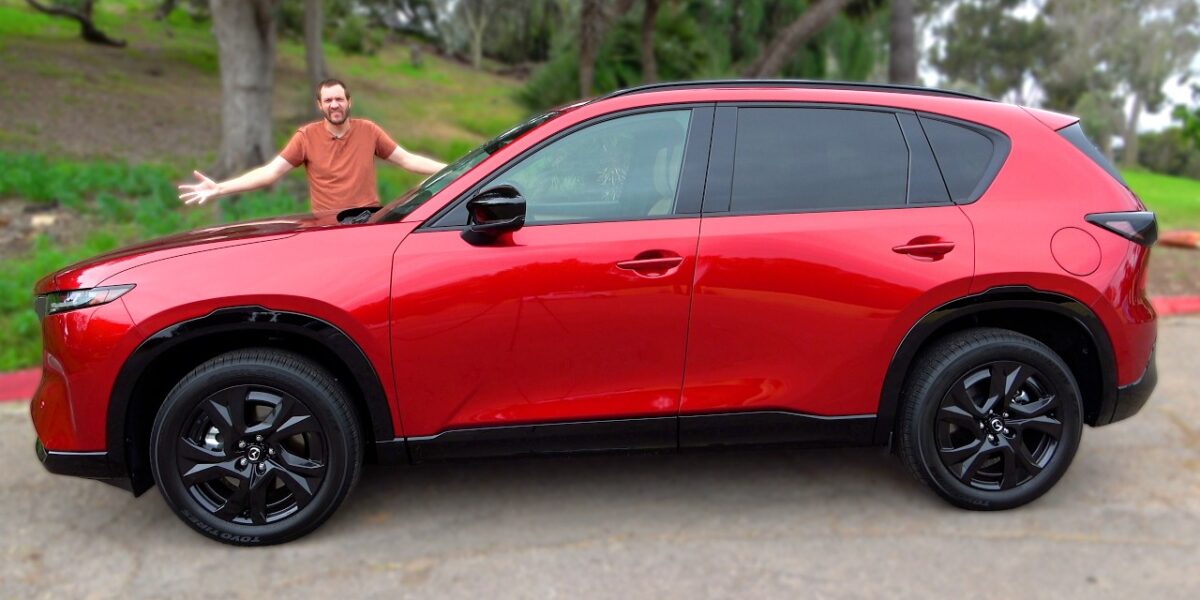
2026 Mazda CX-5: A Familiar Face, But Is It Enough?
The Mazda CX-5, a cornerstone of the brand’s success, has undergone a significant redesign for the 2026 model year. Accounting for a third of all Mazda sales, this compact SUV has been a consistent presence on our roads for nearly 15 years. Now, with a completely new iteration, Mazda aims to build on its popularity. However, while the new CX-5 brings welcome updates, particularly in its interior technology and passenger space, a closer look reveals some significant drawbacks that might temper enthusiasm.
Powertrain: A Step Backward?
Perhaps the most surprising and disappointing aspect of the new 2026 Mazda CX-5 is its powertrain. Currently, the only engine offered is a 2.5-liter four-cylinder producing a modest 187 horsepower. This figure places the CX-5 at the bottom of its class in terms of power, trailing competitors like the Honda CR-V and Toyota RAV4. Even more baffling is the absence of the previous model’s potent turbocharged engine, which offered a healthy 255 horsepower. Mazda has yet to confirm if a more powerful option will return. Furthermore, in an era where hybrid powertrains are becoming standard in the segment, the CX-5 offers no hybrid variant. This is especially perplexing given that Mazda’s own CX-50 offers a 220-horsepower hybrid option that also achieves an impressive 38 MPG combined. The current CX-5’s sole engine feels sluggish, requiring significant throttle input for even moderate acceleration, which in turn impacts fuel economy and creates an unrefined engine note.
Styling: Safe, But Lacks Spark
Mazda has always been lauded for the CX-5’s attractive design, and the new model continues this tradition. However, the updated styling leans towards the generic, lacking the distinctive character that set previous generations apart. Compared to the more muscular and adventurous design of the CX-50, the new CX-5 appears somewhat bland. While Mazda has smoothed out some of the previous model’s more unique design cues, the overall look doesn’t make a strong visual statement. Some interesting exterior details remain, such as the ‘Mazda’ script spelled out across the tailgate – a growing trend among manufacturers – and the signature fading LED turn signals, which offer a nostalgic and upscale touch. And of course, the iconic ‘Soul Red Crystal Metallic’ paint continues to be a standout option, even if the rest of the car feels less inspired.
Interior: Tech-Forward with a Few Quirks
The interior of the 2026 CX-5 sees the most significant improvements, primarily centered around a new, expansive 14.5-inch infotainment touchscreen. This large display integrates many vehicle functions and is generally a well-executed system. It’s responsive, intuitive, and features a user-friendly home screen that can display multiple items simultaneously. The camera system is particularly impressive, offering high resolution and easy access. The inclusion of Google Maps is a welcome convenience. This new touchscreen is a vast improvement over the previous model’s rotary dial controller. However, the implementation isn’t perfect. The volume control, requiring a two-step process of tapping the on-screen knob and then adjusting, is cumbersome, though steering wheel controls do mitigate this for the driver. Climate controls, while accessible via a quick-adjust bar at the bottom, still require navigating menus for functions like heated seats, adding unnecessary complexity. Fortunately, physical buttons for the defroster remain, a sensible inclusion. The digital gauge cluster, while functional, lacks configurability, offering limited options for displaying information like navigation or media.
Attention to detail is evident in features like the real-time display of turn signals on the driver’s display, mirroring the fading effect of the exterior lights. The steering wheel also sports the ‘Mazda’ script in the center instead of the traditional logo and conveniently houses the drive mode selector and a dedicated camera button, a feature many will appreciate for quick access to the rearview and surrounding cameras. An unusual quirk is the placement of a traditional 12-volt accessory outlet in the passenger footwell, catering to older charging devices. Despite Mazda’s claims of cost-cutting due to tariffs, the interior materials and overall ambiance still feel premium for the mainstream segment, maintaining Mazda’s reputation for a more upscale cabin experience.
Space and Practicality
The new CX-5 is approximately 4.5 inches longer, with the wheelbase extended to enhance interior space. This is most noticeable in the rear seats, which offer surprisingly generous legroom and hip room for adult passengers, a significant improvement for a compact SUV. While the rear seating area is otherwise standard for the class, offering climate vents, two USB-C ports, and heated rear seats, the newfound spaciousness is a key benefit. The cargo area is typical for the segment, offering adequate space but no exceptional features. A spare tire is present under the floor, meaning no hidden storage compartments. The absence of household-style power outlets in the cargo area or cabin is a missed opportunity for added convenience.
Value and Target Audience
Pricing for the 2026 Mazda CX-5 starts around $31,000, with top trims exceeding $40,000. This positions it competitively within the crowded compact SUV market. The target buyer is likely someone who appreciates Mazda’s refined interior design and driving dynamics, but the current powertrain significantly undermines its appeal. For those prioritizing performance and efficiency, rivals offering hybrid options or more potent engines present a more compelling case. The decision to omit the turbo engine and a hybrid option makes it difficult to wholeheartedly recommend the CX-5 over its siblings, particularly the CX-50, which offers more powertrain choices and a bolder design. While the CX-5 still offers a pleasant driving experience with good ride quality and handling, its performance limitations are a considerable drawback.
Verdict
The 2026 Mazda CX-5 remains a competent and attractive compact SUV with a refined interior and a spacious cabin. The updated infotainment system is a significant leap forward. However, the underpowered base engine, lack of hybrid option, and somewhat generic styling prevent it from reaching its full potential. While it offers a comfortable and quiet ride, its performance fails to excite, especially when compared to competitors that offer more power and efficiency. Mazda’s decision to focus on the base engine and omit more potent options leaves the CX-5 feeling like an also-ran in a segment where power and efficiency are increasingly important. For potential buyers, the CX-50 presents a stronger alternative within Mazda’s own lineup, offering more engine choices and a more distinctive presence. The 2026 CX-5 is a good car, but it could have been a great one with a more robust powertrain offering.
Source: The New 2026 Mazda CX-5 Is More of a Good Thing (YouTube)

Related Articles


2026 Toyota Camry: A Hands-Free Hopeful, But Not Quite There
The 2026 Toyota Camry, a hybrid powerhouse, undergoes the demanding Woolly Mammoth Challenge for hands-free driving. While packed with safety features, it falls short of true autonomy, scoring 45 points and highlighting Toyota's conservative yet value-rich approach.

Volvo EX90: A Flawed Luxury EV King?
The new Volvo EX90 aims for luxury EV SUV supremacy but falls short due to a high price, disappointing real-world range, and uninspired driving dynamics. While comfortable and practical, it struggles to justify its premium cost against strong competition.


Fisker Ocean: A Second Life For A Flawed Electric Gem?
Once a symbol of electric vehicle ambition, the Fisker Ocean now finds a second life thanks to its dedicated owners. After the company's bankruptcy, the Fisker Owners Association has stepped in to provide parts, service, and software updates, transforming the flawed EV into a community-supported marvel. This has created a unique, albeit niche, bargain for adventurous buyers.