$100K Salary Illusion: Why You’re Not Richer
A $100,000 salary, once a symbol of financial achievement, now often leaves individuals feeling surprisingly strained. This article explores how inflation, taxes, psychological spending pressures, and a misunderstanding of income versus wealth contribute to this modern financial paradox, offering strategies to build a sustainable margin.

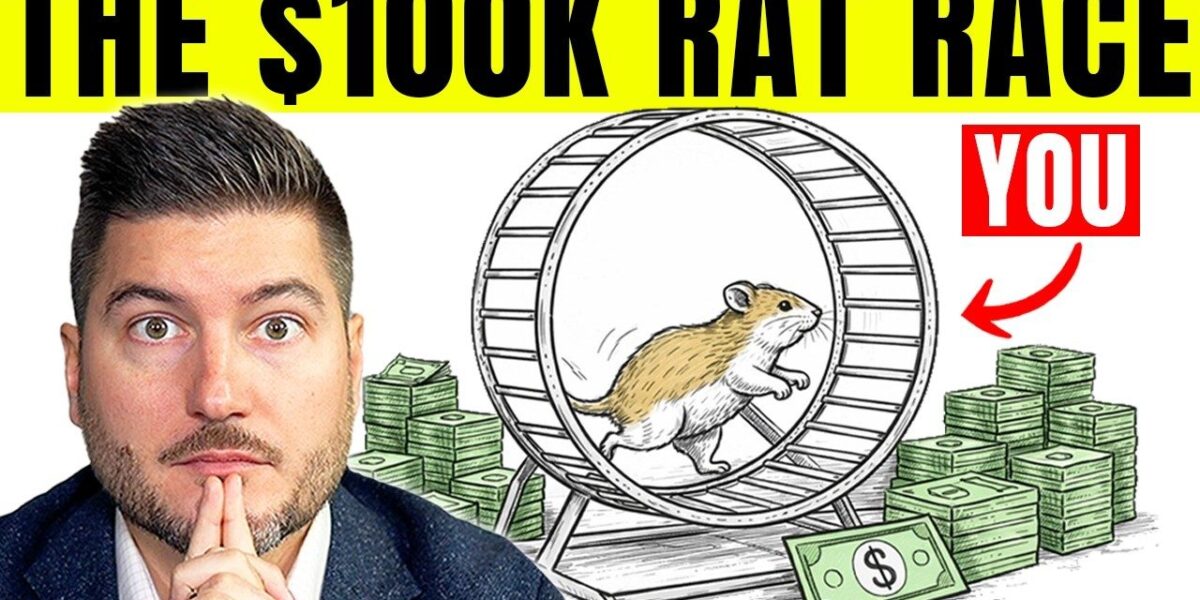
The $100,000 Salary: A Modern Myth of Financial Success
Crossing the six-figure annual income threshold has long been a widely accepted benchmark for financial success in the United States. For many, it represents the culmination of years of education, career advancement, and hard work – a finish line that promises financial security and a comfortable lifestyle. However, a closer examination of economic realities reveals that the purchasing power and lifestyle implications of a $100,000 salary today are vastly different from what they were just a few decades ago. This disconnect is leaving many high earners feeling surprisingly financially constrained, not due to poor financial management, but because the mathematical landscape has shifted significantly.
Inflation’s Silent Erosion of Purchasing Power
The primary driver behind the diminished impact of a $100,000 salary is persistent inflation. According to the Bureau of Labor Statistics (BLS) inflation calculator, the $100,000 earned in 1995 would require approximately $211,000 in 2026 to possess the same purchasing power. This means that an individual earning $100,000 today is effectively earning the inflation-adjusted equivalent of roughly $47,000 in 1995. This stark contrast highlights a fundamental misunderstanding of what a six-figure income can realistically afford in the current economic climate.
The Lifestyle Gap
The aspirational lifestyle associated with a $100,000 income in the 1990s – encompassing homeownership in the suburbs, multiple vehicles, annual vacations, and robust savings for education and retirement – still exists as a societal expectation. However, the cost of this lifestyle has escalated to match the inflation-adjusted income needed, approximately $211,000 annually. This creates a significant gap of about $111,000 between the perceived affordability of a $100,000 salary and its actual purchasing power. Many individuals attempt to bridge this gap through credit cards, home equity loans, and car leases, financing an illusion of prosperity rather than building sustainable wealth.
The Taxman’s Share: How Raises Shrink
Beyond inflation, the progressive nature of the U.S. tax code significantly impacts the net gain from salary increases. Consider an individual earning $75,000 who receives a promotion to $100,000, a nominal raise of $25,000. While this appears to be a substantial increase, the additional income is taxed at the marginal tax rate, not the average rate applied to the entire income. For a single filer, this $25,000 raise would likely be taxed in the 22% federal bracket, immediately reducing the net gain by $5,500.
- Federal Income Tax: Approximately $5,500 (at 22% marginal rate).
- FICA Taxes (Social Security & Medicare): An additional 7.65% on the raise, amounting to roughly $1,912.
- State Income Tax: Varies by state, but an estimated $1,000 to $1,500.
- Student Loan Interest Deduction: A critical, often overlooked factor. As Modified Adjusted Gross Income (MAGI) rises above certain thresholds (e.g., $8,000 for single filers), the ability to deduct student loan interest diminishes, potentially eliminating the deduction entirely. This effectively increases the cost of student loans for higher earners.
After accounting for these deductions, the actual take-home increase from a $25,000 raise might only be around $15,800 for a single filer, a reduction of nearly 37%. While still a meaningful increase, it underscores the importance of understanding the net impact of raises before committing to lifestyle upgrades.
The ‘Conformity Tax’: Psychological Spending Traps
A more insidious challenge arises from psychological pressures, termed the ‘conformity tax.’ As income rises, there’s a subconscious or conscious pressure to align one’s lifestyle with the perceived status of a six-figure earner. This can manifest in several ways:
- Automotive Upgrades: Trading a paid-off, older car for a leased luxury vehicle or a new, expensive model. A $700 monthly car lease payment, for instance, represents $8,400 in after-tax dollars annually.
- Housing Adjustments: Moving to a larger home in a more affluent neighborhood or a better school district, often stretching finances to the maximum approved mortgage amount rather than what is financially prudent.
- Subscription Creep: Upgrading gym memberships, adding multiple streaming services, and increasing dining out frequency, all of which contribute to a higher cost of living.
These voluntary spending increases, while seemingly justifiable individually, collectively inflate expenses and erode the financial benefits of higher earnings. The pressure to ‘keep up’ can feel involuntary, leading individuals to finance an aspirational lifestyle that their actual net income cannot sustainably support.
Income vs. Wealth: The Critical Distinction
The core misunderstanding for many high earners lies in conflating income with wealth. Income represents the velocity of money – how quickly it moves through one’s hands. Wealth, conversely, is what remains. A high income with equally high or escalating expenses results in low wealth accumulation, akin to running on a treadmill: lots of motion and perceived productivity, but little forward progress.
Case Study: $60K vs. $120K Earners
Consider two hypothetical households:
- Household A ($60,000 Annual Income): Rents a modest apartment ($1,400/month), drives a paid-off car, cooks most meals at home, and saves $700 per month ($8,400 annually) into investments. They maintain six months of expenses in savings, providing a significant financial cushion.
- Household B ($120,000 Annual Income): Purchases a $575,000 home with associated mortgage, taxes, and insurance ($3,800/month), finances two car payments ($1,100/month), covers significant childcare costs ($2,400/month), and maintains a lifestyle with subscriptions, dining out, and trips. Despite a gross income double that of Household A, their net monthly income of approximately $7,450 is outspent by expenses of around $9,500, resulting in a negative savings rate and zero margin for error.
Household B, despite earning significantly more, lacks financial flexibility. They are tied to their jobs, unable to weather layoffs or pursue lower-stress opportunities due to their high-cost lifestyle. Household A, conversely, possesses financial freedom and resilience, able to navigate job changes or unexpected events with relative ease.
Parkinson’s Law and Retirement Realities
Parkinson’s Law, in its financial context, suggests that expenses expand to fill the available income. Each incremental increase in lifestyle – a slightly nicer gym, premium groceries, faster internet, more streaming services – contributes to a higher baseline cost of living. This has profound implications for long-term financial goals, particularly retirement.
The Retirement Nest Egg Calculation
Using the 25x annual expenses rule (based on a 4% safe withdrawal rate), an individual living on a $150,000 annual lifestyle requires a retirement nest egg of approximately $3.75 million. To accumulate this by age 65, starting at age 35 with a 7% average annual return, requires monthly investments of about $3,075. In contrast, someone living on $50,000 annually needs a $1.25 million nest egg, requiring monthly investments of roughly $1,025 over the same period. The seemingly small lifestyle upgrades, when compounded over decades, can dramatically increase the required savings and potentially render retirement mathematically unattainable.
The Path Forward: Operating Margin as the Key Metric
The solution lies in shifting the focus from gross income to operating margin – the difference between revenue (income) and costs (taxes and living expenses). Treating household finances like a profitable business is crucial.
Strategies for Building Margin:
- Automate Savings: Prioritize saving and investing by setting up automatic transfers to retirement accounts (401(k), HSA) and brokerage accounts immediately after each paycheck. This ensures funds are allocated before discretionary spending decisions are made.
- Control Lifestyle Inflation: When receiving a raise, commit to saving at least 50% of the after-tax increase. This allows for some lifestyle enhancement without letting expenses outpace income growth.
- Run the Retirement Math: Regularly calculate the total annual expenses and determine the required retirement nest egg. Assess whether current savings trajectories are sufficient to meet these long-term goals.
Ultimately, financial success is not measured by the income on a W-2 form but by the amount of wealth that ‘sticks’ – the margin preserved and invested. By adopting a business-like approach to personal finance, prioritizing margin over mere income, individuals can build genuine wealth and achieve lasting financial freedom, avoiding the trap of the high-earner, not-yet-rich cycle.
Source: Why A $100,000 Salary Is Getting You Nowhere (YouTube)

Related Articles


Russia’s Hidden Debt Crisis: A Silent Drain on Citizens
Russia is reportedly accumulating significant debt through complex financial schemes, which critics argue are subtly draining resources from its citizens. The government's reliance on borrowing, coupled with inflation and rising interest rates, is placing a growing burden on ordinary Russians.


Iran Strait of Hormuz Blockade Threatens Global Oil Prices
Iran's Revolutionary Guard has issued warnings against ships passing through the Strait of Hormuz, a critical global oil chokepoint. This potential blockade threatens to disrupt 20% of the world's crude oil flow, potentially spiking energy prices and fueling global inflation. Experts warn of significant market reactions and widespread economic consequences.


Shrinkflation and Greedflation: Why Your Goods Cost More
Consumers are increasingly facing smaller products at higher prices due to shrinkflation and greedflation. This article explores the tactics companies use, their impact on consumers, and potential regulatory and consumer-led solutions.